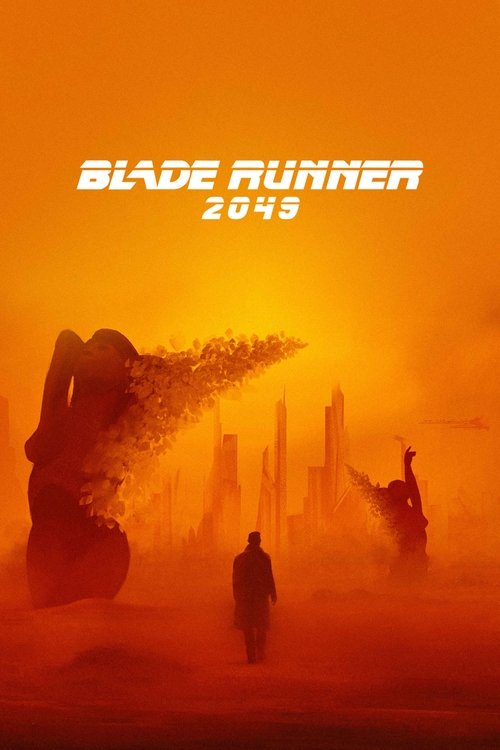
Blade Runner 2049 (2017)
The Most Beautiful Vision of a Ruined Future
by 10days1movie · Published 2026-09-11
| Type | Movie |
|---|---|
| Director | Denis Villeneuve |
| Cast | Ryan Gosling, Harrison Ford, Ana de Armas, Sylvia Hoeks, Robin Wright, Jared Leto |
| Release | 2017 |
| Genre | Science Fiction, Drama |
| Runtime | 164min |
Because the shadow left by its predecessor was so enormous, a sequel arriving 35 years later was an uphill fight from the start. Ridley Scott’s Blade Runner from 1982 remains the film that rewrote the aesthetics of science fiction. To lay hands on that myth came close to recklessness. Yet Denis Villeneuve chose not to imitate the original but to expand its world with his own pace and texture. The Blade Runner 2049 completed that way is a rare case of a sequel rising to a territory sequels seldom reach. My rating is ★4.0.
What it’s about — The event of a replicant giving birth
In 2049, humanity still manufactures the artificial beings called replicants and works them for labor. K (Ryan Gosling), a new-model replicant with the LA police, is a blade runner who hunts down older models and “retires” them. During a mission he discovers buried remains and learns that they belonged to a replicant yet bear the trace of childbirth. This impossible event, that artificial life gave birth, carries a danger that could shake the boundary between human and artifact to its foundations. Chasing the secret, K is led toward Deckard (Harrison Ford), a former blade runner who vanished thirty years earlier.

Direction — Deakins’s images and a fearless slowness
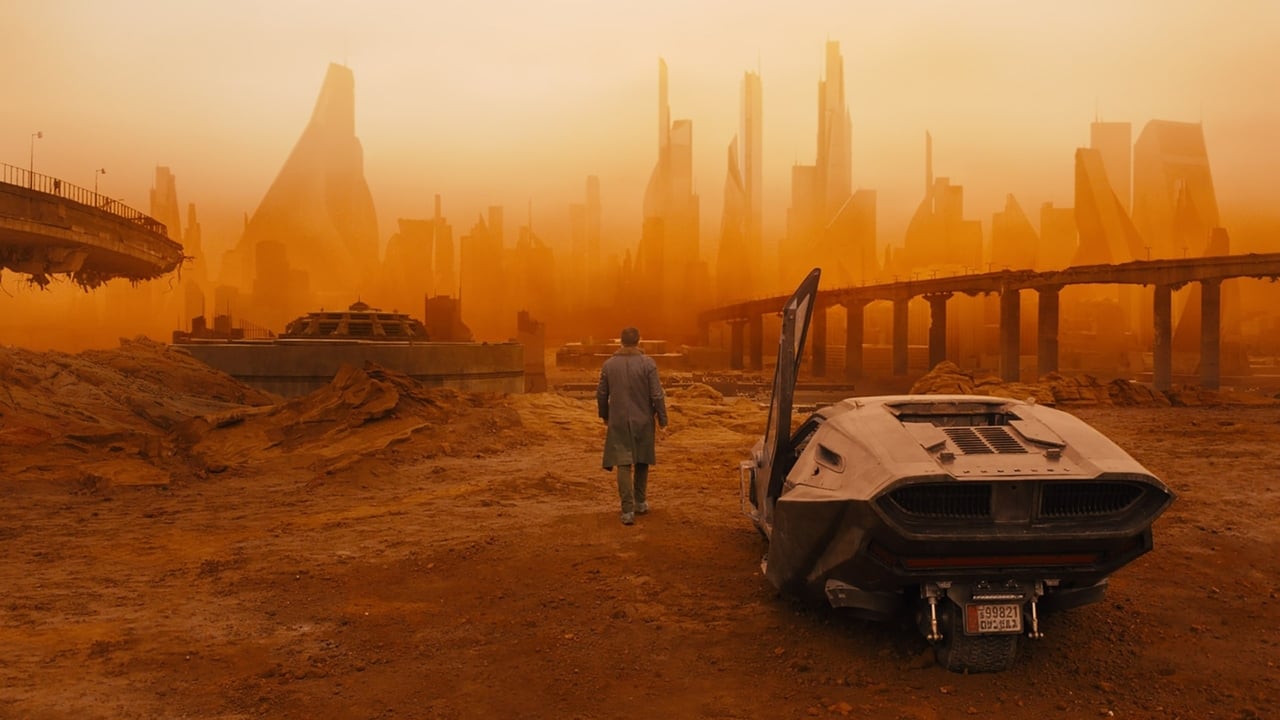
The first thing this film overwhelms you with is its imagery. Roger Deakins, who handled the cinematography, has never captured a ruined future this beautifully. The ash-sunk city, the ruins of Las Vegas drowned in yellow sandstorms, the streets where giant holographic ads bleed into the rain, every scene is composed like a painting. That Deakins finally won the Academy Award for cinematography with this work was a natural conclusion.
Villeneuve’s direction does not fear slowness. He spends the long 164-minute runtime not on pouring out information but on filling silence and empty space. As the heavy sound of Hans Zimmer and Benjamin Wallfisch lays itself over the screen as if pressing down on it, the audience comes to endure the solitude and confusion K feels. This film is undeniably a burden for viewers who want a fast pace. But that very slowness is the device that makes one chew over the meaning of identity.
Performance — Gosling, who conveys emotion by hiding it
Ryan Gosling, playing a character who reveals almost no emotion, paradoxically conveys the deepest emotion. K is a being who moves on command, yet he wavers minutely before the possibility that he might be special. Gosling expresses that wavering not through large movements but through shifts in gaze and breath. Ana de Armas, playing the artificial lover Joi, brings the premise of an insubstantial being feeling love to life with warmth and sorrow. The relationship between the two figures is the most human part of this film. Harrison Ford, who appears in the back half, fills the screen even in limited screen time, bearing the full weight of Deckard’s passing years.
What the film says — The act of choosing meaning for oneself
Blade Runner 2049 pushes the question its predecessor posed one step further. What makes a human a human? If memories can be fabricated and the being you love is nothing but data, does “real” still hold any meaning? The film offers its answer through the process by which K accepts that he may not be special. What matters is not the truth of one’s birth but the act of choosing meaning for oneself in a meaningless world. That conclusion holds, within the cold shell of science fiction, an unexpectedly warm love for humanity.
Ratings & reception
By OMDb, the IMDb rating is a high 8.0. The Rotten Tomatoes Tomatometer is 88 percent and the Metacritic score reaches 81. Critics praised in one voice Deakins’s cinematography, Villeneuve’s direction, and the way it expanded the world without violating the spirit of the original. Owing to the long runtime and slow pace, however, the box office fell short of the production budget, leaving it as another case demonstrating that a masterpiece does not necessarily translate into popular success.

Verdict
Blade Runner 2049 proves that science fiction can be a medium for philosophical contemplation beyond mere spectacle. Every frame is beautiful enough to hang in a museum, and it is all the more valuable in that the beauty is not empty. For viewers prepared to endure a slow pace, this work will leave an afterimage that lingers for a long time. It is a visual poem and a film of thought, more than worthy of four stars.
Recommended for
- Those who regard the beauty of the image itself as a great pleasure of cinema
- Viewers who want to chew over questions of identity and existence at a slow pace
- Anyone who wants to explore the world of the original Blade Runner more deeply
Comments