
Bring Her Back (2025)
The Ugliest Face of a Person Clutching Grief
by 10days1movie · Published 2026-11-10
| Type | Movie |
|---|---|
| Director | Danny Philippou, Michael Philippou |
| Cast | Sally Hawkins, Billy Barratt, Sora Wong |
| Release | 2025 |
| Genre | Horror |
| Runtime | 105min |
Where the Philippou brothers, who debuted with Talk to Me, head in their second film is not toward jump scares but toward the darkest floor of grief. It starts from the simple premise of step-siblings, one of them losing her sight, being placed with a foster mother, but the film soon descends to a horrific place, following one woman’s obsession to reclaim her lost child. It is by no means an easy film to watch, and some scenes refuse to leave for a long time, but I gave it three and a half stars for the nerve to push that discomfort all the way through.
What it’s about — Step-siblings losing their sight and a foster mother
After their father’s death, Andy and his visually impaired younger sister Piper are placed with foster mother Laura (Sally Hawkins). Laura welcomes the two children warmly, but in that house there is another foster child, Oliver, who does not speak, and the fact that Laura recently lost a daughter is slowly revealed. At first it looks like a story of people enduring loss. But the more it becomes clear what hides behind Laura’s kindness, the more obvious it grows that this house is not a sanctuary but a place where a ritual is performed. The film coldly observes how grief consumes a person, and what it tries to fill that empty place with.

Direction — A hand that translates grief into horror
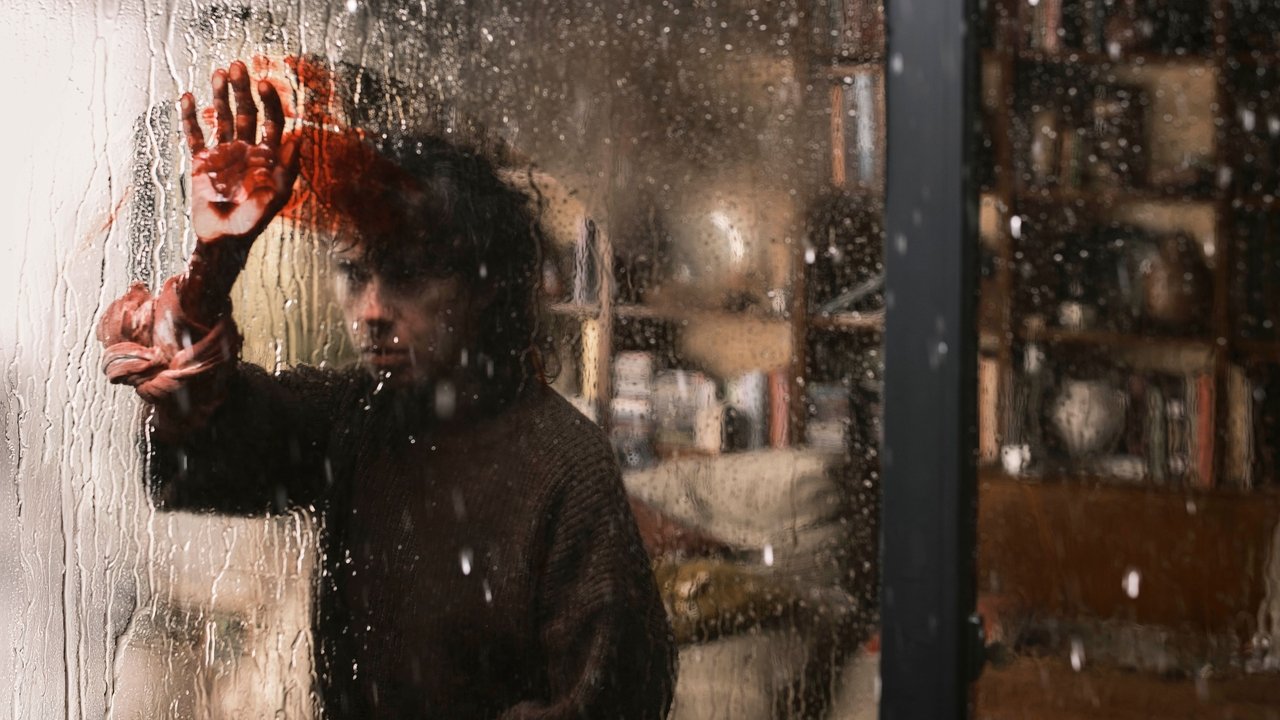
The Philippou brothers are skilled at making horror, but in this film their real weapon is atmosphere. They ration the lurid scenes and instead slowly tighten the unease and silence laid through the house. The camera holds long on the characters’ faces, building horror by letting the audience guess what is happening first, then confirming that the guess was right. The scenes surrounding Oliver are more horrifying through the helplessness of having to watch than through direct violence. Above all, this film wears the outer skin of horror, but its core is a story about how disfigured a human being can become before uncontrollable loss. In never letting go of the weight of that emotion to the end, it has grown a notch deeper than the debut.
Performance — Sally Hawkins, embracing a collapsing motherhood
This film belongs to Sally Hawkins. Her Laura looks tender and fragile, and it is precisely that tenderness that is most frightening. Hawkins shows, convincingly and without exaggeration, how a person devoured by grief comes to believe her own actions are love. The audience finds it hard to hate her, and that makes the film more uncomfortable. Billy Barratt as Andy solidly supports the desperation of a boy trying to protect his sister, and Sora Wong as Piper moves delicately between the anxiety and trust of a visually impaired child. The physical expression of the child actor playing the speechless Oliver also directly holds up the film’s horror.

What the film says — The end of an obsession called love
At the center of Bring Her Back is the desire to undo what cannot be undone. Laura wants to bring her dead daughter back, and for that wish she uses other children as tools. The film does not draw that act as simple evil. Rather, it shows how grief, wearing the face of love, destroys others. The film never looks away, to the end, from what happens when a heart unable to accept loss turns toward the people closest to it. The desperate sentence the title throws out sounds not like comfort but like a warning.
Ratings & reception
Its IMDb score is 7.1 and its Rotten Tomatoes freshness is 89%. Its Metacritic score is 75, drawing broadly favorable reviews. Many felt the Philippou brothers, who drew attention with Talk to Me, did not betray the critics’ expectations, and the response to Sally Hawkins’s performance and the emotional weight stands out in particular. That said, it is also a work that divides opinion due to the intensity of its brutal depictions.
Verdict
Bring Her Back borrows the form of a horror film to draw the darkest mutation of grief. It is less a film that startles you than one that presses heavily on the heart. Some scenes run high enough that it is hard to recommend to just anyone, but the emotional amplitude and the density of the performances are clearly impressive. It is a work in which the Philippou brothers prove the success of their debut was no fluke, and also a place that reconfirms how far an actor like Sally Hawkins can go. Once you watch it through to the ending, the weight of the title has changed completely from where it began. 3.5 stars.
Recommended for
- Those who like horror that presses with atmosphere and emotion over shock
- Those who want to see Sally Hawkins’s performance in depth
- Those who found Talk to Me memorable
Comments