
Burning (2018)
Two and a half hours of questions with no answers
by 10days1movie · Published 2026-08-31
| Type | Movie |
|---|---|
| Director | Lee Chang-dong |
| Cast | Yoo Ah-in, Steven Yeun, Jeon Jong-seo |
| Release | 2018 |
| Genre | Mystery, Drama, Thriller |
| Runtime | 148min |
The source is Haruki Murakami’s short story, but Lee Chang-dong has completely transposed it onto contemporary Korea’s class divide, generational conflict, and youth crisis. The ending stays open and the questions never close. My rating is ★4.0. It doesn’t work for those who want clarity, but for those who enjoy carrying hazy things inside them for a long time, this film doesn’t fade.
What it’s about — Vanished Haemi and Ben’s hobby
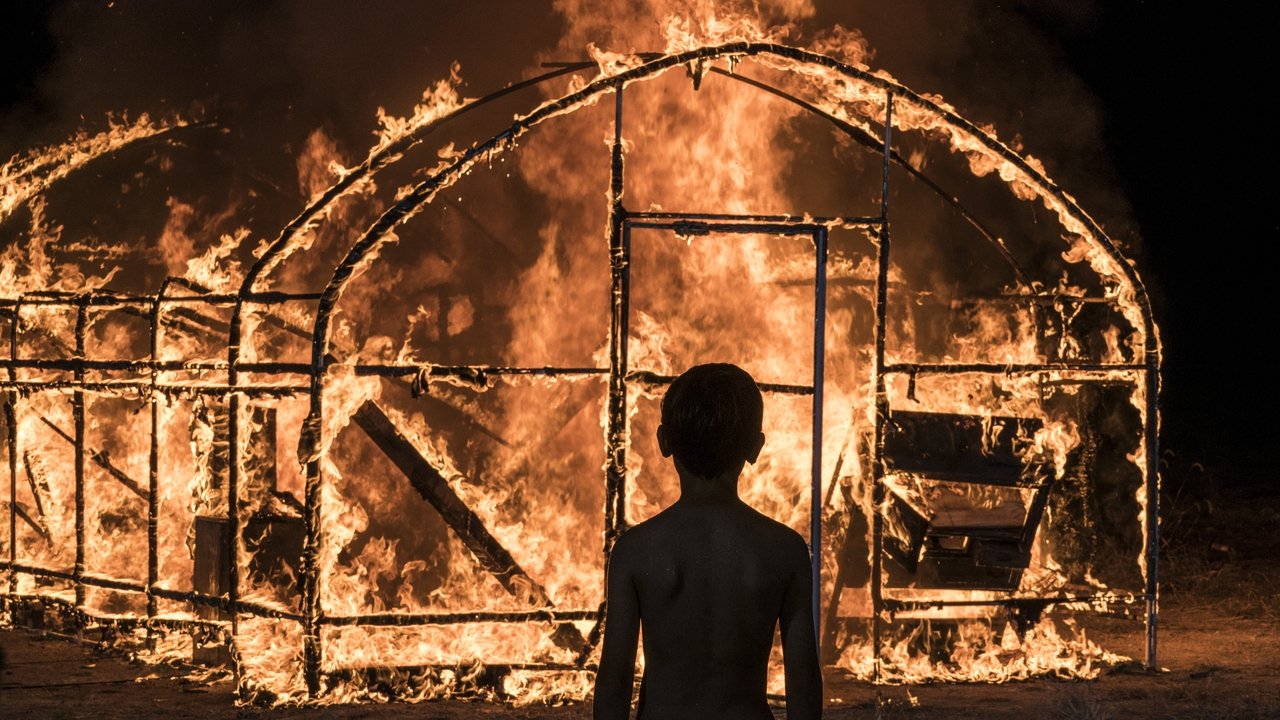
Jongsu (Yoo Ah-in), a young man working part-time delivery jobs while trying to write a novel, is reunited with Haemi (Jeon Jong-seo), a girl he knew in childhood. Haemi introduces Ben (Steven Yeun), a man she met traveling in Africa. Ben is young, wealthy, and at ease — he doesn’t seem to work at anything, yet lives in a high-end apartment and drives an expensive car. One day Ben quietly tells Jongsu that his hobby is burning greenhouses no one notices. And then Haemi disappears.
Direction — Leaving everything ambiguous
For 148 minutes, Lee Chang-dong leaves almost everything ambiguous. He suggests rather than shows directly. Because everything is filtered through Jongsu’s perspective, the audience suspects and is confused alongside him. The scene where Haemi dances at sunset is the film’s heartbeat — a scene where the camera captures everything while explaining nothing. The ambiguity this film employs is not accidental. Murakami’s source material itself begins like a detective story and then withholds an answer; Lee Chang-dong fully transplants that structure into contemporary Korea while placing the questions of class and gender more forcefully to the fore. The scene where Jongsu’s battered truck and Ben’s Porsche are placed in the same frame says more than language could.
Performance — Steven Yeun, more threatening for being harmless
Steven Yeun’s Ben is the most chilling presence in this film. Always smiling, always kind, apparently harmless — and for that reason all the more threatening. It is hard to believe that an American actor could play this complex character so naturally in Korean. Yoo Ah-in plays the passive, directionless Jongsu — typically a difficult kind of character to make convincing, the person who “does nothing” — with conviction. Jeon Jong-seo appears only briefly but carries both Haemi’s emptiness and her longing.

What the film says — Same generation, different worlds of class
At the center of Burning is class. Ben and Jongsu are the same generation but inhabit entirely different worlds. Ben is bored with what he has; Jongsu craves what he doesn’t. Haemi disappears somewhere between them. Ben’s hobby of burning greenhouses can be read as an allegory for the impulse to eliminate the unnecessary, the invisible, the things without presence. What if that directed itself toward a person? The film does not answer that question directly.
Ratings & reception
IMDb score is 7.4, and Rotten Tomatoes freshness is 95%. The film won the FIPRESCI International Critics’ Prize at Cannes, and was selected as Korea’s entry for the Academy Award for Best International Feature Film. It maintains a TMDB score around 7.4 and has established itself as one of director Lee Chang-dong’s defining works worldwide.

What doesn’t work
Some viewers will find 148 minutes long relative to this story’s density. In particular the first half before Haemi disappears moves very slowly. Ending without clear answers is unsatisfying for some audiences. This film suits those who enjoy the process more than the destination.
Verdict
Lee Chang-dong knows how to explode Korea’s class divisions and youth’s rage this quietly. Burning is more lastingly remembered precisely because that explosion never visibly occurs. This was Lee’s first film after Poetry (2010), and the eight years between them compressed how much Korean society had changed — juxtaposing Ben’s lifestyle and Jongsu’s situation to show that transformation. Steven Yeun’s role here became the catalyst for recognition in both the United States and Korea, and led to his Academy Award nomination for Best Actor for Minari (2020). ★4.0.
Recommended for
- Those who enjoy films with ambiguous, open endings
- Those who love the atmosphere of Haruki Murakami’s fiction
- Those who want to see class conflict and generational division in Korea through film
Comments