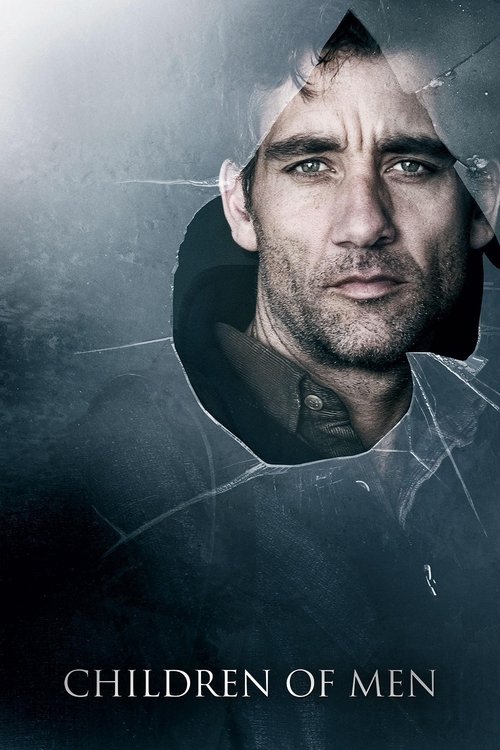
Children of Men (2006)
Protecting a child in a world without hope
by 10days1movie · Published 2026-08-28
| Type | Movie |
|---|---|
| Director | Alfonso Cuarón |
| Cast | Clive Owen, Julianne Moore, Chiwetel Ejiofor, Michael Caine |
| Release | 2006 |
| Genre | Sci-Fi, Thriller, Action |
| Runtime | 114min |
It is 2027 and humanity has been unable to have children for eighteen years. The last person born has just died. That premise alone is heavy enough. And yet Alfonso Cuarón made this world of the end of days feel not like fantasy but like a news bulletin. My rating is ★4.0. Close to two decades later, watching it now actually feels closer, not more distant.
What it’s about — A world where no child is born
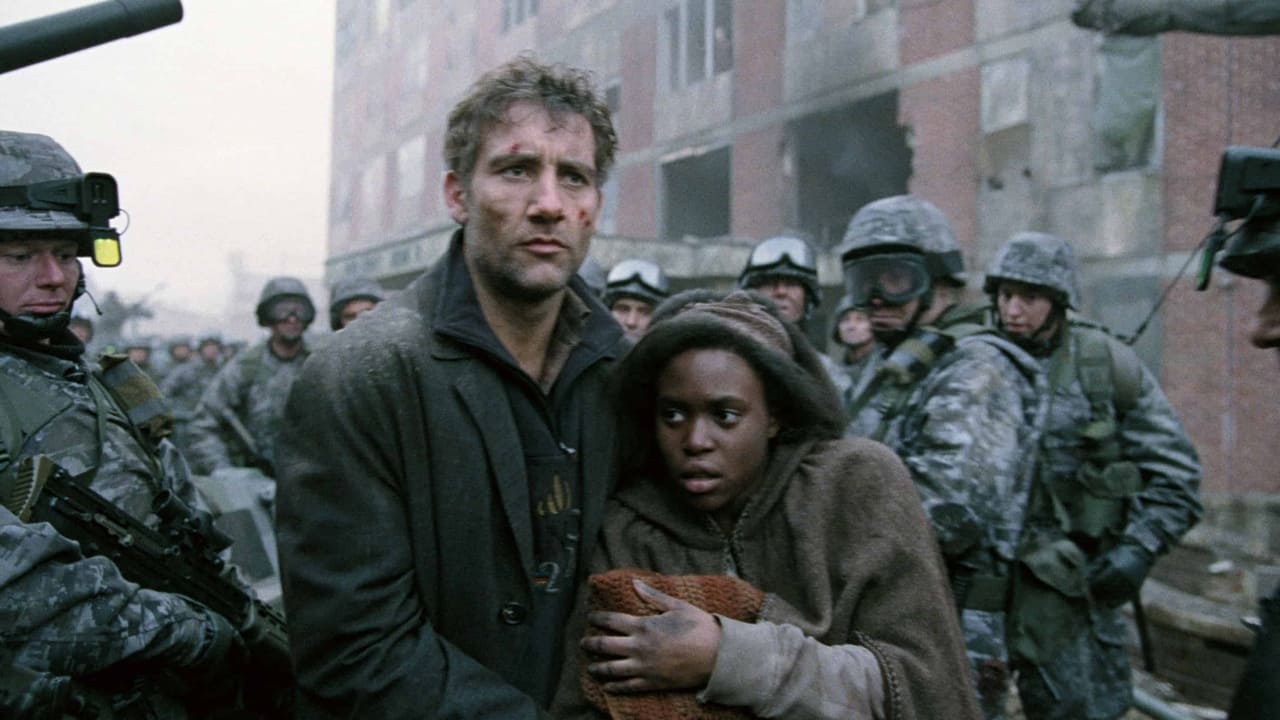
British society has completely lost hope. The government locks up immigrants in detention centers, people endure reality on drugs, and rebel forces control the streets. In this landscape, former activist Theo (Clive Owen) is assigned the mission of safely escorting Kee (Clare-Hope Ashitey), a refugee woman who has miraculously become pregnant. Her baby is humanity’s first newborn in years, and every force in the world wants the child. Theo doesn’t even fire a gun. The 2027 Britain this film depicts feels more like an extension of the present than digital technology or sci-fi elements. News bulletins, advertising boards, refugees in the streets — everything looks like the current world pushed to a slightly more extreme point. That realist approach is the film’s most powerful weapon.
Direction — The power of the unbroken long take
This film is remembered for its direction. Cuarón and cinematographer Emmanuel Lubezki created long-take battle scenes running for tens of minutes. Blood splashes onto the camera lens and it isn’t wiped away — it just keeps following. Rather than creating tension through editing, they push the audience into the situation itself by cutting nothing. Thanks to this, the battle scenes feel like the most real things I’ve seen in a war film.
Performance — The weight of Theo, who is no hero
Clive Owen’s Theo is not a hero. He is exhausted, powerless, and has been living with deliberate numbness. The process of a person like that accepting responsibility because he has no choice emerges naturally from the performance. Michael Caine appears briefly but conveys Theo’s previous life and human warmth. Julianne Moore comes in an important early role before quickly disappearing, leaving Owen to carry the journey alone.

What the film says — A hope that isn’t sweet
What this film says is “hope” — but the way it says it is not sweet at all. The scene where a single newborn’s cry stops the gunfire is one of the enduring moments of cinema history. Cuarón does not heavily romanticize that hope. The film also shows directly that guns pause only briefly before starting again. The themes the film handles — refugee reception, state violence, the extreme methods desperate people choose — feel closer to the 2020s than to 2006.
Ratings & reception
IMDb score is 7.9, consistently high. Rotten Tomatoes freshness is 92%. Praised upon release, but ongoing re-evaluation has made it now cited as one of the greatest sci-fi films of the 2000s. It received three Academy Award nominations including Best Cinematography and Best Editing, but won none. TMDB score is 7.6.
What doesn’t work
The world-building is so dense that some context passes without explanation. First-time viewers may need time to orient themselves. The ending also concludes in an open way — that openness can be moving, but it may draw complaints from viewers who want narrative closure.
Verdict
Both technically and thematically, this is a film hard to find fault with. The cinematography and long-take direction are remarkable even now. The way it speaks about hope while looking directly at the world’s cruelty is rare in its honesty. The moment when the guns briefly stop is the film’s entire heart — everything that came before builds toward that single scene. The film is based on P.D. James’s source novel, but Cuarón created an independent visual language. Emmanuel Lubezki’s cinematography brought him worldwide attention with this film, and he would subsequently win the Academy Award for Best Cinematography for Birdman and The Revenant. A film that stays in the memory for a long time. ★4.0.
Recommended for
- Those who want dystopian sci-fi with a realistic texture rather than fantasy
- Those with an interest in film direction, particularly long-takes and cinematography
- Fans of films set in worlds after the end of the world
Comments