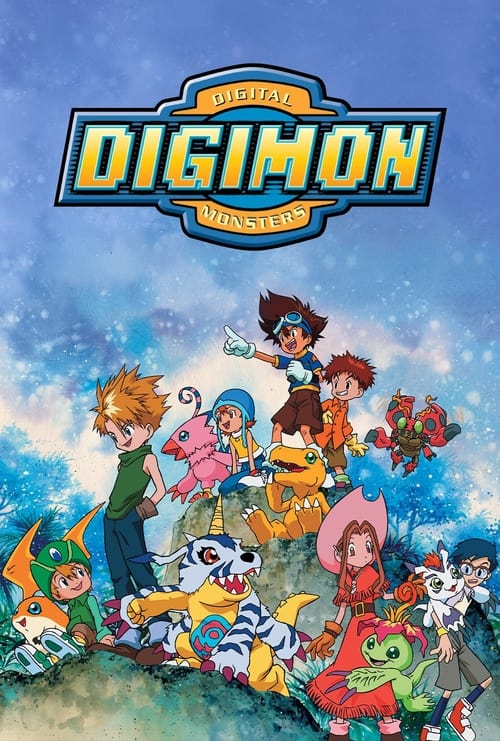
Digimon Adventure (1999)
An Adventure of Growing Up with a Partner
by 10days1movie · Published 2026-06-08
| Type | Series |
|---|---|
| Director | Shinji Hirota |
| Cast | Reiko Kiuchi, Megumi Urawa, Rio Natsuki, Hiroaki Hirata, Junko Noda |
| Release | 1999 |
| Genre | Animation, Action, Adventure, Fantasy |
| Runtime | 22min |
Seven children suddenly swept from summer camp into the Digital World. Each finds a partner Digimon, and together they fight and grow. Digimon Adventure, a 54-episode Toei Animation series broadcast from March 1999 to March 2000, was directed by Shinji Hirota. My rating is ★5.0. For its generation, this was not simply an anime — it became a memory of growing up.
What it’s about — seven children’s adventure in the Digital World
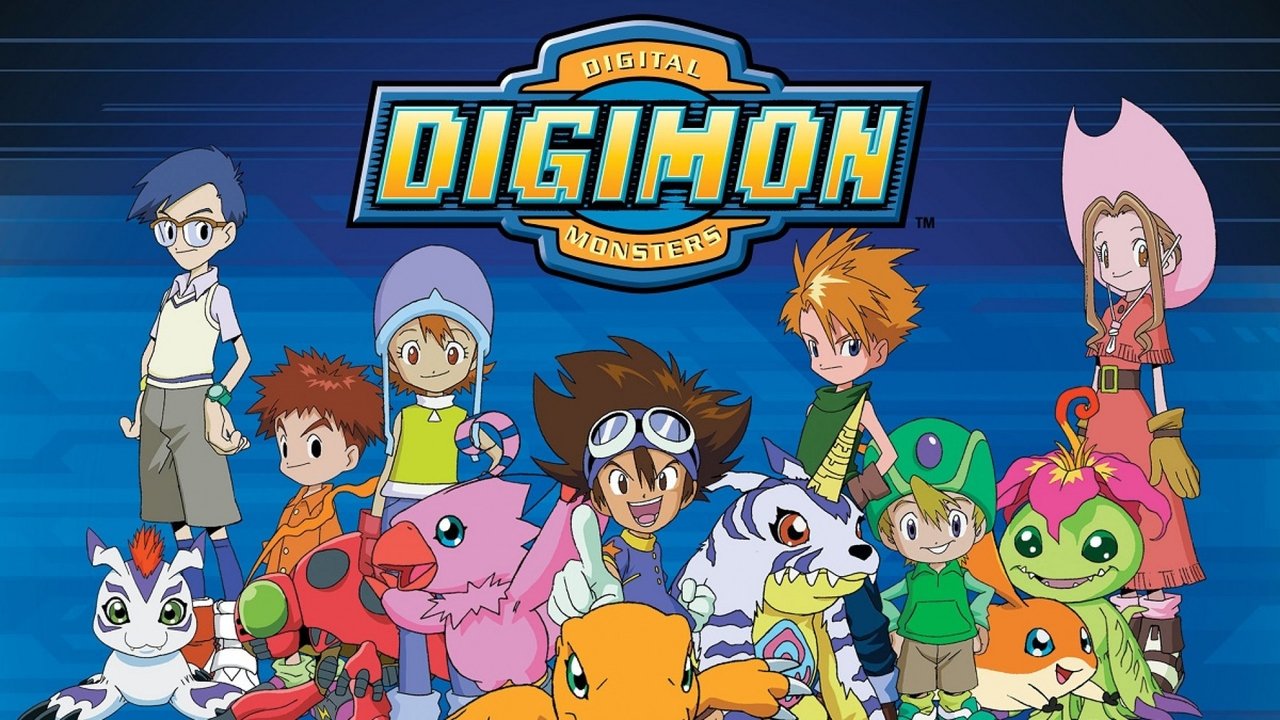
The story centres on protagonist Tai Kamiya and his partner Agumon, as seven children and their Digimon fight their way through the Digital World. Each child receives a different crest and tag — Courage, Friendship, Love, Sincerity, Knowledge, Hope, and Light — and the respective partner Digimon evolve in accordance with those traits. Early on the series follows an episodic pattern of defeating enemy Digimon, but from the midpoint onward the story begins converging toward a single overarching goal.
What sets this series apart from straightforward battle anime is the structure in which each child’s individual flaws and growth are continuously pushed forward by the story. Tai learns the responsibility of leadership; Yamato lets go of his possessiveness over his brother. Mimi breaks free of selfishness; Joe overcomes his indecisiveness. The battles in each episode serve as catalysts for this growth narrative.
Direction — the evolution sequences and Koji Wada’s music
Shinji Hirota’s direction strikes a good balance between per-episode quality and overall flow. The Digital World’s setting is internally consistent, and the emotional changes in the characters are structured to accumulate naturally. The evolution sequences are directed so that each appearance carries a near-ritualistic weight, and the Ultimate evolution scenes left a powerful impression on young viewers at the time.
Music is also a key element of this series. The battle background music and theme songs composed by Koji Wada are at the core of Digimon Adventure’s identity. The theme song in the Korean dubbed version was equally deeply imprinted on viewers of that generation.
What the work says — real-world flaws and farewell to a partner
The reason Digimon Adventure is remembered across time is that the problems the children face are grounded in reality. Parents’ divorce, sibling conflict, fear of responsibility, saving face in front of friends — these subjects are dealt with concretely against the fantasy backdrop of the Digital World. The partner Digimon relationships function not merely as battle companions but as mirrors of each character’s own virtues.
The ending is a farewell. The Digital World and the real world must remain separated, and the children must part from their partner Digimon. This conclusion touched young viewers more deeply than expected, and it remains the scene that causes many to think back on this series in adulthood.
Ratings & reception
On IMDb it carries a rating of 7.4 based on around 26,000 votes. The raw numbers appear average, but this series holds a generational resonance that numbers cannot capture. Together with Pokémon, it was considered one of the two defining anime of the late 1990s, and it still enjoys deep affection among fans of that era.
Verdict
Watching Digimon Adventure as an adult, you discover the storytelling is better structured than you might expect. Not merely because of childhood memories — the growth narrative of each individual character is genuinely well-crafted. The scope of the adventure and its emotional range exceed what was expected of children’s anime at the time. There is reason for that generation to revisit it, and there is enough in this series for those unfamiliar to understand why it is special.
Recommended for
- Those who watched this series as children in the late 1990s
- Fans of adventure anime with a solidly crafted growth narrative
- Those who connect with the emotional thread of bonds and farewell between partners
- Those interested in classic anime from the same era as Pokémon
Comments