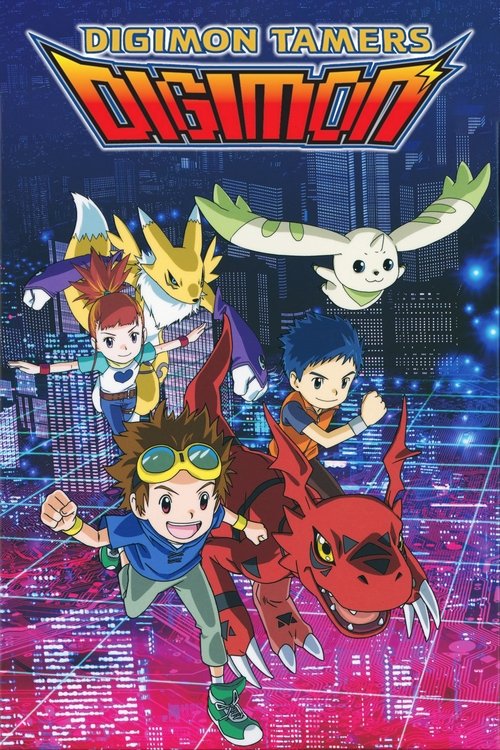
Digimon Tamers (2001)
The Series That Captured Childhood Farewells in Anime
by 10days1movie · Published 2026-07-29
| Type | Series |
|---|---|
| Director | Yukio Kaizawa |
| Cast | Takato Matsuda (voiced by Reiko Kiuchi), Lee Jenrya (voiced by Mayumi Yamaguchi), Makino Ruki (voiced by Fumiko Orikasa) |
| Release | 2001 |
| Genre | Animation, Action, Science Fiction |
| Runtime | 25min |
Digimon Tamers is remembered as the darkest series in the Digimon franchise. Unlike Season 1 (Adventure) and Season 2 (Zero Two/02), it erases the concept of the Chosen Children and starts fresh. In this world, Digimon are nothing more than card game characters, and the three protagonists are ordinary young people who happen to become partners with real Digimon. My rating is ★4.0. Both the vibrant energy of the first half and the heavy farewell of the second half remain in memory together.
What it’s about — a hand-drawn Digimon comes to life
Takato Matsuda is a boy obsessed with Digimon. One day, a Digimon he drew himself — Guilmon — comes to life, and the story begins. Lee Jenrya and Makino Ruki each connect with their partner Digimon in their own way, and the three confront wild Digimon invading the real world. The series wraps up in 51 episodes. Director Yukio Kaizawa helmed the production, which began airing in April 2001, with screenwriter Chiaki Konaka tackling considerably more mature themes than previous seasons.
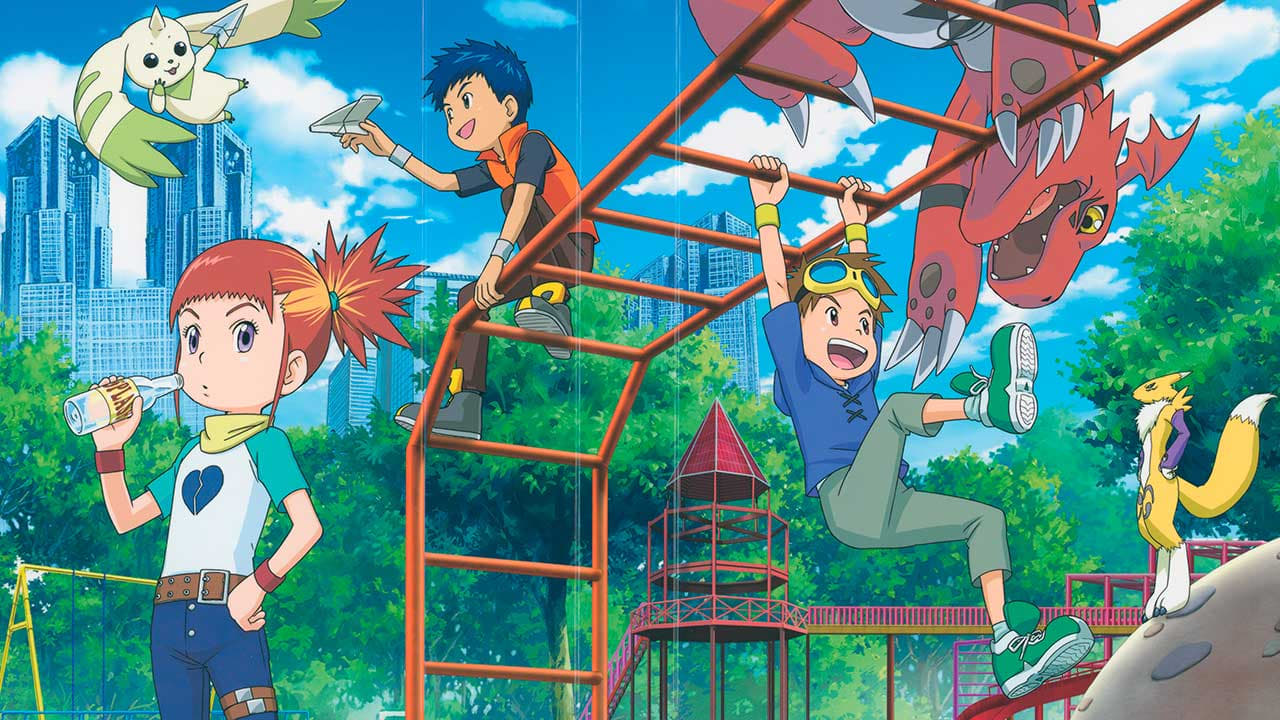
Direction — the increasingly dark gloom of the D-Reaper
What makes this series special is its atmosphere. The first half is set against the urban backdrop of the real world, depicting day-to-day life with the Digimon, and the unique card-slash battle system feels fresh. From the midpoint, the reasons Digimon are disappearing and the system behind it are revealed, and the tone shifts. The later Deva arc and the battle against the D-Reaper carry a level of gloom and urgency that is hard to call children’s anime. The colour palette grows progressively darker, and the background music is designed to ramp tension to its absolute limit. The directorial consistency is excellent, and the structure of each episode goes beyond a simple lineup of battles to build up the series’ world.
Performance & characters — the three tamers’ distinct textures
The voice cast plays a major role. Reiko Kiuchi, voicing Takato, covers a wide emotional range from boyish excitement to the grief of the later episodes that is difficult to bear. Fumiko Orikasa’s Ruki starts cold and gradually opens up in a convincing arc. Each of the three protagonists has a distinct personality and background, so each relationship with their Digimon partner is portrayed differently. This variety gives the narrative three-dimensionality.

What the work says — farewell to what cannot be held
The central theme of Digimon Tamers is separation. The physical impossibility of digital world beings and real-world humans coexisting is what creates the tragedy in this series. Instead of the victory and return common in coming-of-age anime, this series asks: when you cannot hold on to something precious, what do you do? It is an unusually weighty question for a children’s anime. The way it tells a story of friendship, growth, and loss simultaneously through the partner Digimon relationships is what sets this series apart from simple battle shows.
Ratings & reception
TMDB score: 8.5.6 — it is considered one of the most highly regarded seasons in the Digimon franchise. This series is frequently cited in fan communities internationally as having the most shocking ending of their childhoods. It is a case where fan reappraisal exceeds official critical reception, with many responses noting that watching as an adult makes the depth of the themes even clearer.
Weaknesses
Some episodes in the first half display a filler-like structure. The pattern of wild Digimon appearing and being defeated repeats across certain stretches, which can make the middle portion feel slow. The sheer intensity of the D-Reaper arc in the final stretch also makes the middle section feel comparatively unremarkable. Being a 2001 production, animation quality has limitations, and many battle scenes rely on recycled cuts.
Verdict
Digimon Tamers is a series that was too sad to watch as a child, and that you understand why it stayed with you only when you grow up. Going well beyond a simple battle anime, it depicts the connection between digital beings and humans — and its end — with quiet composure. My rating is ★4.0. Across the entire Digimon franchise, this is the season with the clearest thematic consciousness.
Recommended for
- Former childhood Digimon viewers who want to revisit the series
- Those who want children’s anime that nonetheless tackles weighty themes
- Those who enjoy coming-of-age narratives dealing with friendship and loss
Comments