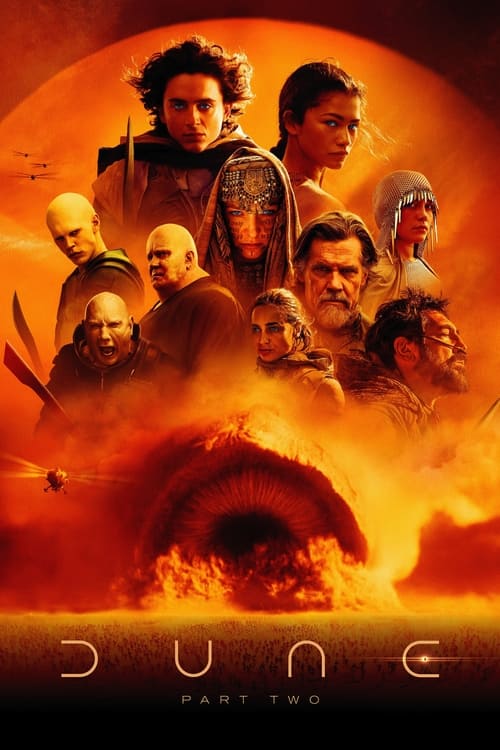
Dune: Part Two (2024)
When Prophecy Becomes Power, the Saviour Disappears
by 10days1movie · Published 2026-08-12
| Type | Movie |
|---|---|
| Director | Denis Villeneuve |
| Cast | Timothée Chalamet, Zendaya, Rebecca Ferguson, Javier Bardem, Josh Brolin |
| Release | 2024 |
| Genre | Science Fiction, Adventure |
| Runtime | 167min |
If Part 1 was the first chapter of a vast world, Part 2 shows how that world operates — in the most unsparing way possible. Denis Villeneuve’s Dune: Part Two is faster and darker than its predecessor, pushing the story of Paul Atreides in an increasingly complex direction. My rating is ★4.0.
What it’s about — Paul becoming the prophesied saviour
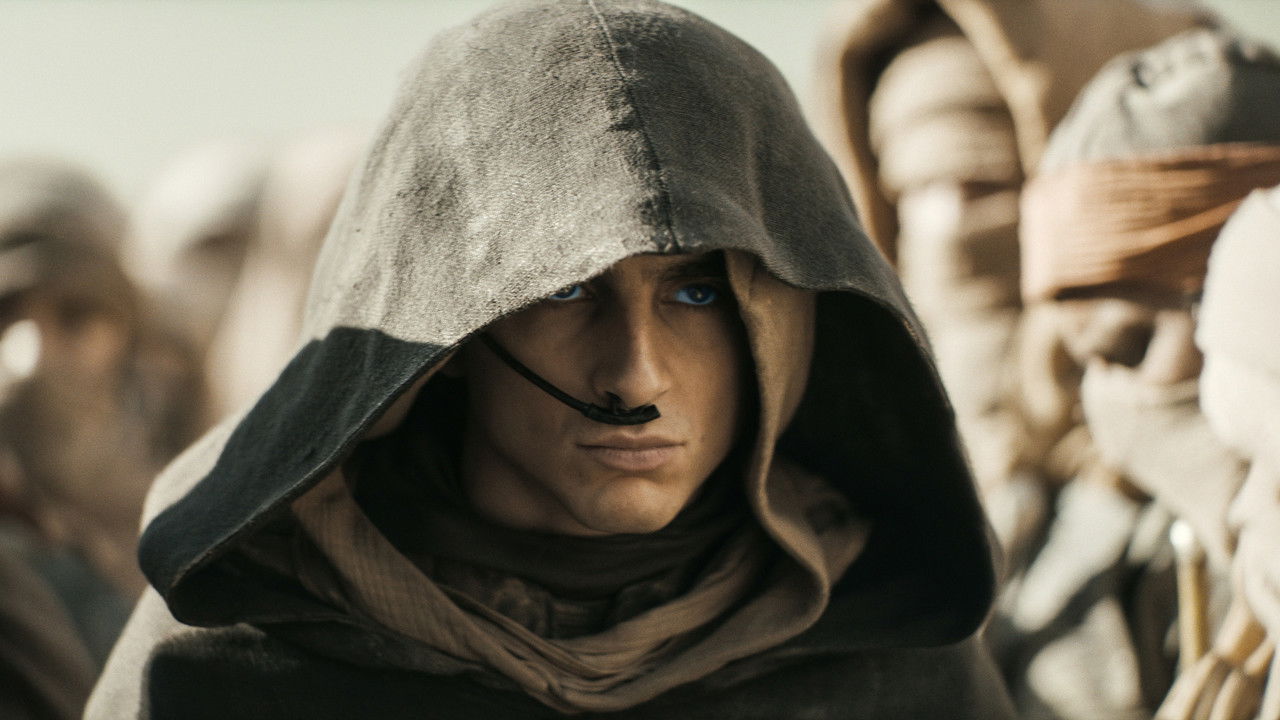
Paul (Timothée Chalamet), now living among the Fremen, begins to be accepted by them as the prophesied messiah. Having at first refused that role, Paul ultimately embraces the narrative, and the film moves forward with a logic that is terrifying in its coherence. Chani (Zendaya) is the only character who continues to doubt the prophecy’s legitimacy. Her scepticism serves as the film’s moral anchor throughout. The war against the Harkonnens, the arrival of Princess Irulan (Florence Pugh), and the fearsome villain Feyd-Rautha (Austin Butler) all drive the story upward. The arena showdown between Feyd-Rautha and Paul is one of the finest action sequences in the entire series.
Direction — the monochrome arena sequence
In this film Villeneuve achieves an even higher balance between visual spectacle and political tension. The desert planet’s battle sequences are overwhelming on the cinema screen, as if designed for IMAX. The arena scene set in the black desert in particular is among the most intense sequences in the entire series — its monochrome palette and uncanny spatial design amplify the visual shock. The large-scale battle scenes using the desert are far more direct and swift than those in Part 1. Hans Zimmer’s music reinforces all of it, expanding the sonic world of Part 1 into something even more vast.
Performance — the doubting Chani and the menacing Feyd
Timothée Chalamet portrays Paul’s darkening inner transformation with far greater conviction than in Part 1. Zendaya’s Chani emerges as the most conscientious character in the film, and it is notable that her arc diverges from the original novel. Austin Butler’s Feyd-Rautha is both aesthetically striking and genuinely threatening — a villain built through distinctive appearance and exaggerated physicality that leaves a visual memory. Florence Pugh’s Irulan, despite limited screen time, raises expectations for the next film.

What the film says — prophecy as a tool, a critique of the messiah
The core theme of Part 2 is the relationship between prophecy and power. Prophecy is not truth — it is a tool. Paul does not become the messiah because he was chosen; he becomes the messiah because that story is politically necessary. Villeneuve delivers this message from Frank Herbert’s original far more clearly than in Part 1. The film shows how blindly those who believe in the saviour narrative can follow, and how cold those who exploit it can be.
Ratings & reception
TMDB score: 8.1. IMDb score: 8.4. Rotten Tomatoes freshness: 92%. It was named the highest-rated sci-fi film of 2024 and earned higher box office returns than its predecessor.
Weaknesses
With the source novel’s second half compressed into 167 minutes, some character arcs were cut. The film is difficult to enjoy without having seen Part 1. Chani’s character development may feel unfamiliar to readers of the original. The ending again invites the audience to wait for further story.
Verdict
Dune: Part Two honours the promises made by Part 1. It is faster, more complex, and surpasses Part 1 both visually and narratively. The critique of messianic mythology that Herbert’s original encodes has never been realised in film as clearly as this. The dark side of Paul that was cautiously visible in Part 1 comes fully to the surface here, making clear that this series is not a simple heroic narrative. The clever device of using Chani’s perspective to distance the audience from Paul is the key implementation in film language of the source material’s thematic core.
Recommended for
- Those who have seen Dune Part 1
- Those who enjoy films that combine sci-fi epic and political drama
- Those seeking an IMAX cinema experience
Comments