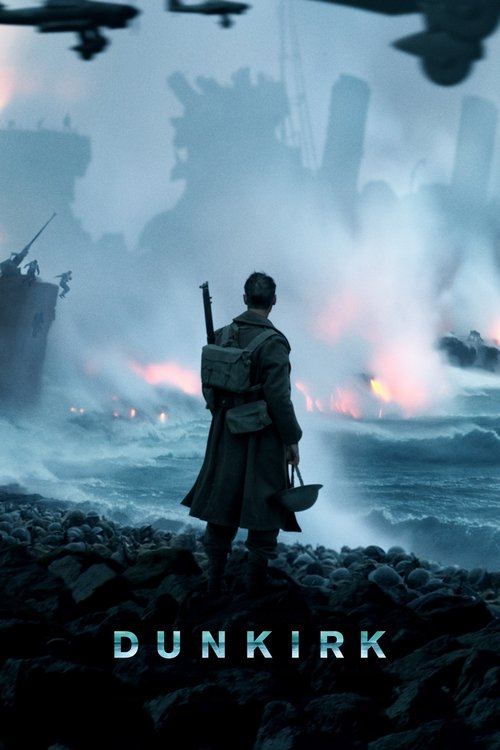
Dunkirk (2017)
Surviving Is Victory in Itself
by 10days1movie · Published 2026-06-17
| Type | Movie |
|---|---|
| Director | Christopher Nolan |
| Cast | Fionn Whitehead, Tom Hardy, Mark Rylance, Cillian Murphy, Kenneth Branagh |
| Release | 2017 |
| Genre | War, Action, Drama |
| Runtime | 107min |
How often have you watched a war film and felt the tension drain from your body when it ended? Dunkirk holds the audience coiled for all 107 minutes and only lets them breathe when it is over. This film about the Allied evacuation from Dunkirk beach in France in 1940 is the most compressed expression of all the directorial skill Christopher Nolan has accumulated. My rating is ★4.5. The extreme tension a war film can deliver is right here.
What it’s about — an evacuation split across three perspectives
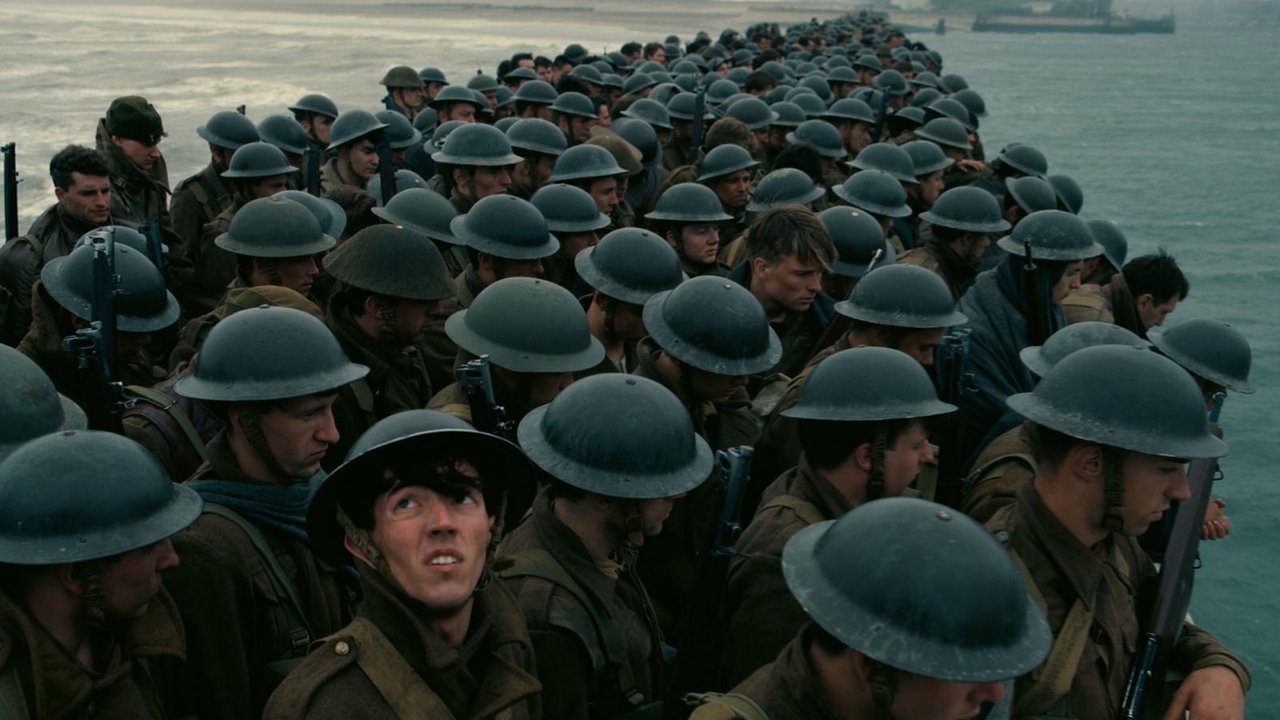
May 1940. Four hundred thousand British and French Allied soldiers are surrounded by German forces and stranded on Dunkirk beach and its mole. The film splits this crisis into three perspectives: the perspective of soldiers on the beach trying to survive; the perspective of a civilian yacht skipper who sails out to help; and the perspective of a fighter pilot engaging enemy aircraft from the air. The three stories proceed on different time scales and converge at the end. The focus on the historical event itself rather than fictionalised individuals is one of the film’s defining characteristics.
Direction — discarding exposition and weaving three timelines
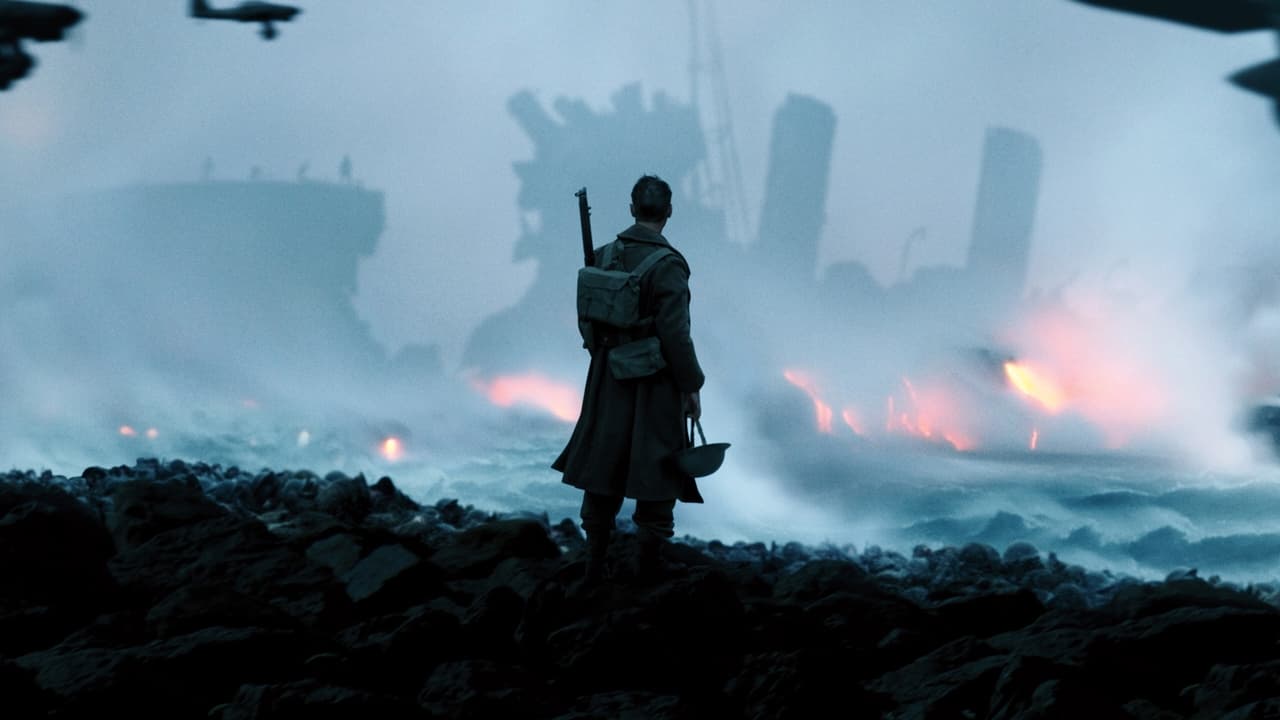
Nolan stripped away nearly all explanation in this film. There are no title cards establishing the background, no scenes where characters lay out the situation in dialogue. The audience is thrown onto the beach without knowing who the protagonist is or where he came from. This choice makes the film far more urgent. Hans Zimmer’s music presses relentlessly with a ticking-clock pattern that never lets up. The footage shot on IMAX film conveys the vastness of sky and sea with tangible immediacy. The aerial combat sequences in particular were filmed using actual Spitfire aircraft with no CGI, and the sense of speed and air resistance transmitted through the screen is overwhelming.
The three-timeline structure is disorienting at first, but as the film moves into its second half, the moment when each story locks into place amplifies the emotion explosively. This editing strategy is not mere technique but a structural expression of war’s character — in which terror and hope coexist simultaneously.
Performance — fear conveyed through the eyes without dialogue
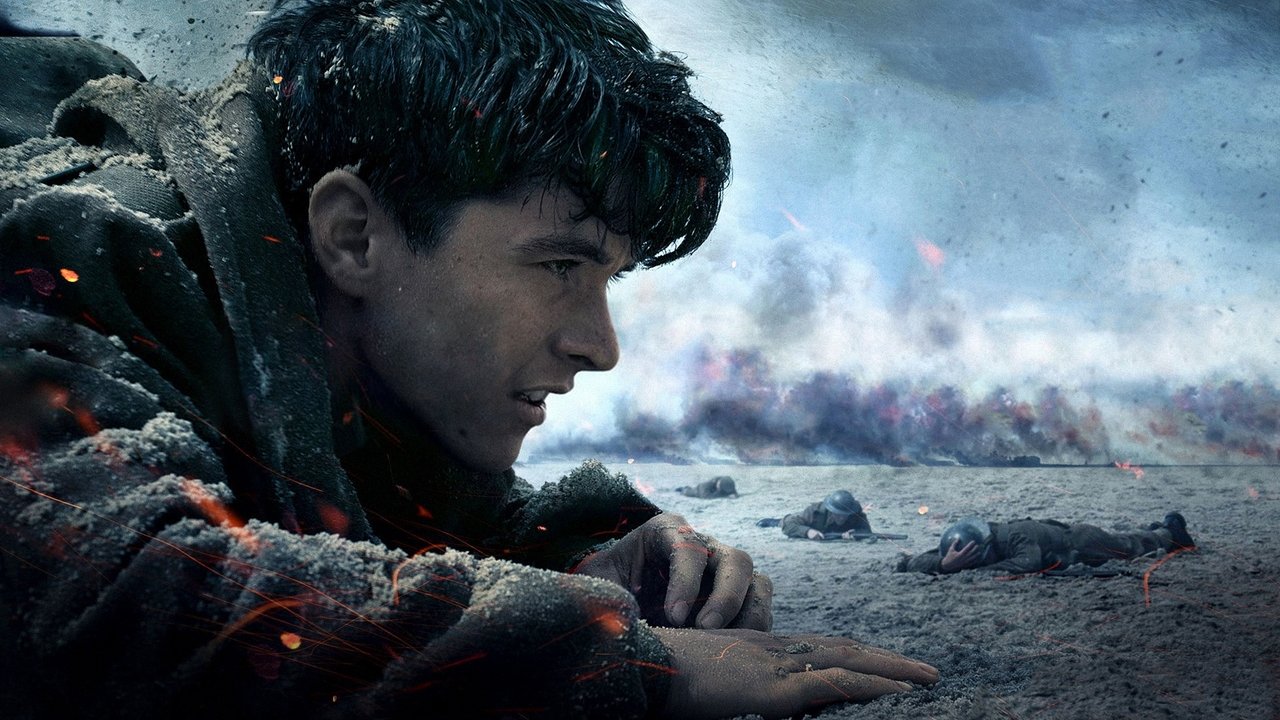
Fionn Whitehead’s soldier Tommy is almost wordless. He conveys fear, instinct, and the will to survive through eyes and expression alone. Mark Rylance shows a quiet, solid weight as a civilian captain. Tom Hardy plays fighter pilot Farrier with his helmet and oxygen mask covering nearly his entire face. His only instrument is his eyes, and within that constraint he simultaneously expresses resolve and exhaustion. Cillian Murphy’s character — a shell-shocked survivor rescued from the sea — provides a brief but impressionistic glimpse of post-traumatic stress.
What the film says — surviving is victory in itself
The Dunkirk evacuation was militarily all but a retreat. Yet in Britain it is remembered as a collective miracle of survival. The film recreates that sensation. It places at its centre not heroic combat or a decisive victory, but simply the fact of having survived and boarded the ships home. The closing scene in which an evacuated soldier reads Churchill’s speech from a newspaper compresses the message the film wants to deliver. Surviving is itself the act of fighting.
The film neither glorifies nor romanticises war. Death arrives suddenly and without meaning; survival is close to luck. The fear the film generates comes from never showing the enemy directly. The German forces are faceless to the end. Bullets fly and bombs fall, but the enemy is never seen. That quality of fear is the source of the tension that dominates the entire film.
Ratings & reception
IMDb score: 7.8, holding steady. Rotten Tomatoes freshness: 92%, with strong critical support. At the Academy Awards it won three categories: Best Film Editing, Best Sound Editing, and Best Sound Mixing. The Editing win in particular was official recognition of the structural challenge of managing three simultaneous timelines — one of the most experimental films in Nolan’s filmography.
Weaknesses
The near-absence of character is simultaneously the film’s strength and its weakness. Many viewers find it difficult to form emotional attachments to the characters. Anyone looking for the character drama, camaraderie, and sacrifice narrative typical of a traditional war film will be disappointed here. The multi-timeline structure is also confusing early on, and the pattern only becomes visible once the film has progressed somewhat. The 107-minute runtime raises the intensity of the experience but is also the result of choosing intensity over emotional depth.
Verdict
Dunkirk borrows the form of a war film and makes the experience itself its objective. Sensation over story, situation over character. That choice could have been a liability, but here it is a well-executed decision. Editing, sound, and cinematography are all unified toward a single purpose, and that purpose is to drag the audience onto the beach of 1940. The film faithfully accomplishes that mission. ★4.5.
Recommended for
- Those who want an immersive experience instead of a traditional war film
- Fans of Christopher Nolan’s directorial style
- Those who have the opportunity to watch on IMAX or a large screen
Comments