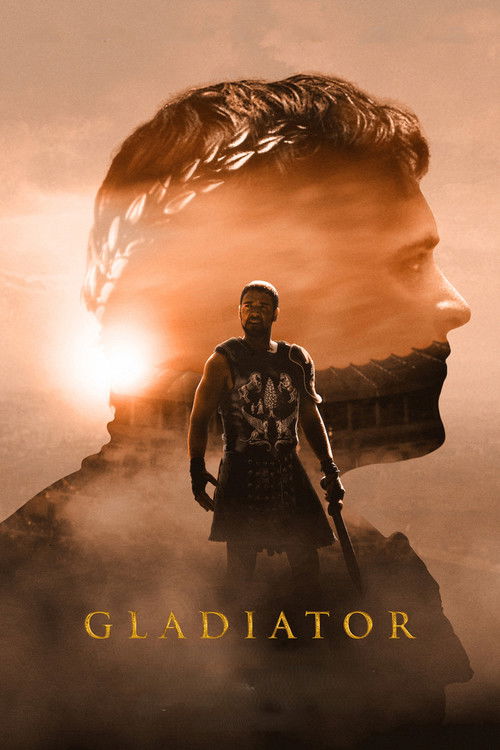
Gladiator (2000)
He Fought Not for Revenge, but to Go Home
by 10days1movie · Published 2026-07-01
| Type | Movie |
|---|---|
| Director | Ridley Scott |
| Cast | Russell Crowe, Joaquin Phoenix, Connie Nielsen |
| Release | 2000 |
| Genre | Action, Drama, Adventure |
| Runtime | 154min |
The opening hits hard within the first ten minutes. The battle against the Germanic tribes, the field alive with flaming arrows, Maximus’s army breaking through the enemy line — the fact that any of this was possible in the year 2000 still astonishes. Gladiator was made at the height of Ridley Scott’s powers, and those powers are fully on display. My rating is ★4.5. It is a rare kind of epic where real human drama lives inside the spectacle.
What it’s about — Maximus reduced to a slave gladiator
Emperor Marcus Aurelius, near death, plans to hand power to Maximus (Russell Crowe), the general he trusts. The emperor’s son Commodus (Joaquin Phoenix) discovers the plan and kills his father, then has Maximus’s family slaughtered. Maximus survives the assassination attempt, is sold into slavery, and becomes a gladiator. His aim is revenge against Commodus — but as the story unfolds, his reasons for fighting shift into something beyond revenge.
Direction — the violence of the Colosseum against the wheat fields
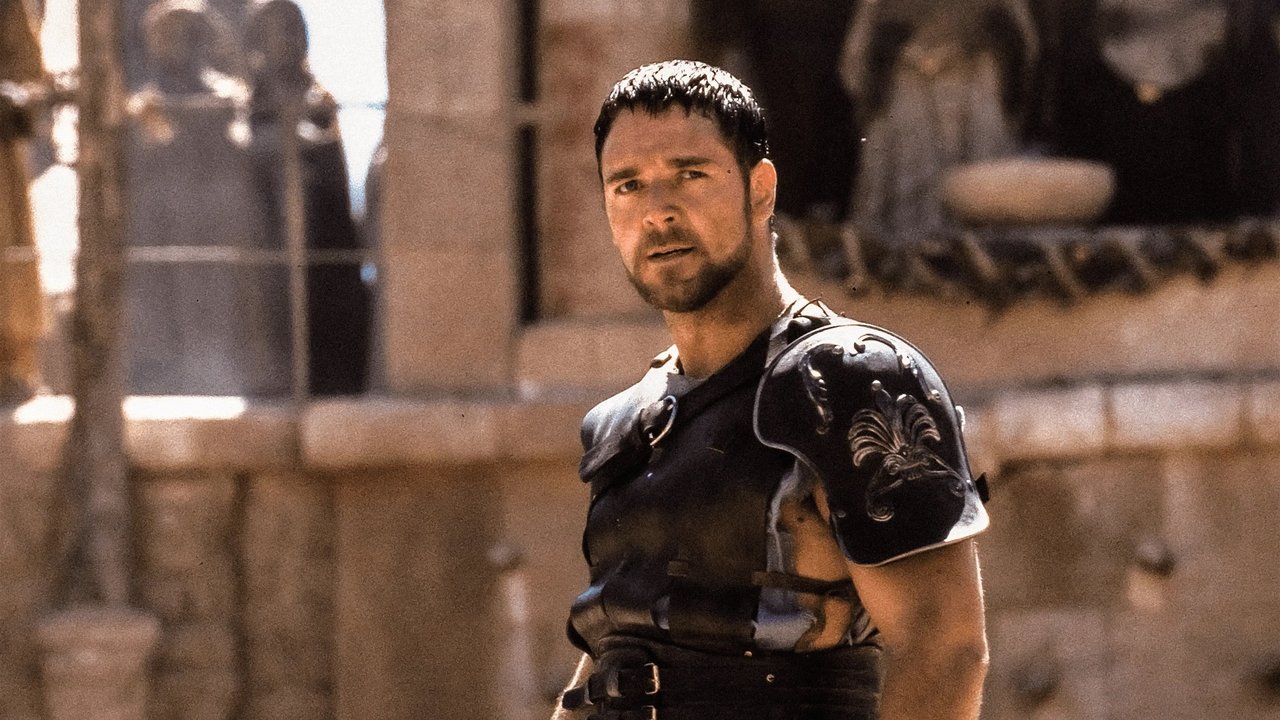
Ridley Scott’s visual command turns the Colosseum and the gladiatorial games into something beyond mere spectacle. The camera chases the chaos of crowds, blood, sand, chariots, and beasts in a way that pulls the viewer into the arena. At the same time, quieter scenes of Maximus longing for his dead family — dreams of walking through golden wheat fields — counterbalance the spectacle. Hans Zimmer’s score carries at least half the film’s emotional weight.
Performance — Crowe’s Maximus and Phoenix’s Commodus
Russell Crowe won the Academy Award for Best Actor for this role. Maximus is not a simple hero — he is exhausted, grief-stricken, barely wanting to live but unable to stop. Crowe puts that weight into his body. Joaquin Phoenix’s Commodus is the film’s greatest discovery. Nursing the wound of a father who never loved him, channelling it into a hunger for power — this villain, simultaneously weak and dangerous, generates the film’s real tension.
What the film says — not revenge, but the return home
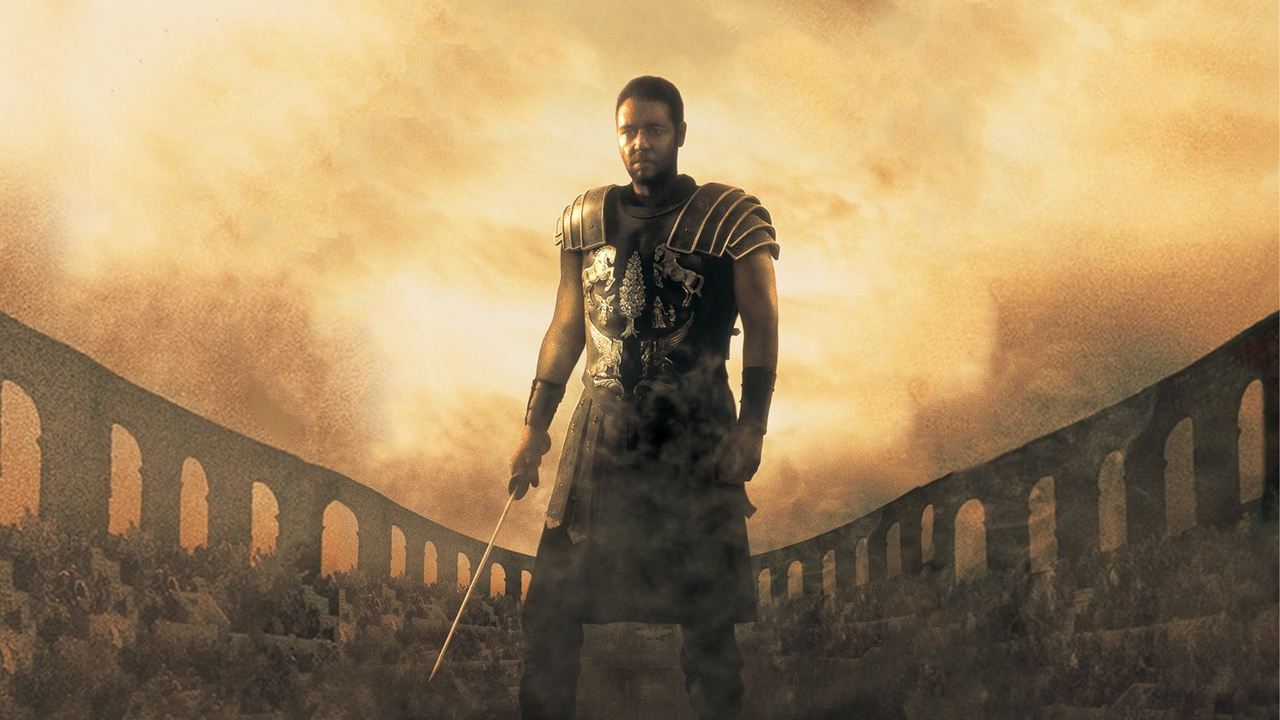
Gladiator endures because it places a story of homecoming inside the frame of a revenge epic. Maximus wants revenge, but what he truly wants is home — the home where his wife and children wait for him in the golden fields. That the place he finally reaches at the end is not that home in reality but its dream equivalent is what turns the whole film from epic into elegy.
Ratings & reception
TMDB score is 8.2. IMDb is 8.5, Rotten Tomatoes freshness 78%. The film won five Academy Awards, including Best Picture and Best Actor for Russell Crowe. It grossed $460 million worldwide, making it one of the biggest hits of its year and briefly reviving the ancient-world epic as a commercially viable genre.
What doesn’t work
The film takes considerable liberties with history — Commodus’s death scene, among other details, is a creative invention. That’s defensible since the film was always a narrative epic rather than historical reconstruction. The female characters are underdeveloped; Connie Nielsen brings real presence to Lucilla, but the script doesn’t give her enough to do. The middle section, covering Maximus’s time training as a slave gladiator, is rushed in ways that would have paid off if the emotional stakes had been built more gradually.
Verdict
Gladiator proves that a spectacle film can also be a moving character drama. Russell Crowe’s Maximus and Joaquin Phoenix’s Commodus are both characters worth remembering. “My name is Maximus Decimus Meridius” — even now, just reading those words carries the energy of that scene.
Recommended for
- Fans of ancient Rome epics
- Viewers who want to see Russell Crowe and Joaquin Phoenix at their best
- Anyone looking for spectacular action alongside a genuinely affecting story
Comments