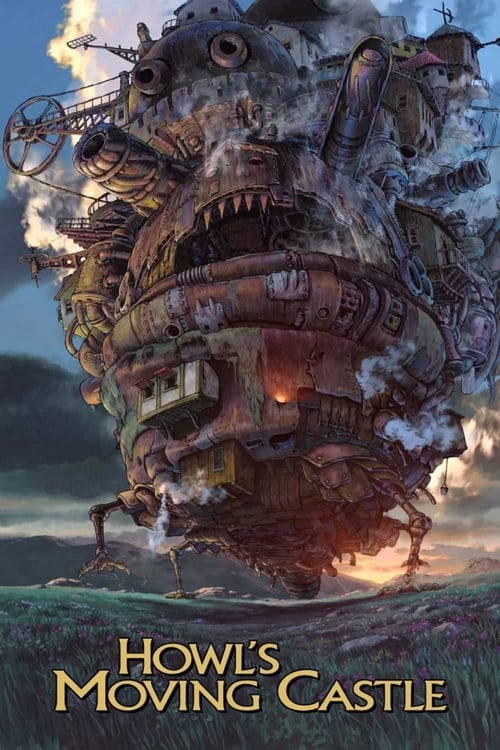
Howl's Moving Castle (2004)
Miyazaki's Warmest, Most Elusive Fantasy
by 10days1movie · Published 2026-06-03
| Type | Movie |
|---|---|
| Director | Hayao Miyazaki |
| Cast | Takuya Kimura, Chieko Baisho, Ryusei Nakao |
| Release | 2004 |
| Genre | Animation, Fantasy, Adventure |
| Runtime | 119min |
Among all of Miyazaki’s fantasies, this is the warmest — and the one that leaves the most complicated feeling behind. Howl’s Moving Castle is, on the surface, a story about a cursed girl and a vain wizard saving each other, but it never quite reads as simple romance or adventure. My rating is ★5.0. This film chose perfect sensation over perfect plot, and twenty years on that choice still holds.
What it’s about — A Cursed Girl and a Wizard
Sophie (Chieko Baisho) is an ordinary young woman working in a hat shop when the Witch of the Waste curses her into the body of a ninety-year-old. Wandering the wastelands alone, she stumbles into the walking castle of the wizard Howl (Takuya Kimura) and installs herself as housekeeper. Inside she finds the fire demon Calcifer (Ryusei Nakao), a young boy named Markl, and Howl himself — a man who has given his heart to Calcifer and lives without it. Around them, a war between two kingdoms draws ever closer.
Direction — The Animation and Joe Hisaishi’s Score
Miyazaki departs substantially from Diana Wynne Jones’s source novel, pushing anti-war sentiment and questions of identity to the foreground. The plot loosens as a result — and deliberately so. As the director himself acknowledged, this film follows the current of emotion more than the current of logic. That decision, far from being a flaw, is what makes it so rich to experience again and again.
The density of the animation is staggering. Howl’s castle — a churning amalgam of machinery, magic and improbable architecture — conceals new details in every shot. A sequence where bomber squadrons blacken the sky above a city is simultaneously terrifying and gorgeous. And the early scene where Howl takes Sophie by the hand and they walk together above the rooftops of town ranks among the most purely delightful minutes in Studio Ghibli’s entire filmography.
Joe Hisaishi’s score anchors all of it emotionally. The main waltz theme, “Merry-Go-Round of Life,” arrives as Sophie first climbs aboard the moving castle in her old woman’s body, and in that moment it quietly announces the film’s true subject: not grief, but liberation. A single piece of music, and half the audience is already converted.
Performance — A Sophie Beyond Age
One of the film’s quiet strengths is Sophie herself. Before the curse she was already living like an old woman — self-effacing, invisible, resigned. The curse paradoxically frees her: as a ninety-year-old she becomes blunt, resourceful, and bold in ways she never allowed herself to be. This is not a story about beauty or age. It is a story about a person finding herself, and it proceeds with unusual honesty about how self-imposed limitations can be harder to shake than any magic spell.
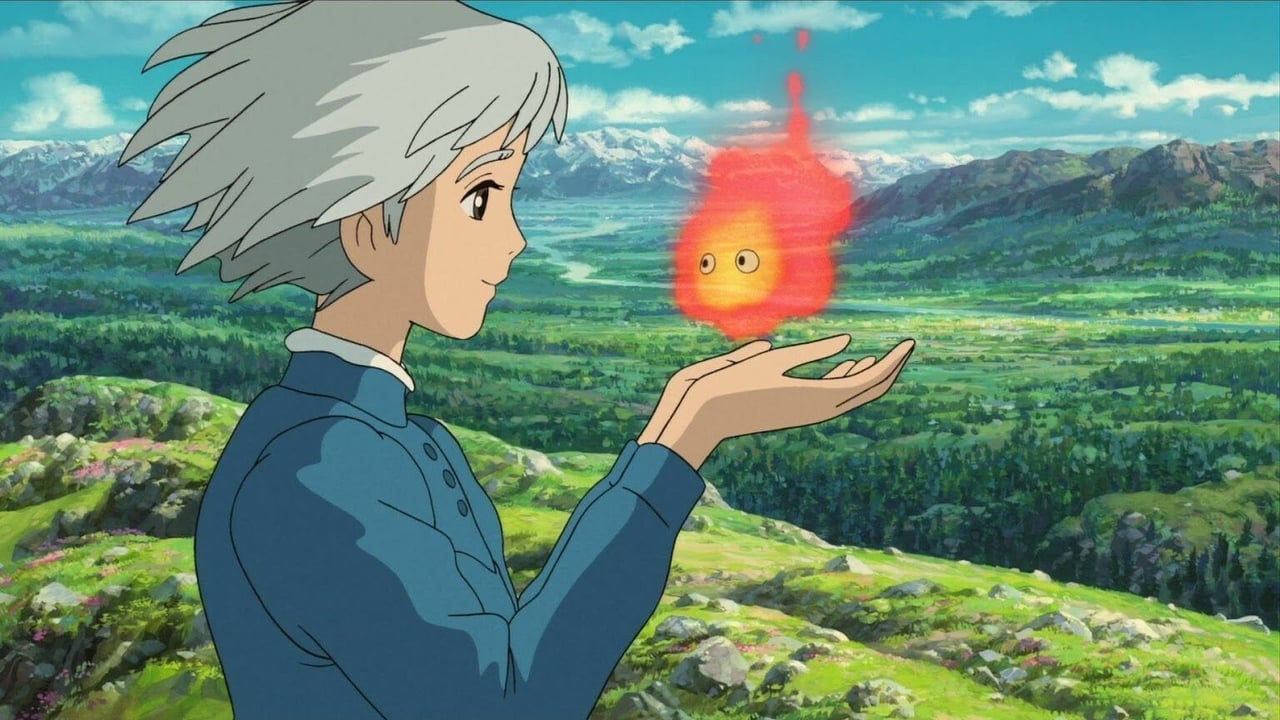
Howl is equally well-drawn. He is vain, cowardly at a certain level, and refreshingly transparent about both qualities — which makes him far more compelling than a straightforward heroic wizard would be. His arc is one of learning to stand and face the things he has spent his life flying away from. And Calcifer, the fire demon bound to the castle’s hearth, is the most alive presence in the film: mischievous, loyal, and funny in a way that raises the temperature of every scene he inhabits.
Ratings and reception
Critical reception is strong. Howl’s Moving Castle holds an 88% score on Rotten Tomatoes based on 185 reviews and an 8.2/10 on IMDb. Critics praised the film’s visual richness, its mature perspective on war, and the way it lets youth and old age coexist rather than oppose each other. The most consistent reservation is the same one casual viewers raise: the plot in the second half becomes genuinely hard to follow, and the resolution arrives more as feeling than as logic. The film’s 20th-anniversary re-release in 2024 demonstrated that none of this has diminished its pull on audiences worldwide.

Verdict
The narrative looseness is real. Cause and effect blur in the final act, and the question of exactly what happened and why is one the film declines to answer cleanly. But Howl’s Moving Castle is not trying to be a well-oiled machine. It communicates through a shift in Sophie’s expression, through the color of Calcifer’s flame, through the rhythm of a waltz playing over rain and smoke and clouds. It is a film that works through sensation, and sensation is precisely what Miyazaki does better than anyone. Hence ★5.0.
Recommended for
- Studio Ghibli fans, especially those who prize atmosphere over tidy plotting
- Viewers who want a fantasy film that stays with them as mood and image rather than as story
- Anyone who wants to hear Joe Hisaishi’s most romantic score in the context it was made for
Comments