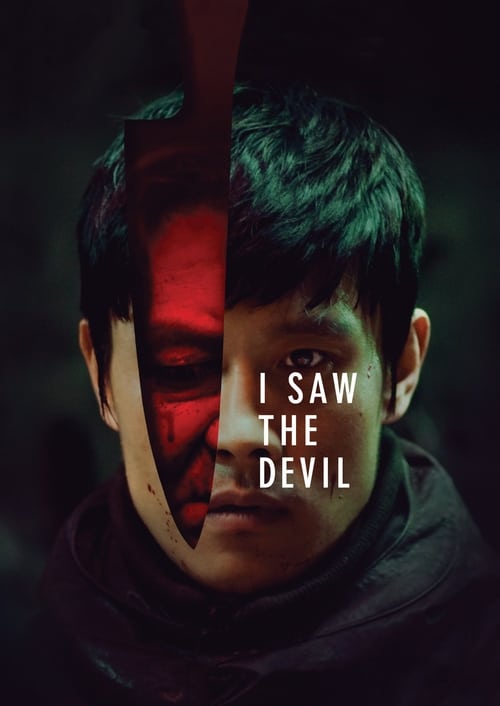
I Saw the Devil (2010)
At the End of Revenge, Another Devil Awaits
by 10days1movie · Published 2026-09-25
| Type | Movie |
|---|---|
| Director | Kim Jee-woon |
| Cast | Lee Byung-hun, Choi Min-sik, Jeon Gook-hwan, Cheon Ho-jin, Oh San-ha, Kim Yoon-seo |
| Release | 2010 |
| Genre | Thriller, Horror |
| Runtime | 144min |
There are many films about revenge, but works that probe this relentlessly into how the very process of revenge ruins a person are rare. Kim Jee-woon’s film is the story of a man who pursues the killer after losing his fiancée brutally, yet it does not end with the satisfaction of simply punishing a villain. Rather, the deeper the revenge goes, the more the boundary between hunter and hunted blurs, and what remains at the last is neither victory nor solace but an empty despair. It is uncomfortable to watch throughout, but that discomfort is precisely the point the film aims at.
What it’s about — Revenge that catches and releases, over and over
Kim Soo-hyun (Lee Byung-hun), an agent of the national intelligence service, loses everything when his fiancée is gruesomely murdered by the serial killer Jang Kyung-chul (Choi Min-sik). Rather than killing the culprit at once, he sets a rule he devises himself: to catch him, release him, track him down again to inflict pain, and let him go once more. The plan is to return upon the perpetrator the same fear his victims must have felt. But his opponent is no ordinary villain. Each time he is caught, Jang Kyung-chul commits something more horrific to provoke Soo-hyun, and the game of revenge slips ever further out of control. Over 144 minutes the two figures repeat the chase, dragging each other’s depths all the way to the bottom.

Direction — An aesthetic that dismantles the fantasy of righteous revenge
Even while handling cruel material, Kim Jee-woon never leaves the frame rough. On the contrary, every cut is so precisely designed that even the violence carries a cold, exact aesthetic. The 360-degree rotating fight inside a taxi is a passage that instantly displays the film’s directorial sense, capturing the chaos within a tight space in a single breath. There are many brutal scenes, but they are deployed not merely for shock but as tools to show the stages of a character’s psychological collapse.
What is especially striking is the way it makes you doubt the very structure of revenge. As the pain Soo-hyun inflicts repeats, the audience feels its heart, once rooting for him, grow steadily uneasy. The director slowly dismantles the fantasy of righteous revenge and leads the audience to the conclusion that revenge only breeds another evil. This cold gaze elevates the film beyond a mere splatter piece.
Performance — Lee Byung-hun killing emotion, Choi Min-sik unleashing it
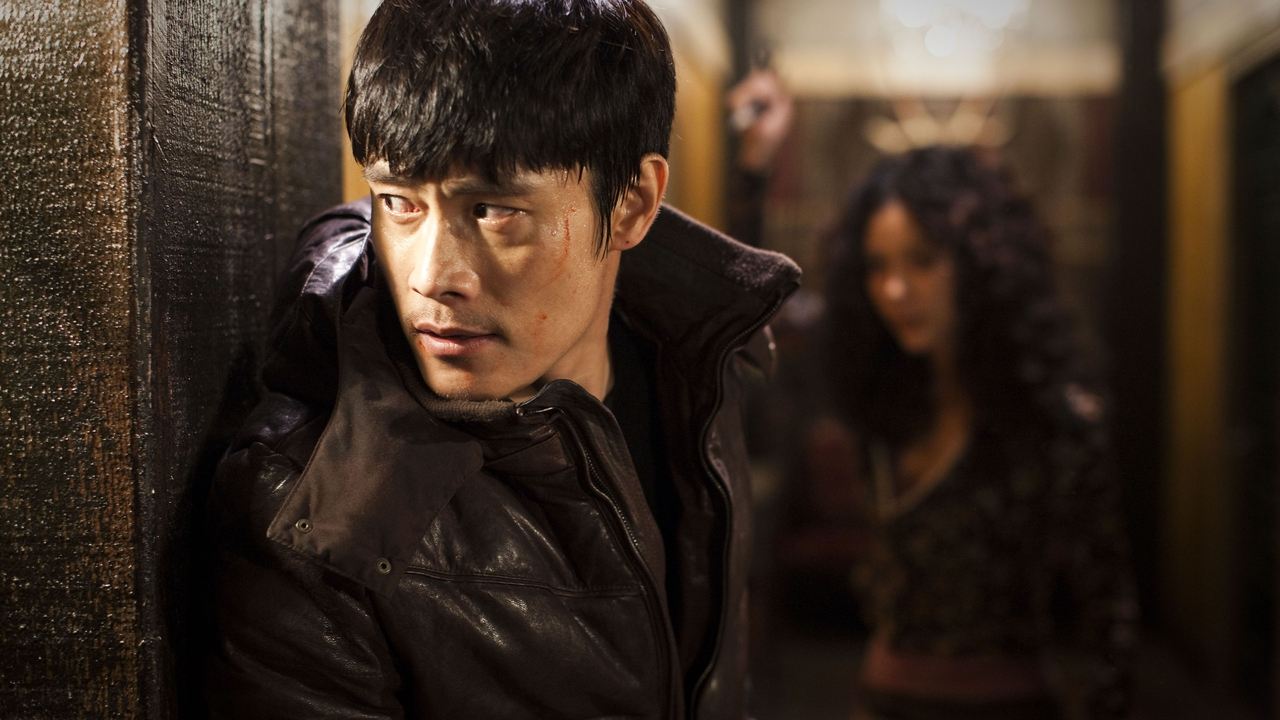
The showdown between Lee Byung-hun and Choi Min-sik is the film’s greatest spectacle. Lee Byung-hun renders, with a restrained expression, a Soo-hyun who swallows his grief inward and gradually turns into a cold machine. Acting that suppresses rage rather than exploding it reveals all the more clearly how deeply he has broken. Choi Min-sik, by contrast, unhesitatingly plays pure evil without a trace of guilt. His shifts of expression, sly one moment and chilling the next, send a shiver down your spine just to watch.
Every time the two actors clash, a taut tension flows. The contrasting performances, one killing his emotion and the other unleashing his freely, collide and heighten the film’s density. The supporting performances are flawless too, so that even briefly appearing figures leave their own distinct darkness.

What the film says — He who chases the devil becomes one
The core of this work is exactly its title. The old maxim that whoever chases the devil ultimately becomes a devil is something the film proves in the cruelest way. Soo-hyun’s revenge looks justified at first, but in the process he comes to resemble more and more the very target he hated. Even at the moment the revenge is complete, what was lost does not return, and all that remains is a deepened loss. The film makes you face, without any consolation, the fact that repaying violence with violence can never become healing.
Ratings and reception
This film holds a 7.8 on IMDb, a Rotten Tomatoes freshness of 83 percent, and a Metacritic score of 67 out of 100. Opinion divided over the level of cruelty, but broad praise gathered around the polish of the direction and the two actors’ performances. Abroad too it is steadily cited as a work that represents the intensity of the Korean thriller, earning recognition for its genre craftsmanship. That said, because the intensity is so extreme, it is repeatedly noted in reviews that it is hard to recommend to everyone.
Verdict
This is not a film you can watch easily. After it, your heart stays heavy for a long while, intense enough that the thought of rewatching does not come readily. Yet in refusing to glamorize the theme of revenge and pushing it all the way through to show clearly what remains at the end, this film achieves something unmistakable. It is a work that lands all the more painfully for being so well made. To that polish and weight I give a rating of ★4.0.
Recommended for
- Those who can withstand a dark thriller that probes deep into the underside of revenge
- Those who want to see the taut acting duel between Lee Byung-hun and Choi Min-sik
- Those who want to confirm Kim Jee-woon’s precise directorial sense
Comments