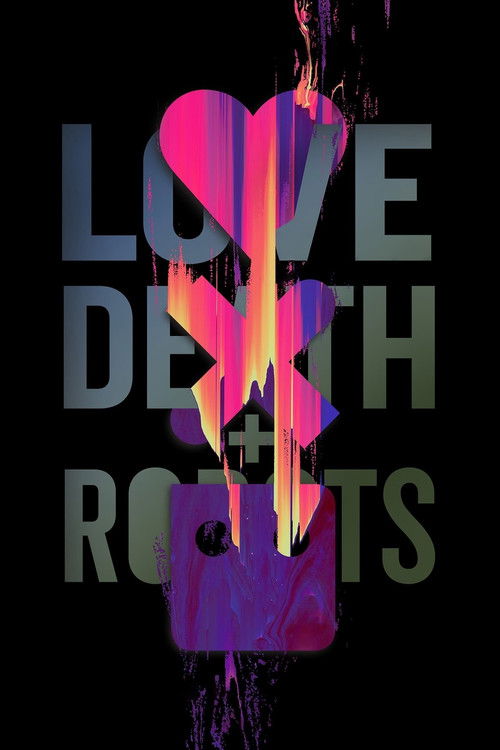
Love, Death & Robots Season 1 (2019)
18 Experiments, All Different, All Intense
by 10days1movie · Published 2026-07-13
| Type | Series |
|---|---|
| Director | Tim Miller (executive producer) |
| Cast | Anthology |
| Release | 2019 |
| Genre | Animation, Sci-Fi |
| Runtime | 15min |
Each of the eighteen episodes has a completely different style, genre, and texture. The common thread: all are short, all are intense, and all push a boundary somewhere. Love, Death & Robots Season 1 is an anthology that experiments with how far animation as a medium can reach — and many of those experiments succeed.
What it’s about — Eighteen Omnibus Experiments
An adult animation omnibus produced for Netflix with Tim Miller as executive producer and David Fincher as co-producer. All eighteen episodes were released simultaneously in March 2019, with each episode running between six and seventeen minutes. The series moves through sci-fi, horror, fantasy, comedy, and other genres, with different studios and directors involved in each episode. Visual styles range from CGI realism to 2D cell animation to stop-motion-style aesthetics, completely different episode to episode.

Direction — A Different Visual Style Each Episode
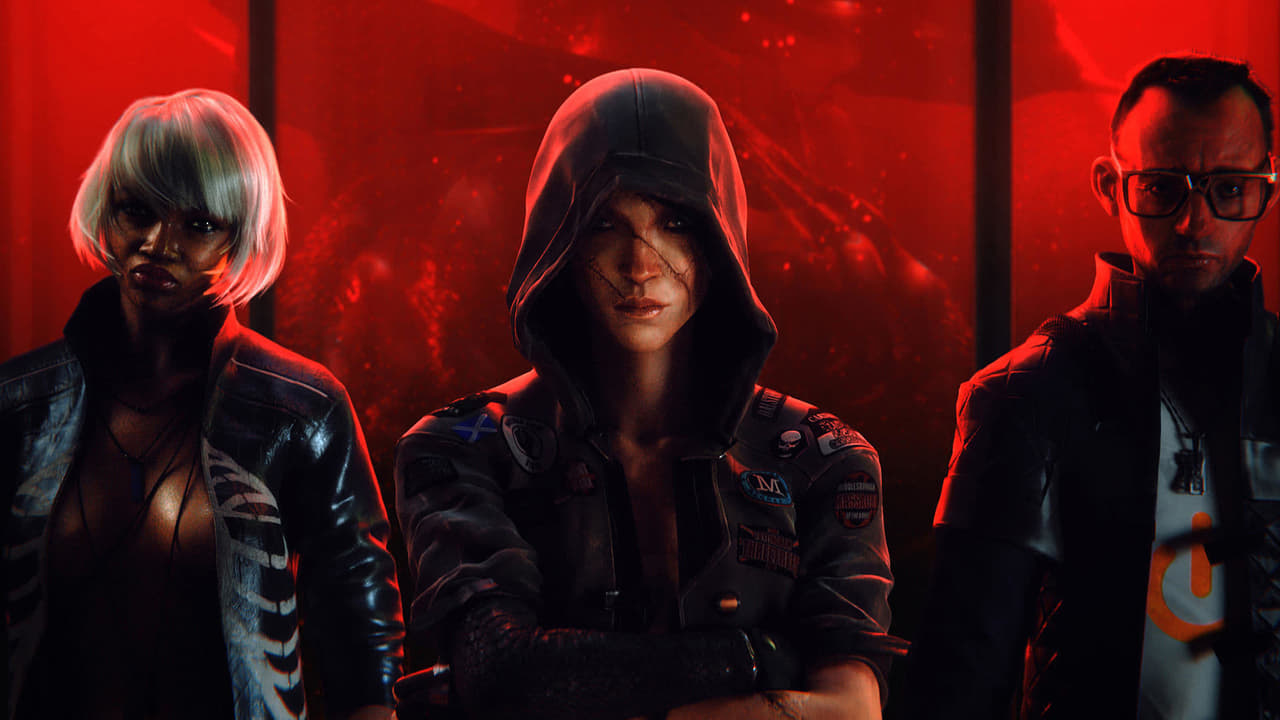
The most-noticed episodes in Season 1 each show a completely different directorial approach. Blur Studio’s Sonnie’s Edge captures a dark and violent fighting narrative in near-photorealistic CGI; Three Robots deploys the humour and black comedy unique to animation with a light touch. The Witness combines non-linear storytelling with a distinctive visual style, and Beyond the Aquila Rift renders cosmic horror with a vivid sense of reality. Because each team approaches the work as if making a short film, the creator’s individual personality is clearly visible in all eighteen episodes.
Performance & characters — A Structure Where Visuals Drive Emotion
Given the omnibus format, there is no unified ensemble of actors. The voice cast differs by episode, and some episodes proceed almost entirely without dialogue, led purely by visuals. Rather than performers coming to the fore, stories and visuals drive the emotion. The music also has completely different directional intent in each episode.
What the work says — Experimenting with Form Itself
If the eighteen episodes share a common theme, it is the moments when humans and machines, survival and extinction, love and violence meet in unexpected ways. Some episodes approach those themes through black comedy; others use horror or sci-fi. The strength of the omnibus format is that even if one experiment doesn’t succeed, the next episode arrives from a different direction. Season 1’s success in presenting new possibilities for adult animation comes less from any particular message than from the success of the formal experiments themselves.
Ratings & reception
IMDb score is 8.4. TMDB is 8.2. In 2019 the show won the Primetime Emmy Award for Outstanding Short Form Animated Program. It is assessed as having presented a new benchmark in the English-language adult animation market. Which episode is best remains a topic of active debate among fans.
What doesn’t work
The wide variation among the eighteen episodes is the inherent limitation of the omnibus format. There are episodes of high quality alongside episodes that feel like mere demonstrations of visual technique or that fail to fit sufficient story into their short runtime. Some episodes contain sexual content that may feel excessive, and this limits who can be universally recommended the whole season. Rather than watching everything consistently, you tend to selectively pick episodes that match your taste.
Verdict
My rating is ★4.0. This is a season you must experience if you enjoy the omnibus animation format, or if you’re interested in what animation as a visual medium can do. In any eighteen episodes, you’ll find at least one work that stays with you. In particular, Three Robots, Sonnie’s Edge, Beyond the Aquila Rift, and The Witness each confirm the anthology’s possibilities in their own way. The ability to pack this level of density into a short runtime is appealing in a way that’s different from feature-length drama.
Recommended for
- Adult viewers who enjoy sci-fi and fantasy
- Those who prefer short, dense stories
- Viewers interested in the possibilities of animation’s visual expression
Comments