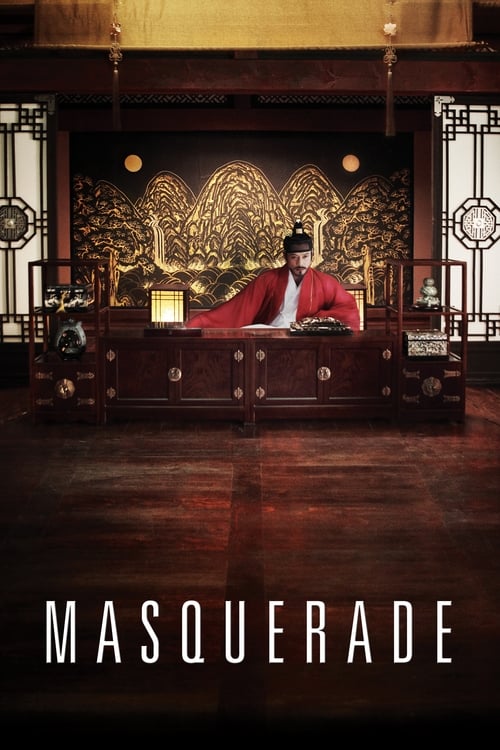
Masquerade (2012)
The Real Politics Shown by a Fake King
by 10days1movie · Published 2026-10-03
| Type | Movie |
|---|---|
| Director | Choo Chang-min |
| Cast | Lee Byung-hun, Ryu Seung-ryong, Han Hyo-joo, Kim In-kwon, Jang Gwang, Shim Eun-kyung |
| Release | 2012 |
| Genre | Drama, History |
| Runtime | 131min |
The Annals of the Joseon Dynasty are said to be missing about fifteen days of records on the deeds of King Gwanghae. Masquerade fills that empty stretch of time with imagination. What if, during those fifteen days, it was not the real king but a commoner who looked just like him who sat upon the throne? Starting from this intriguing premise, the film moves naturally toward the weighty questions of the nature of power and what good governance truly is.
What it’s about — Imagination filling the empty fifteen days of the Annals
King Gwanghae, plagued by the threat of poisoning, orders that a stand-in be found to take his place. The figure brought into the palace this way is a clown named Ha-seon. A lowly entertainer who made people laugh with bawdy jokes on the streets, he comes to sit on the throne for the single reason that his appearance is identical to the king’s. At first Ha-seon trembles with fear and does only as he is told, but gradually, as he faces the people and the court officials, he begins to make judgments of his own. Royal secretary Heo Gyun directs this precarious play, yet finds himself shaken by the unexpected sincerity the fake king shows.

Direction — Tension made of gazes and silence within the palace
Director Choo Chang-min carries the story head-on without forcing any gimmicks. Instead of flashy action or grand battles, he focuses on the tension of words and gazes clashing within the enclosed space of the palace. The anxiety that the fake king’s identity might be exposed is held taut throughout the film, and what creates this tension is not a great event but small glances and momentary silences. Even while handling a situation where the real and the fake are swapped, the direction firmly grips the emotional center so that the audience never gets confused about whose side to take.
The completeness of the art direction and costumes also raises the film’s class. The colors of the royal robes and the grain of the palace fill the screen, creating a period-drama gravity, and within it, the clumsy gestures of the commoner-born Ha-seon form a curious contrast. This contrast plays a large part in portraying a figure who sits in the seat of power without being stained by it. In particular, the scene where Ha-seon first steps into a royal court session, and the scene where he is at a loss before a formal royal table, draw out laughter and tension at once. Through such moments the film quietly reveals how hollow the forms of power can be, and makes the audience imagine for themselves what the true posture of governance beyond those forms should be.
Performance — Lee Byung-hun’s dual role splitting the same face
This film essentially stakes everything on Lee Byung-hun’s dual role, and that gamble pays off perfectly. He portrays the real king Gwanghae, trapped in suspicion and rage, and Ha-seon, who never loses his humanity even amid fear, as two entirely different people through expression and speech alone. That you can tell at a glance which of them is sitting on the throne, despite the identical face, is owed entirely to the actor’s skill. Ryu Seung-ryong as the royal secretary supports another axis of the film, moving between the demeanor of a cold-blooded politician and human wavering. Han Hyo-joo’s queen and Kim In-kwon’s chief guard Do also each add warmth to the story from their own places.

What the film says — When a commoner is more kingly than the king
The question Masquerade poses is clear. Is a good ruler determined by bloodline, or completed by a heart turned toward the people? The fake king Ha-seon has never learned politics nor deeply read the classics, yet his heart moves at the sight of starving subjects and he flares with anger before injustice. The film says that this very ordinary human sensibility is the starting point of politics. In an era when status determined everything, the premise that a commoner could be more kingly than the king is, in itself, a biting satire.
Ratings and reception
The IMDb rating is 7.8 out of 10, high even among Korean period dramas, and the Rotten Tomatoes freshness recorded 100 percent. Domestically it was a huge box-office success, surpassing ten million admissions, and that year it swept major awards including Best Film and Best Actor at the Blue Dragon Film Awards and the Grand Bell Awards. The fact that it borrowed a familiar body-double premise yet naturally folded a political message inside it was widely praised.

Verdict
Masquerade is a well-crafted commercial film that starts from a clever premise and closes with a warm ending. One could argue that the somewhat idealistic conclusion lightens the weight of reality, but even that comes to be accepted as part of the goodwill this film holds. Add the pleasure of witnessing the peak of an actor like Lee Byung-hun, and the satisfaction of four stars is more than earned.
Recommended for
- Those who want to properly appreciate an actor’s dual-role performance
- Those who like Korean period dramas with a weighty message
- Those who want to follow questions about power and politics without strain
Comments