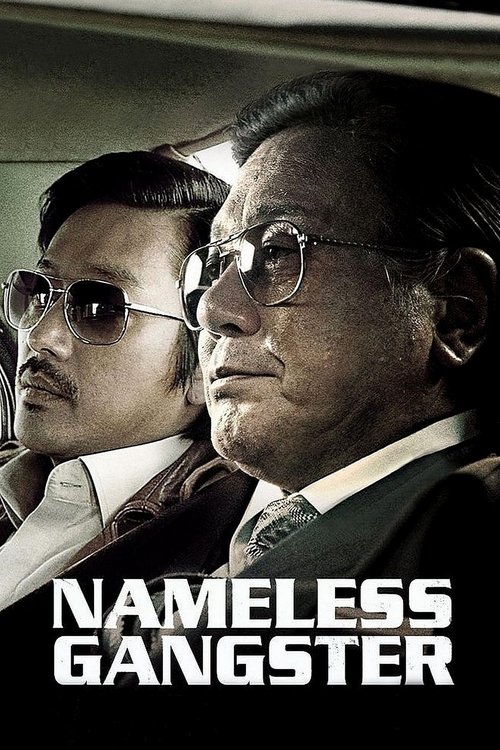
Nameless Gangster: Rules of the Time (2012)
The Definitive Korean Gangster Film
by 10days1movie · Published 2026-06-03
| Type | Movie |
|---|---|
| Director | Yoon Jong-bin |
| Cast | Choi Min-sik, Ha Jung-woo, Jo Jin-woong |
| Release | 2012 |
| Genre | Crime, Thriller |
| Runtime | 133min |
This is the film that set the standard for Korean gangster cinema. Nameless Gangster: Rules of the Time runs 133 minutes without a single gunshot, yet it never once releases its grip. My rating is ★5.0. With Choi Min-sik and Ha Jung-woo in opposing corners, director Yoon Jong-bin builds a portrait of greed, betrayal and institutional corruption that feels less like a genre exercise and more like reconstructed history.
What it’s about — A Small Man Burrowing into Power
Busan, 1982. Choi Ik-hyun (Choi Min-sik) is a mid-level customs official — small-time, connected to no one important, but blessed with an uncanny nose for opportunity and a sprawling network of distant relatives that stretches across the city’s underworld. Through sheer social opportunism he falls in with Choi Hyung-bae (Ha Jung-woo), the cold-blooded boss of Busan’s largest organized crime syndicate, and spends the next decade riding that alliance to wealth and influence he could never have earned on his own merits. When the government’s 1990 crackdown on organized crime puts both men in the crosshairs of the prosecution, the partnership dissolves into mutual destruction.
The film is rooted in real events. The story draws directly from the documented collusion between Busan’s criminal organizations and political power brokers during the 1980s and early 1990s — a period of rapid wealth and endemic corruption in South Korean society. It doesn’t feel like fiction. It feels like a case file.
Direction — A Structure You Watch Knowing the Downfall
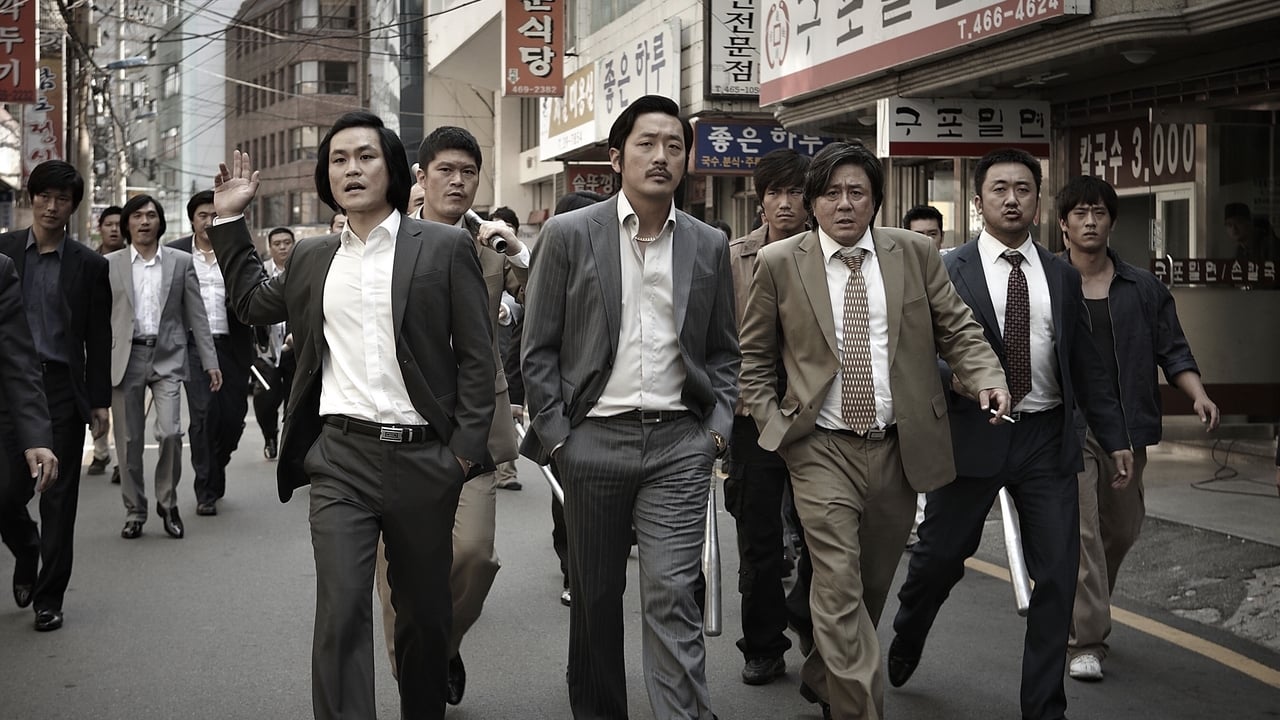
Yoon Jong-bin chooses realism at every turn. There are no stylized shootouts, no operatic slow-motion violence — just bats, fists, and the blunt messiness of men who solve problems the old-fashioned way. The very unglamorousness of the violence is what makes it land. The 1980s Busan palette is meticulously recreated — the washed-out earth tones of the era’s fashion, actual courtrooms and police stations, Busan dialect so thick it’s subtitled even for Korean audiences.
The film’s structural intelligence is also worth noting. It opens at the end: Choi Ik-hyun is already in the witness stand testifying against his former boss. We know from the first frame that it all falls apart. The story then unfolds in extended flashback — and the remarkable thing is that knowing the outcome makes it more gripping, not less. We watch a man walk toward a cliff he can’t see because he refuses to look down, and we can’t look away either.
Performance — The Contrast of Choi Min-sik and Ha Jung-woo
Choi Min-sik plays a man who is never heroic for a single moment. Choi Ik-hyun is sycophantic, opportunistic, and frequently ridiculous — a small man inflated by borrowed power. Yet Choi Min-sik makes him completely impossible to dismiss. The performance spans a remarkable range: the greedy gleam of someone who has finally tasted real money, the desperate scramble of a man watching his leverage evaporate, the pathetic self-delusion of someone who truly believed his connections would protect him forever. It is a wider, more textured performance than his iconic turn in Oldboy — and arguably the more difficult one.
Ha Jung-woo’s Choi Hyung-bae operates on an entirely different frequency. Where Choi Min-sik is loud and performative, Ha Jung-woo is still and surgical. His boss is a man of few words and total clarity — every sentence lands with finality, every glance carries a threat assessment. The contrast between the two actors, sharing the frame, generates a tension that requires no dialogue to communicate. It is one of the finest lead pairings in Korean film history.
Ratings & reception
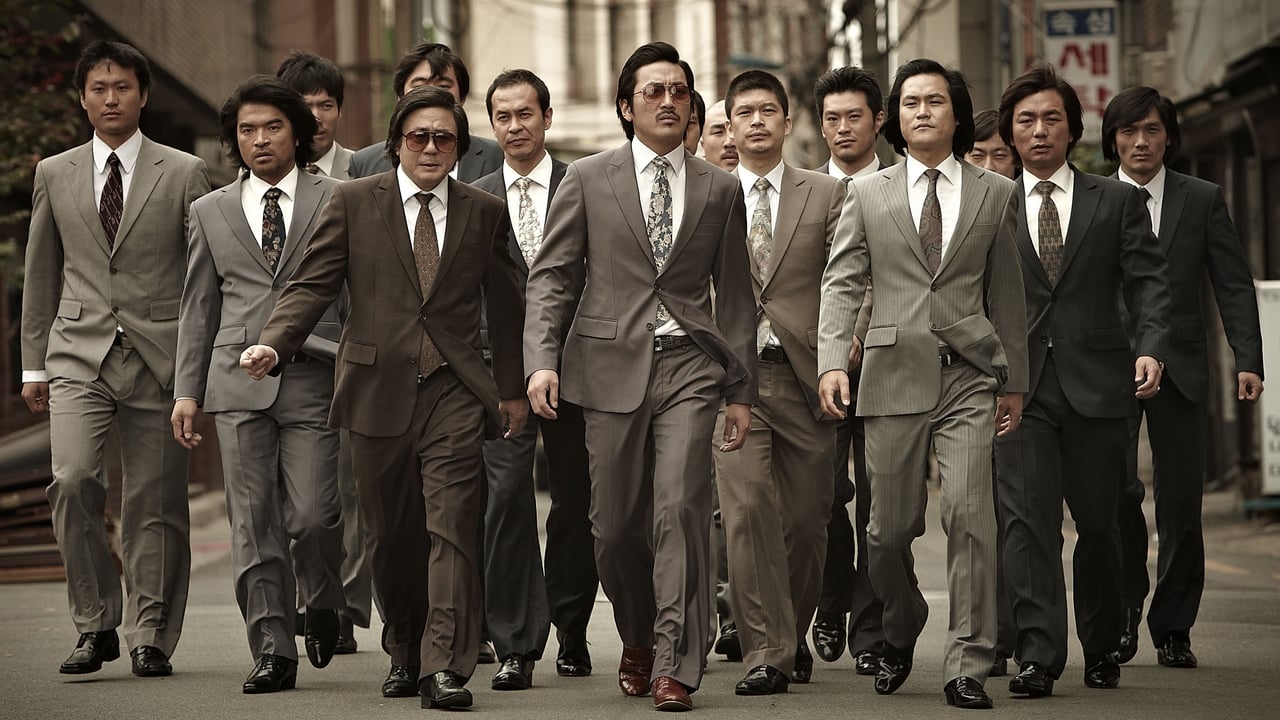
The film holds a 7.0/10 on IMDb and a 100% Tomatometer score on Rotten Tomatoes from 5 critic reviews. Critical consensus praises the unsparing realism of its period recreation and the sheer force of the two lead performances. In South Korea it attracted over 4.8 million admissions at the box office, a commercial success to match the critical one. Choi Min-sik won Best Actor at the Grand Bell Awards for this performance. The film is frequently compared to Goodfellas — a comparison that is apt but somewhat misleading. Where Scorsese romanticizes the mob life before pulling the rug out, Yoon Jong-bin never romanticizes anything. His gangsters are not glamorous; they are just people who chose the easiest path through a corrupt system.
Verdict
Nameless Gangster sustains its tension through character, not action. The source of dread in this film is not violence but people — specifically, what happens when two people whose interests were temporarily aligned stop needing each other. The film understands that real power in any corrupt system is relational: it lives or dies in the web of mutual dependencies, and the moment one thread snaps the whole structure can unravel. Yoon Jong-bin never loses this thread, and neither do Choi Min-sik and Ha Jung-woo. The result is the best Korean crime film of its decade, and one of the finest genre films the country has produced. ★5.0.
Recommended for
- Fans of epic, character-driven gangster dramas in the Goodfellas tradition
- Anyone who wants to see Choi Min-sik and Ha Jung-woo at the peak of their powers
- Viewers who prefer moral complexity and social realism over stylized action
Comments