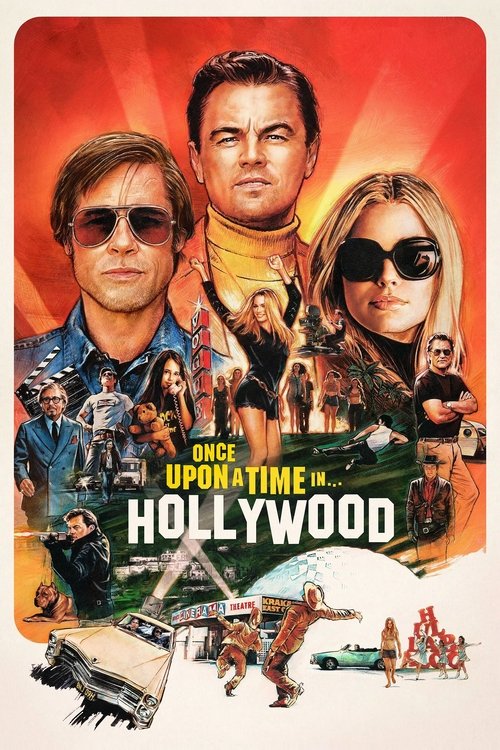
Once Upon a Time... in Hollywood (2019)
Tarantino's Love Letter to 1969 Hollywood
by 10days1movie · Published 2026-08-25
| Type | Movie |
|---|---|
| Director | Quentin Tarantino |
| Cast | Leonardo DiCaprio, Brad Pitt, Margot Robbie |
| Release | 2019 |
| Genre | Comedy, Drama, Thriller |
| Runtime | 162min |
This film is slow. That slowness is deliberate. For two hours and forty-one minutes, Tarantino is in love with 1969 Hollywood, and he keeps the audience inside that world for as long as possible. Mood takes precedence over story; character and dialogue take precedence over plot. Accept that and this is quite an enjoyable film. If you came expecting something different, it might disappoint. Rating: ★4.0.
What it’s about — A fading actor and the stuntman at his side
Los Angeles, 1969. Rick Dalton (Leonardo DiCaprio), a once-popular TV western actor, watches his roles dry up with growing anxiety. His longtime stunt double and friend Cliff Booth (Brad Pitt) quietly takes care of Rick’s day-to-day life. Living next door to Rick is Sharon Tate (Margot Robbie). A real historical event from the summer of 1969 forms the backdrop.
Direction — Dialing down the showmanship to recreate an era
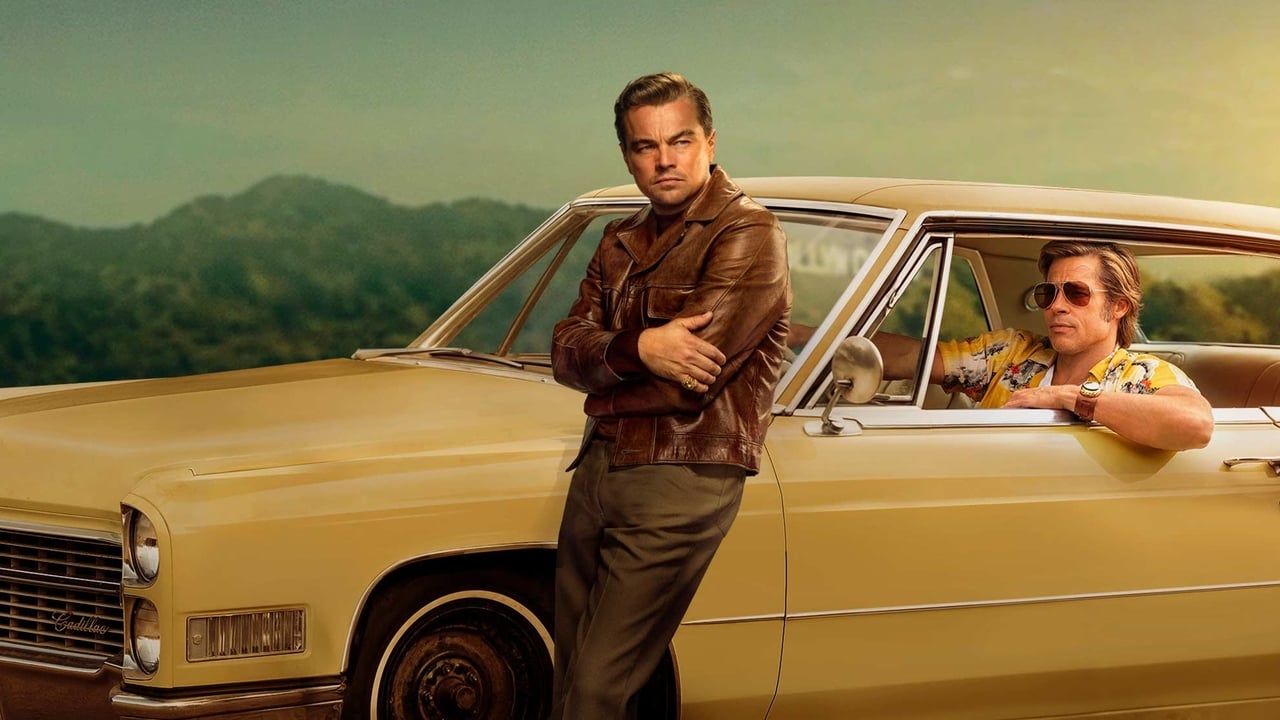
Tarantino’s direction here is deliberately restrained compared to his usual self-display. Instead, all the energy goes into period reconstruction. Music on the radio, billboards, clips from TV shows of the era, cars and costumes. The accumulation of these details gives you the physical sensation of actually being inside 1969. The scene of Brad Pitt biking across L.A. has nothing happen in it — and yet it’s poetic in itself.
Performance — The golden pairing of DiCaprio and Pitt
DiCaprio renders with precision a man caught between confidence and anxiety. He particularly shines in the scene where, on camera, his character actually acts — a man falling apart and holding on at the same time. Brad Pitt’s Cliff is a quiet, morally ambiguous man with a murky past, and the ease and danger that emanate simultaneously from Pitt’s performance stand among the best work of his career. Margot Robbie’s Sharon Tate warms the film’s temperature with her presence rather than her lines.
What the film says — A wish that it had ended differently
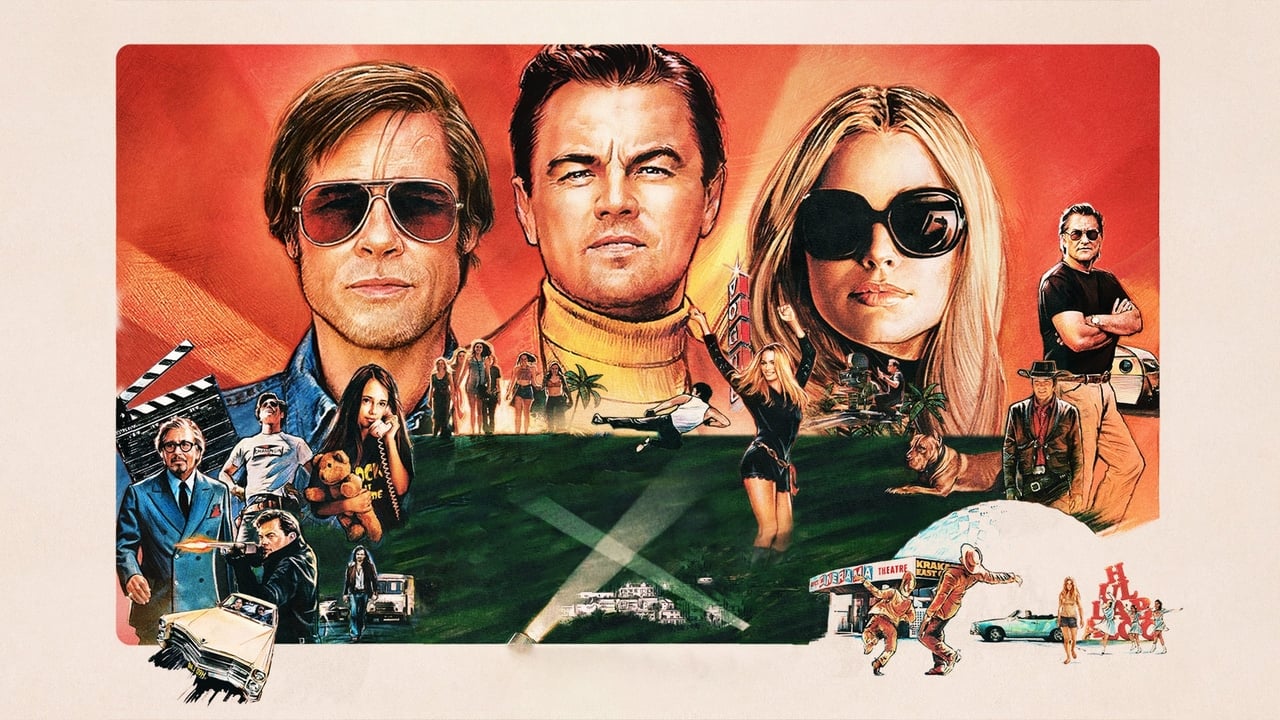
This film is Tarantino’s personal nostalgia. Love for cinema history, affection for the actors and films of that era, packed into two hours and forty-one minutes. And at the end there is a choice that rewrites history. That choice is the film’s core. It isn’t a throwaway Easter egg of an ending — it is the director’s wish: “What if it could have ended differently.”
Ratings & reception
IMDb score is 7.6. Rotten Tomatoes freshness is 86% — certified fresh. At the Academy Awards, Brad Pitt won Best Supporting Actor, and the film was also nominated for Best Picture. The film scores especially high among Tarantino fans and viewers with an interest in Hollywood history. Criticism that there is no story and defense that this is precisely the point coexist side by side.
What doesn’t quite work
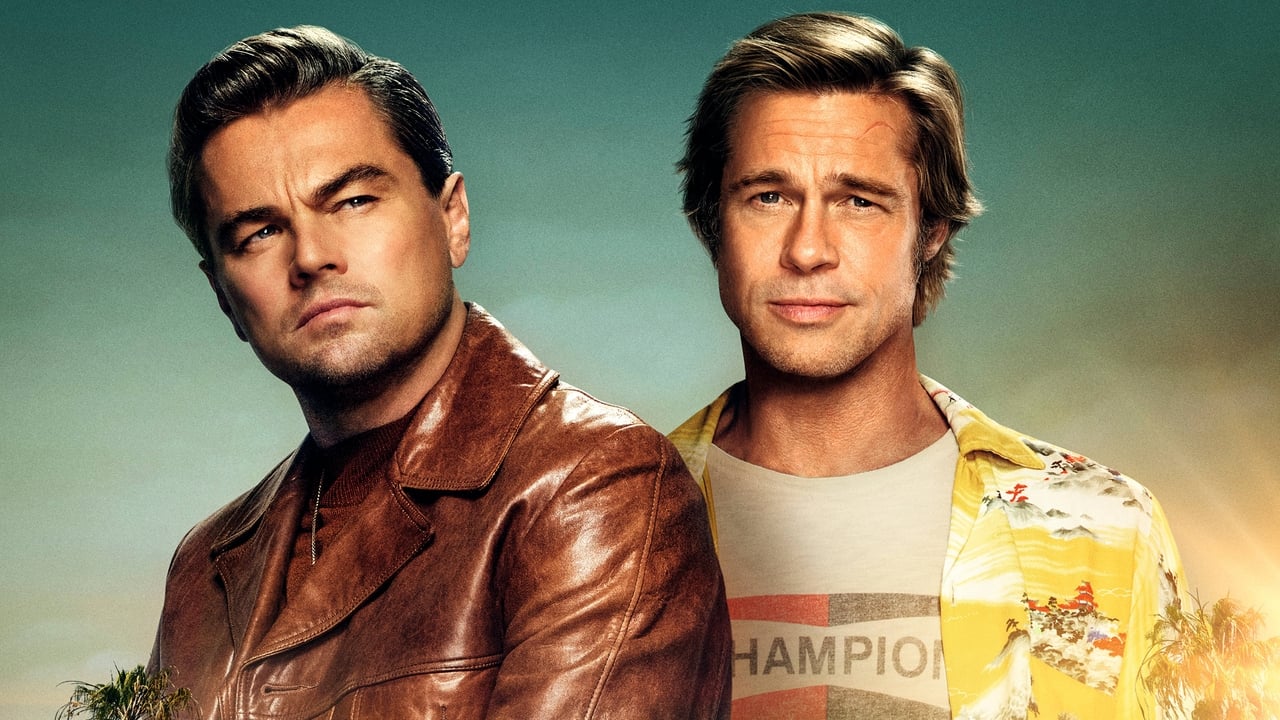
If you’re expecting plot, you’ll be bored. Many people found Margot Robbie’s character underserved by the runtime. Without prior knowledge of 1969 Hollywood, many of the references go over your head. Sharon Tate is a historically significant figure, but in the film she has almost no dialogue and drifts around the edges of the story. There were criticisms that this approach either idealizes or instrumentalizes her. The nearly two hours of everyday-life depiction in the first half can feel tedious to viewers who aren’t already steeped in that era’s cinema history — the humor and emotion require knowing which TV shows, actors, and films are being referenced. This is also one of the Tarantino films with the largest gap between fans and non-fans. At two hours and forty-one minutes, the runtime is unquestionably long, and not every scene has the density to justify it.
Verdict
The most personal and most quiet film Tarantino has made. It is less about flashy reversals or cathartic violence than about a director’s love of movies. If you can share in that love, two hours and forty-one minutes is time well spent.
Recommended for
- Tarantino fans or anyone interested in Hollywood of the 1960s–70s
- People drawn to the pairing of Brad Pitt and DiCaprio
- Viewers who prefer mood and character-driven films over story-driven ones
Comments