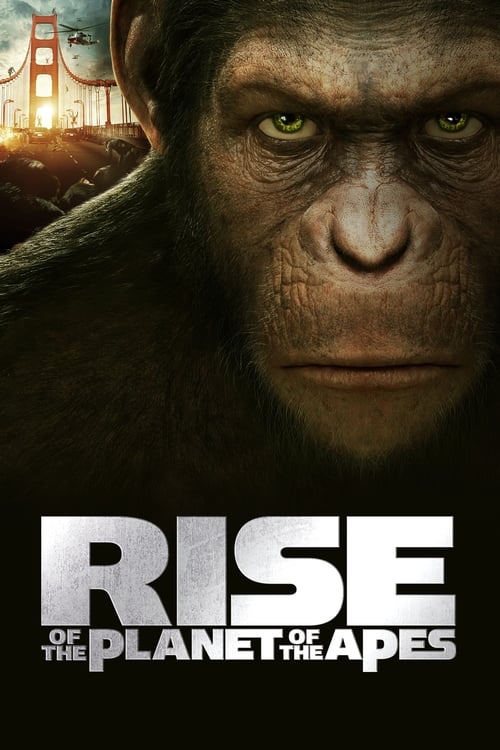
Rise of the Planet of the Apes (2011)
The Weighty Questions One Ape Asks
by 10days1movie · Published 2026-10-13
| Type | Movie |
|---|---|
| Director | Rupert Wyatt |
| Cast | Andy Serkis, James Franco, Freida Pinto, John Lithgow, Brian Cox, Tom Felton |
| Release | 2011 |
| Genre | Science Fiction, Action, Drama, Thriller |
| Runtime | 106min |
Restarting an old franchise is always risky, because you have to handle a familiar mythology while persuading new audiences at the same time. Rise of the Planet of the Apes walks that difficult tightrope cleverly. Rather than grabbing attention with vast spectacle, it starts from the eyes of a single ape and patiently builds toward the moment civilization is overturned. And at the center of it all, it places a character more human than the humans.
What it’s about — How the chimpanzee Caesar becomes a leader
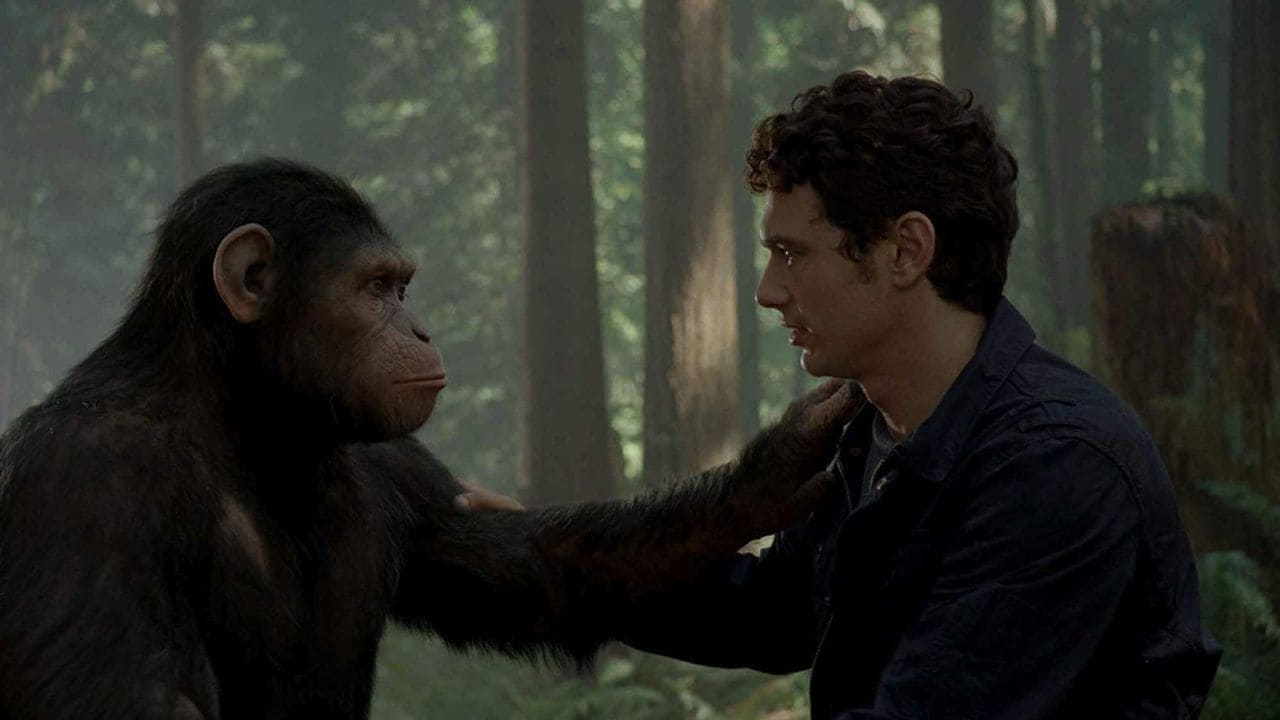
Will, a scientist developing a cure for Alzheimer’s, brings home a baby chimpanzee named Caesar, who has gained extraordinary intelligence through the experiments. Raised within a family’s love, Caesar quickly learns human language and emotion, but he also comes to realize that he can never fully belong to the human world. After a single incident lands him in a sanctuary, Caesar awakens at the sight of his abused fellow apes and finally leads an uprising for his kind. The film does not rush headlong toward the scale of disaster; instead it first persuades us of how one individual gains a sense of self and becomes a leader.
Direction — Approached as a coming-of-age drama, not an action film
Rupert Wyatt approaches this not as an action film but as a coming-of-age drama. The love Caesar receives at home, the moment he is betrayed, and the process by which he nurtures his rage in captivity are all drawn out over ample time. As a result, the uprising in the latter half lands not as mere spectacle but as an emotional explosion. The audience comes to stand on the side of the apes rather than the humans, and that strange position is the film’s greatest achievement.
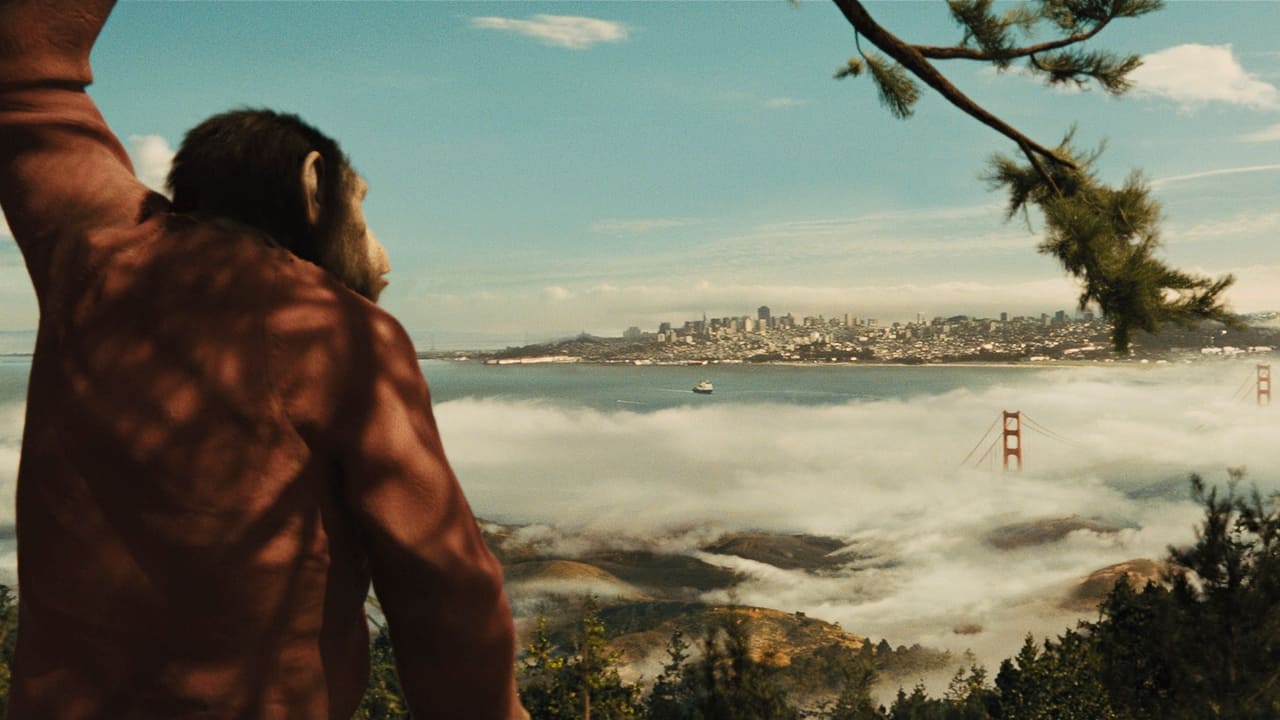
The visual effects serve the story. The late-film clash on the Golden Gate Bridge is certainly spectacular, but more impressive still are the quiet moments carried by expression alone, without dialogue. A shot like Caesar’s back as he gazes down over a fog-shrouded city conveys, without a single word, the instant a being becomes aware of his own destiny. The direction stays with Caesar’s point of view throughout, laying a persuasive emotional bridge along the road toward an ending we already know.
Performance — A film Serkis carries on his gaze alone
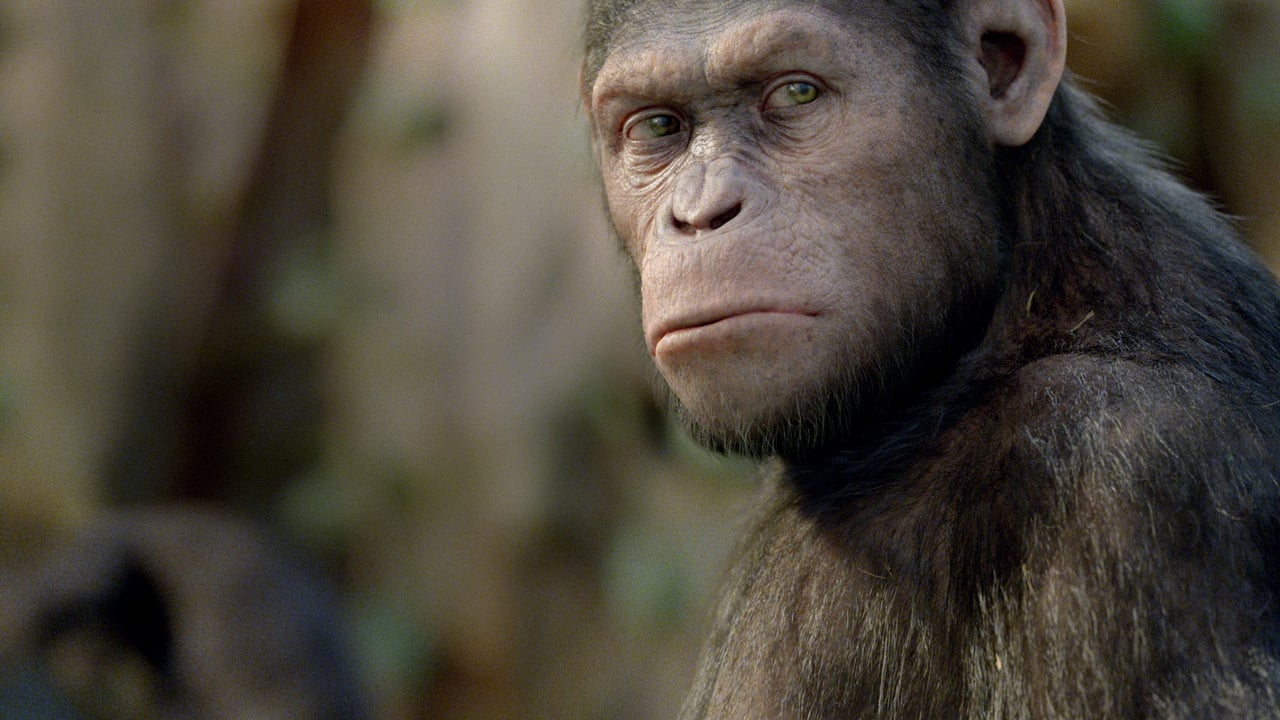
The true lead of this film is Andy Serkis, who plays Caesar through motion capture. With a single expression, a single shift of the shoulders, he renders curiosity, hurt, rage, and resolve in turn, so delicately that you forget you are watching a CG character. A depth of emotion no less than a human actor’s close-up lives in Caesar’s eyes, so that the choice he makes just before the uprising finally lands with weight.
The human actors faithfully serve as mirrors that reflect Caesar. James Franco plays Will with balance, a man who regards Caesar as family yet remains trapped within the limits of human society, and John Lithgow lends the film warm feeling as the ailing father. Tom Felton, as the sanctuary’s sadistic keeper, distills human cruelty into compact form.
What the film says — Tragedy springs from small choices
Rise of the Planet of the Apes warns of human arrogance in treating nature carelessly, but it never preaches. Instead, by showing one being awaken to its dignity and confront injustice, it asks anew where intelligence and power ought to reside. What is striking is that the film does not paint humans as simple villains. The process by which an experiment begun in good faith and a series of small selfishnesses accumulate into an irreversible outcome reminds us that tragedy always springs not from grand malice but from small choices.
Ratings & reception
This film is regarded as a model case of a franchise reboot. Its IMDb rating is a high 7.6 out of 10, the Rotten Tomatoes freshness score is 82 percent, and the Metacritic score is 68 out of 100. Critics widely praised the leap forward in motion-capture technology, Andy Serkis’s performance, and direction that put emotion ahead of spectacle. It is also frequently cited as the solid starting point that supported the high quality of the sequels that followed.
Verdict
Rise of the Planet of the Apes shows how a blockbuster can fill both the head and the heart. Even as it moves toward a familiar ending, it pours sincerity into the journey, making the character of Caesar one you remember long after. There is the slight regret that the human drama is somewhat flat, but the moments when Caesar commands the screen more than fill that gap. The rating is ★4.0. By the time it ends, you find yourself freshly astonished that a single ape’s expression can carry an entire film.
Recommended for
- Those who love sci-fi that delivers both spectacle and emotional throughline
- Those who want to see firsthand how far motion-capture acting has come
- Those who want to grasp the series’ true starting point before bingeing it
Comments