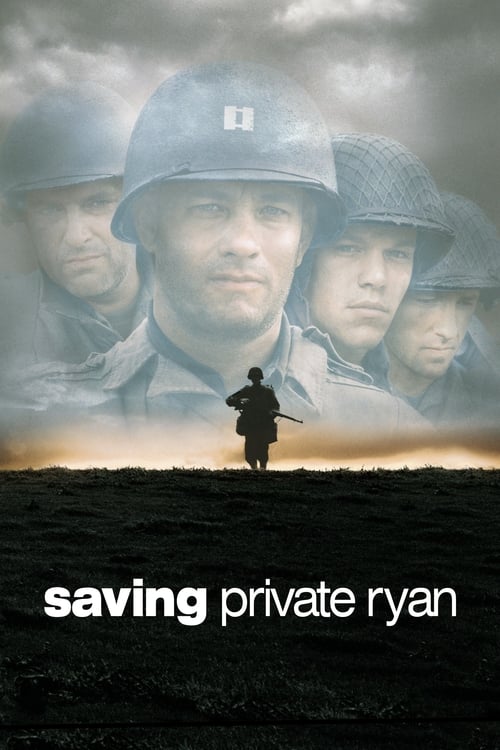
Saving Private Ryan (1998)
On the Price Paid to Save One Man
by 10days1movie · Published 2026-10-14
| Type | Movie |
|---|---|
| Director | Steven Spielberg |
| Cast | Tom Hanks, Tom Sizemore, Edward Burns, Barry Pepper, Adam Goldberg, Vin Diesel |
| Release | 1998 |
| Genre | War, Drama, History |
| Runtime | 169min |
Among war-film openings, few are revisited as often as this one. From the instant the landing-craft doors open on Omaha Beach, for some twenty minutes Steven Spielberg shoves the audience into the very middle of bullets and screams. There is no heroic music, no comforting distance. With that very first scene, Saving Private Ryan plainly declares its stance: it will not glorify war.
What it’s about — Eight set out to save the youngest one
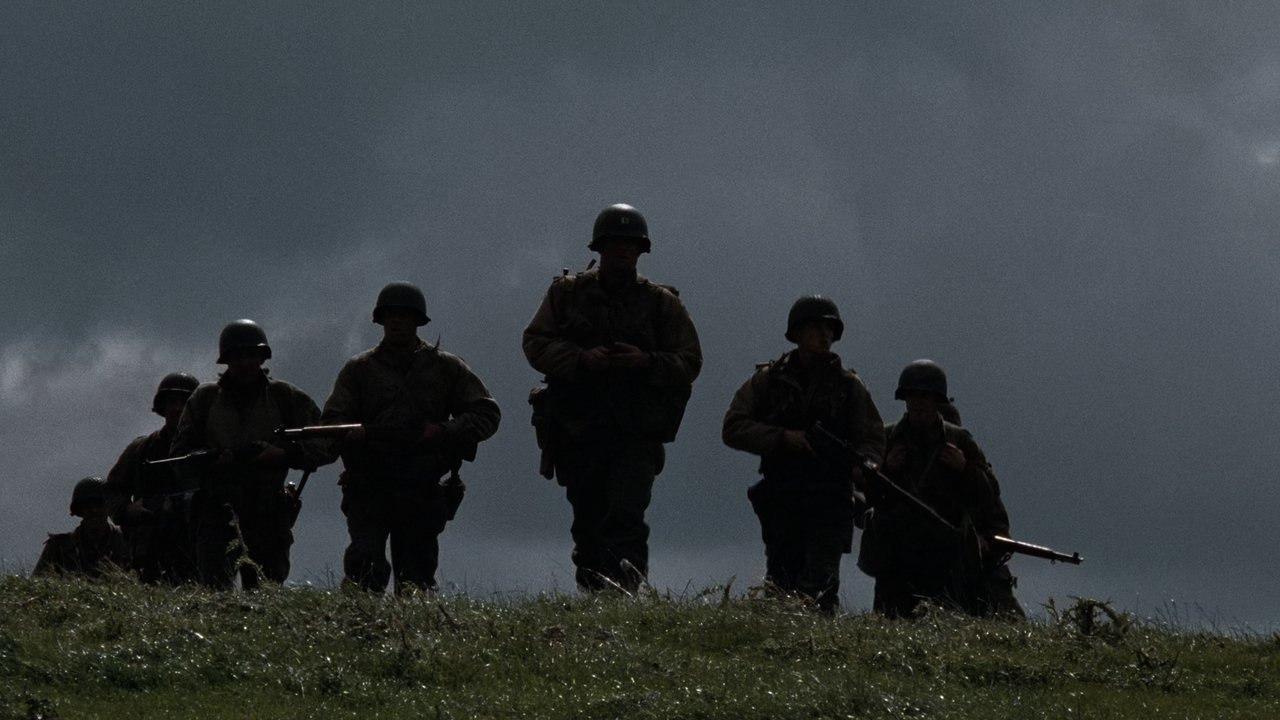
In the immediate aftermath of the Normandy landings, the U.S. high command learns that three of one family’s four brothers have been killed. An order comes down to safely return the last surviving brother, Private Ryan, to his home, and eight soldiers led by Captain Miller (Tom Hanks) set out deep into enemy territory to find him. A mission that stakes many lives to save a single man. The soldiers press forward step by step even as they ceaselessly question the justness of the order. Following that journey, the film asks what war demands of human beings.

Direction — An Omaha Beach like combat newsreel footage
In the combat scenes Spielberg deliberately shakes the camera and lowers the saturation, creating a rough texture as if you were watching combat newsreel footage. Cinematography that adjusts the shutter speed so explosion debris flies up in sharp relief, along with a sound design in which the audio goes muffled for an instant, transfers a soldier’s senses directly onto the audience. These techniques became a template for countless war films that followed.
That said, between the intense battles bookending the film, the middle stretch in which the squad moves to find Ryan slows its pace considerably. For some viewers this may feel somewhat sagging, but it is precisely this section in which the soldiers come to know one another and clash over the meaning of the mission. Thanks to it, the weight of the final bridge defense finally lands with gravity. The long 169-minute runtime reads, in the end, as a choice made for that balance.
Performance — Ordinary people hiding their trembling hands
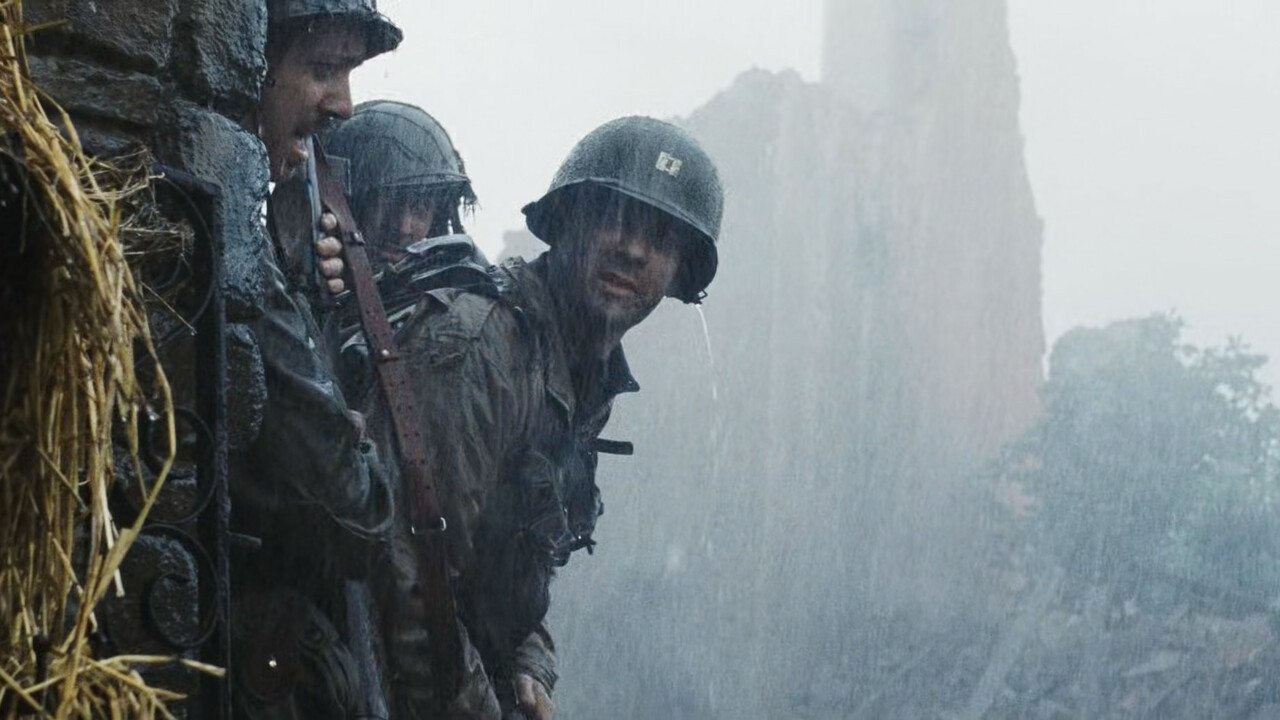
Tom Hanks portrays Captain Miller not as a hero but as one ordinary man. Before his men he never loses his composure, but the sight of him unable to hide his trembling hand when alone quietly reveals the weight of a commander’s position. Tom Sizemore anchors the squad as a seasoned sergeant, and the sniper played by Barry Pepper impressively expresses the tension between faith and killing. With the distinct individuality of squad members like Adam Goldberg and Edward Burns, each time one of them falls, the loss arrives as a concrete weight. In particular, the interpreter Upham, who joins with no combat experience, stands in for the fear of a man unaccustomed to war, and the helplessness he shows at a decisive moment pulls a story that could have drifted into heroism back to the place of human beings.
What the film says — A scale weighing one life against many
At the core of this film lies a single ethical question: is it truly just to endanger many people in order to save one? The film offers no easy answer. Instead, through the doubt and anger of the soldiers carrying out the mission, and a single line thrown out at the end, it hands the audience the full weight of the responsibility the survivor must bear. How is one to live a life obtained through someone’s sacrifice? That question lingers long after the film ends.
Ratings & reception
The IMDb rating is 8.6 out of 10, placing it at the very top tier of war films. The Rotten Tomatoes freshness score is 94%, and the Metacritic score is 91 out of 100, with overwhelming critical acclaim. With this work Spielberg won his second Academy Award for Best Director, and the film took five categories including Cinematography, Sound, and Editing. Its realistic depiction of combat drew a strong response even from actual veterans, and it is credited with changing the very way war films handle violence thereafter.
Verdict
Saving Private Ryan is a film that honestly confronts the horror of war while never losing the theme of human responsibility within it. The slow pace of the middle and the long runtime may feel burdensome, but all that time is, in the end, accumulated for the resonance of the finale. It shows one summit of the gravity a war film can reach, and four stars suit that achievement.
Recommended for
- Those seeking a realistic, weighty war film
- Those who want a work that places its weight on the characters’ ethical dilemmas over action
- Those who want to see Tom Hanks’s restrained, humane performance
Comments