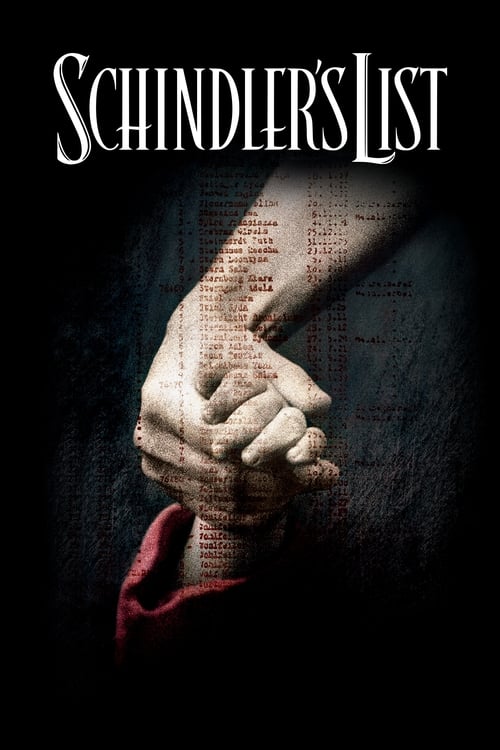
Schindler's List (1993)
One Man's List Changed a Thousand Lives
by 10days1movie · Published 2026-10-15
| Type | Movie |
|---|---|
| Director | Steven Spielberg |
| Cast | Liam Neeson, Ben Kingsley, Ralph Fiennes, Caroline Goodall, Jonathan Sagall, Embeth Davidtz |
| Release | 1993 |
| Genre | Drama, History, War |
| Runtime | 195min |
Across a screen unfolding in black and white, one small child in a red coat passes through a street like a ruin. In a world stripped of all color, that tiny red point seizes the viewer’s gaze and will not let it go. With this single image, Steven Spielberg makes us vividly recall one human life amid a tragedy once remembered only as a vast number. Schindler’s List is, in that way, a film that returns history to an individual face.
What it’s about — A businessman chasing profit writes a list
Poland, occupied by Germany during the Second World War. The businessman Oskar Schindler (Liam Neeson) seizes the war as an opportunity, running a factory on cheap Jewish labor and amassing wealth. At first his only concern is profit. But as the ghetto is liquidated and a massacre unfolds before his eyes, Schindler gradually becomes a different man. Together with his accountant Stern (Ben Kingsley), under the pretext of labor needed for the factory, he tries to put even one more name on the list to keep them from the concentration camps. The names written on that list become, in turn, the lives that survive.

Direction — A red coat in black and white that takes aim at emotion
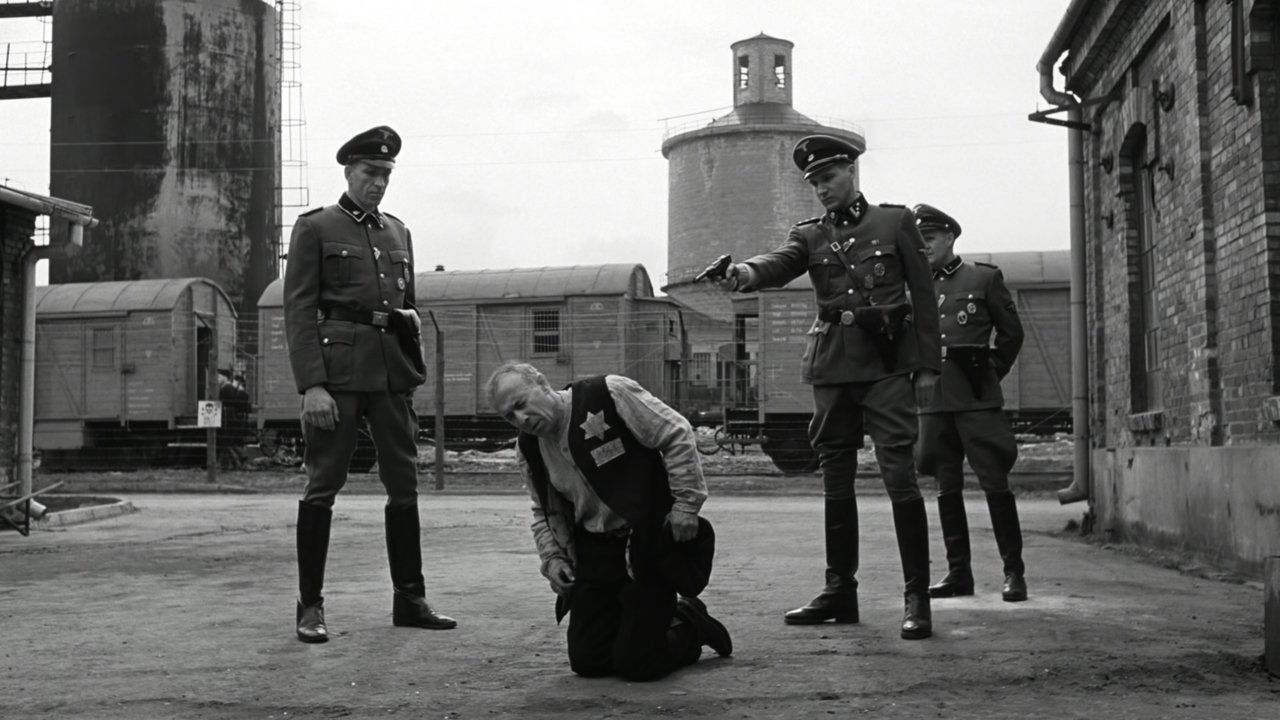
Spielberg shot nearly the entire film in black and white, creating a distance and a truthfulness as if you were facing documentary photographs of the era. The ghetto-liquidation scenes captured with handheld camera convey chaos and terror raw and unprocessed, and the restrained framing shows the director’s stance of refusing to consume the tragedy sensationally. The use of color, appearing only a handful of times, like the child in the red coat, takes precise aim at the audience’s emotions without excess.
The runtime, reaching 195 minutes, is by no means a span you can watch lightly. Yet through that length the film captures both the everydayness of the massacre and the slow process of salvation. That said, some scenes in the second half give the impression of raising emotion somewhat directly, and this is a point where opinion may divide between viewers who accept it as Spielberg’s signature voice and those who wish for more restraint. Even so, the gravity that runs through the whole never wavers.
Performance — Evil wearing the face of numb routine
Liam Neeson renders, without exaggeration, the inner shift of Schindler from a selfish businessman into the savior of countless lives. Because he does not begin as an obvious hero, his transformation leaves a heavier resonance. Ben Kingsley anchors the moral center of the film through the calm and devoted Stern. Goeth, the camp commandant played by Ralph Fiennes, is the most chilling presence in the work. The sight of him killing people with a bored expression shows, with horrifying persuasiveness, that evil can exist not as grand madness but as the face of numb routine.
What the film says — To save one is to save the world
At the end of the film, Schindler breaks down, saying he could have saved more. His cry, that had he only sold a car, a single badge from his lapel, he could have saved a few more, asks not about the size of a good deed but about how absolute the weight of one life is. The film’s line that “whoever saves one life saves the world entire” thus becomes not a simple comfort but the most concrete answer to what a human being can do in the face of tragedy.
Ratings & reception
The IMDb rating is 9.0 out of 10, making it one of the most highly regarded works in film history. The Rotten Tomatoes freshness score is 98%, and the Metacritic score is 95 out of 100, with critical acclaim near perfect. With this work Spielberg won his first Academy Award for Best Director, and the film took seven categories including Best Picture. Among films dealing with the Holocaust, it is the most broadly embraced by both the public and critics, and it has long been used as material for historical education.
Verdict
Schindler’s List is not an easy film to watch. It is long and heavy, and scenes you want to look away from follow one after another. But for that very reason, this film is worth confronting at least once. By reducing a vast tragedy to one person’s face and one line of a name, it makes you, in the end, remember what must not be forgotten. Before that grave achievement, a four-star rating comes naturally.
Recommended for
- Those seeking a weighty film that confronts historical tragedy head-on
- Those who want to feel the power of black-and-white imagery and restrained direction
- Those who want to see the contrasting brilliant performances of Liam Neeson and Ralph Fiennes
Comments