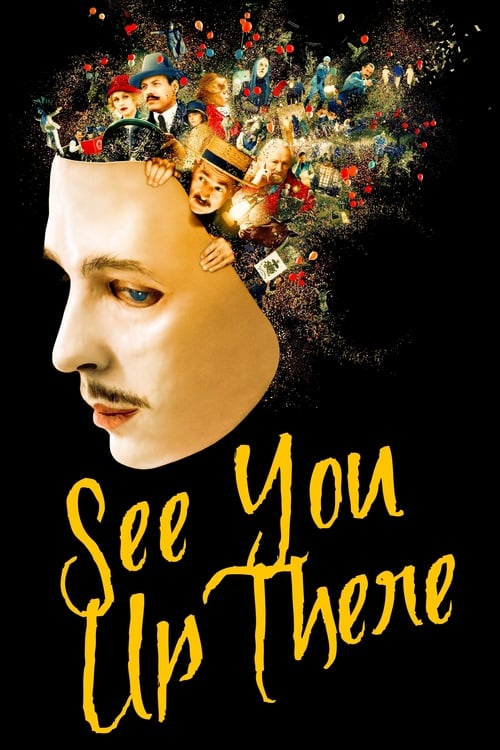
See You Up There (2017)
A Postwar Fable That Turns the Rage Behind a Mask into Art
by 10days1movie · Published 2026-10-16
| Type | Movie |
|---|---|
| Director | Albert Dupontel |
| Cast | Nahuel Pérez Biscayart, Albert Dupontel, Laurent Lafitte, Niels Arestrup, Mélanie Thierry |
| Release | 2017 |
| Genre | Drama, Crime, War |
| Runtime | 113min |
That the war has ended does not mean peace has come for everyone. See You Up There renders that truth with melancholy through the story of a man who survived the close of the First World War but lost his face. The original title, “Au revoir là-haut,” is taken from a farewell offered to fallen comrades. This film, in which lavish art design, sorrowful humor, and rage all mingle together, leaves the heart sunk for a while after watching. The skill of hiding a sharp critique inside a fairy-tale exterior was so impressive that there was no shortage of reason to give it ★4.0.
What it’s about — A faceless painter who stages a memorial-monument swindle
Just before the war ends, a commander blinded by ambition drives his men to their deaths. The young painter Édouard, who barely survives this slaughter, loses the lower half of his face to a shell, and his comrade Albert saves him. After the war the two return home, but neither the state nor society will face them. Édouard turns his back on the world, covering his ruined face with an ornate paper mask, and the two stage a vast swindle centered on monuments to the war dead. Following this revenge plot, the film takes precise aim at the hypocrisy of a society that lines its pockets while pretending to honor war heroes.
Direction — A world of color where masks stand in for dialogue
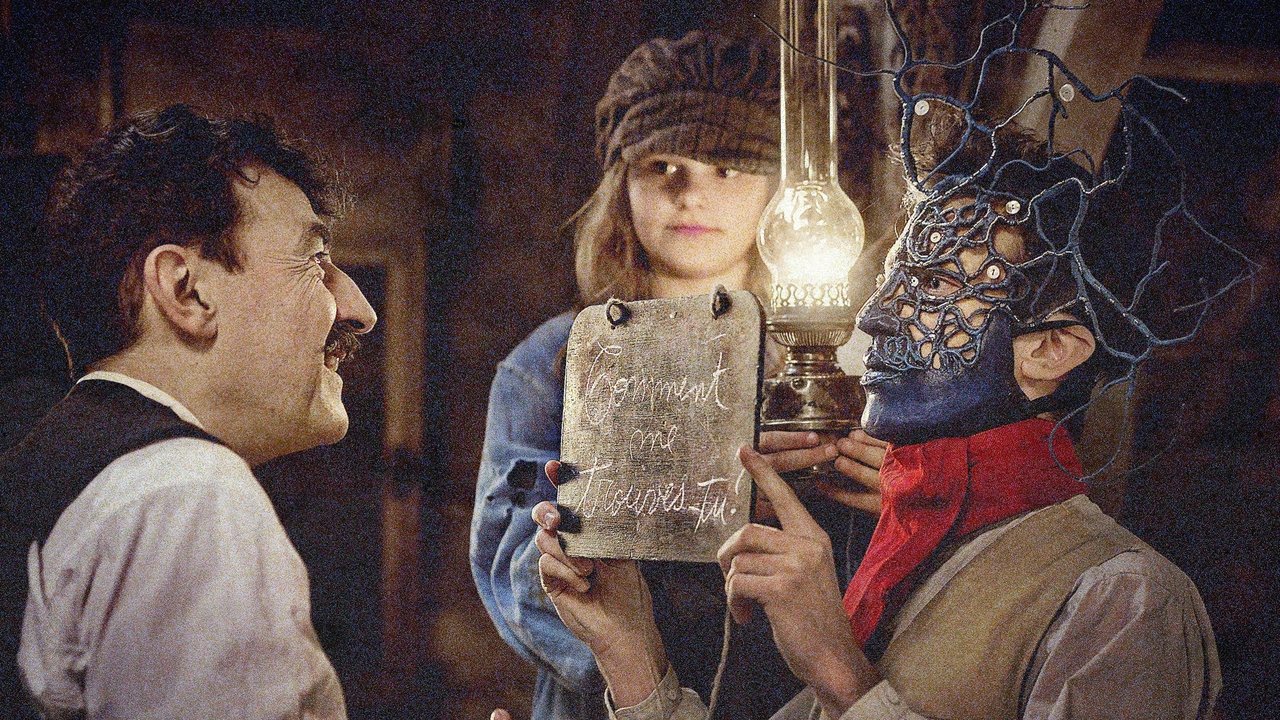
The direction of Albert Dupontel, who both directed and stars, is bold and lavish. He pushes color and art design to the extreme, spreading out at once the misery of the postwar world and the fantastical realm of the masks. The camera sweeps across a ruined trench and then glides, before you know it, into an opulent ballroom, crossing freely between the borders of tragedy and comedy. Such a wide swing in tone risks becoming scattered, but Dupontel never loses the characters’ emotional throughline and so keeps his balance. The masks Édouard makes himself, in particular, function as artworks in their own right and as the only language the man, robbed of speech, offers to the world. Resembling birds, beasts, and clowns, these masks speak for the character’s emotions whenever a scene changes, conveying more than dialogue could.
The difference in how the film handles the war scenes and the later swindle is also worth noting. The film renders the mud and gun-smoke of the trenches realistically, then shifts the stage to the gaudy streets of Paris and changes the temperature of the color entirely. That the texture of the screen shifts with the space even though the same character lives through the same era tells us, visually, that the survivors are caught between two worlds.
Performance — Crossing between despair and mischief on the eyes alone
Nahuel Pérez Biscayart expresses all of Édouard’s despair, mischief, and rage through his eyes and gestures alone, without a single line of dialogue. To convey such rich emotion with the lower half of his face hidden is by no means easy. Dupontel’s Albert is a timid, ordinary man, but he renders the loyalty and guilt he feels toward his friend with such weight that he anchors the film’s emotional center. Laurent Lafitte, as the corrupt commander, chillingly expresses the shamelessness of a man who never repents to the end, provoking the audience’s anger.
What the film says — A society that honors the dead and abandons the living
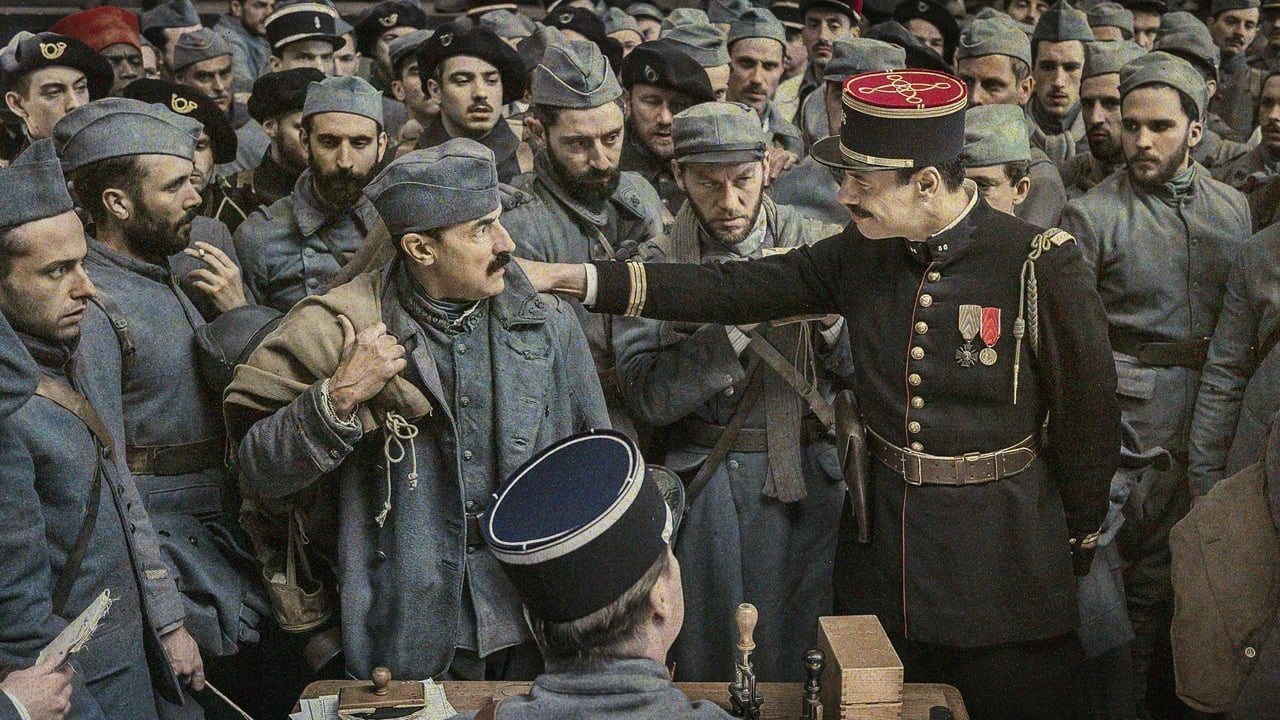
The core of See You Up There is the story of those left behind after the war ends. The state raises the dead up as heroes and erects monuments, yet it drives the wounded veterans who returned alive out into the streets. Édouard’s mask is thus a quiet protest the abandoned man hurls at the world, and at the same time a shield with which he protects himself. Borrowing the form of a revenge plot, the film at its end moves toward sorrow and reconciliation rather than rage. The mourning that dwells within the lavishness lingers long.
Ratings & reception
By OMDb, the IMDb rating is 7.4. The Rotten Tomatoes freshness score is 94 percent, with critical acclaim conspicuous. This work earned nominations in several categories at the French César Awards, drawing high marks for its art direction, direction, and adaptation. Its capturing of both lavish visuals and a weighty theme appears to have drawn critical support.
Verdict
See You Up There is a singular work that holds the solemnity of a war film, fairy-tale fantasy, and social satire in one vessel. With its wide swing in tone, opinion may divide, but that very boldness is the film’s greatest charm. Watching a man’s rage behind a mask sublimate, in the end, into art is sorrowful and beautiful at once. It is little known, but a film well worth discovering.
Recommended for
- Those who love films distinguished by lavish art design and visuals
- Those interested in dramas about the wounds of war and their aftermath
- Those seeking a work of singular tone where tragedy and humor mingle
Comments