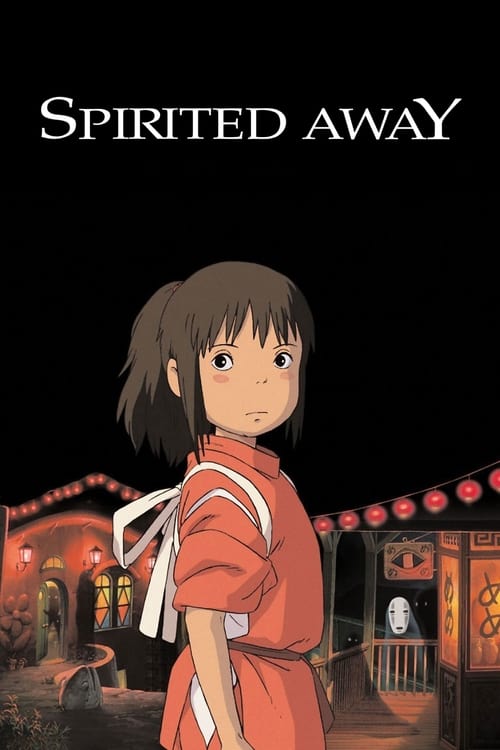
Spirited Away (2001)
What Remains When Your Name Is Taken
by 10days1movie · Published 2026-06-04
| Type | Movie |
|---|---|
| Director | Hayao Miyazaki |
| Cast | Daveigh Chase, Suzanne Pleshette, Miyu Irino |
| Release | 2001 |
| Genre | Animation, Family, Fantasy |
| Runtime | 124min |
If you could only keep one Studio Ghibli film, you would keep coming back to this one. Spirited Away is Hayao Miyazaki’s 2001 feature — winner of the Academy Award for Best Animated Feature and, for years, the highest-grossing film in Japanese history. My rating is ★5.0. It holds your breath all the way through and keeps you inside its world long after the credits roll.
What it’s about — A girl stripped of her name in the world of the gods
Ten-year-old Chihiro is dragged along on a family move, cuts through what looks like an abandoned theme park, and stumbles into the realm of the spirits. Her parents eat food left out for the gods and are turned into pigs. Alone, Chihiro has to survive in this place on her own terms. She finds work at the enormous bathhouse run by the witch Yubaba — but at a cost: Yubaba takes her name, calling her Sen instead. Everything Chihiro does from that point forward is in service of one goal: get her parents back and go home.
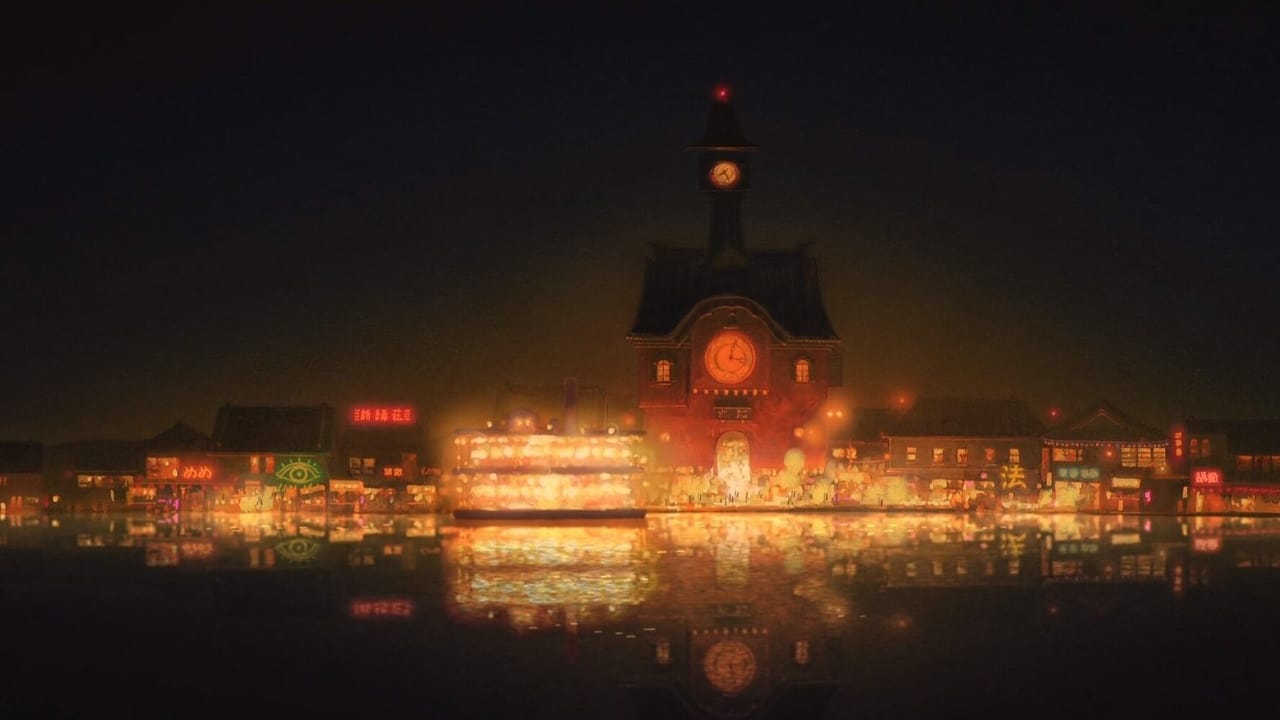
The plot is simple. The world it unfolds in is not. The bathhouse’s endless corridors, the parade of gods and spirits checking in for a soak, the masked creature No-Face wandering the halls with his bottomless appetite, the stinking river god who turns out to be something entirely different — each detail carries the weight of Japanese myth, folk belief, and pointed commentary on labour, consumption, and identity.
Direction — Animation that doesn’t explain, and Hisaishi’s melody
Miyazaki’s greatest creative decision here is what he chooses not to explain. The bathhouse’s layout, the rules of the spirit world, the precise nature of No-Face — none of it is decoded for the viewer. It simply exists, and you absorb it the way you absorb a place you’ve actually visited. That restraint is what makes the world feel real rather than constructed.
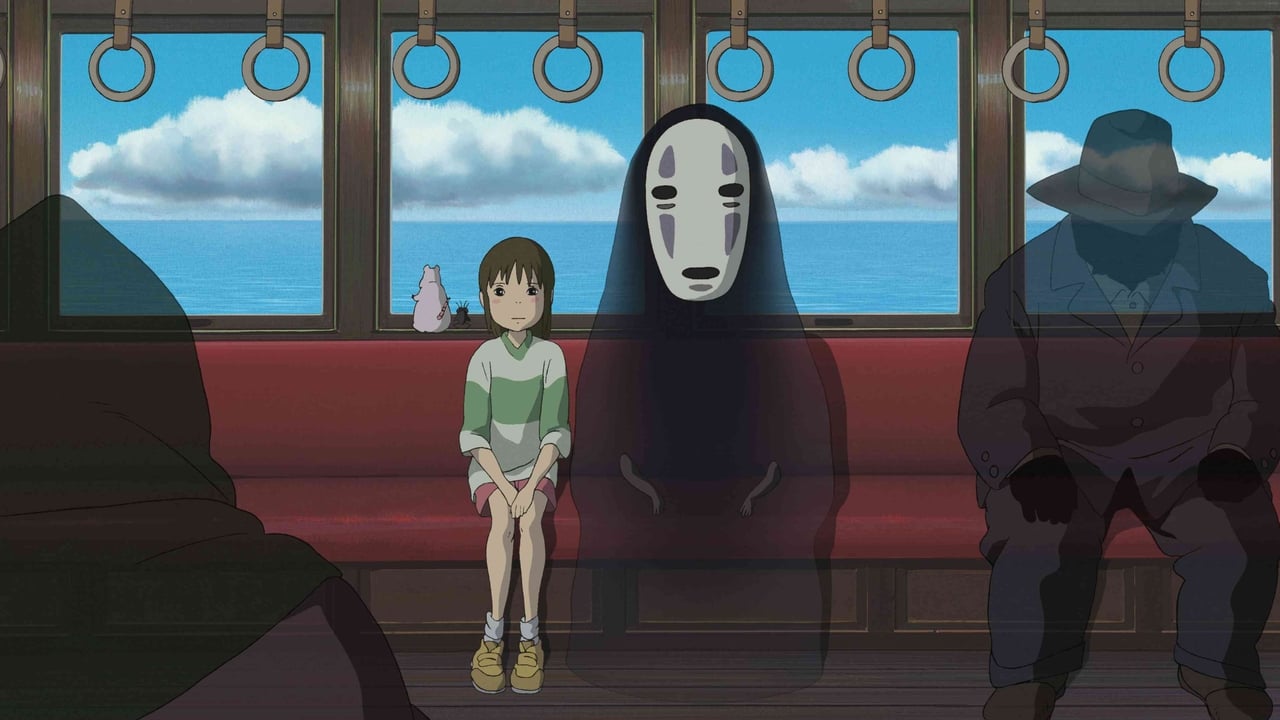
The density of the animation is staggering. Hundreds of creatures move through the frame with individual purpose — frog attendants scrubbing floors, soot sprites ferrying coal, a radish spirit waiting patiently for the elevator. Iconic images accumulate without fanfare: Chihiro sprinting across a flooding bridge, a train cutting silently across a shallow inland sea, Chihiro descending into the furnace room for the first time. Each background painting stands alone as a complete work of art.
Joe Hisaishi’s score is so fused to the film’s emotional rhythm that it is nearly impossible to hear the main theme — “Always With Me” — without the images flooding back. The music never pushes; it simply arrives at exactly the right moment and opens something up.
What the film says — Name, identity, and connection
Chihiro starts the film as a deliberately unremarkable protagonist — sulky, scared, incapable. That is the point. This is not a story about a chosen hero. It is a story about an ordinary child who is frightened every day and keeps moving anyway. Her growth is not a dramatic arc but an accumulation of small choices: asking for a job when everything in her wants to run, carrying a task through even when she doesn’t understand it, extending kindness even when no one told her to.
Haku is a being who has forgotten his own name — and with it, who he is. He serves Yubaba as a fixer, stripped of any identity beyond his function. Chihiro remembers his name for him. The film’s central argument is quiet but clear: names, meaning identity, can be taken away or forgotten; but if someone holds that memory for you, it can be reclaimed.
No-Face is the film’s saddest figure. He wants something he cannot name. He eats and eats and fills nothing. The only person who ever treated him as a presence worth acknowledging was Chihiro — and that one small act of ordinary decency is what eventually allows him to stop consuming and become still. The film is, underneath everything else, about what it means to be seen.

Ratings and reception
The consensus is as close to unanimous as critical reception gets. Spirited Away holds a 96% score on Rotten Tomatoes. Beyond the Academy Award for Best Animated Feature (2003), it won the Golden Bear at the Berlin International Film Festival — the only animated film ever to receive that honour. Critics have praised its extraordinary visual invention, its willingness to treat a child audience as intelligent, and its layered engagement with Japanese mythology and the anxieties of modern consumer society.
Verdict
What is remarkable is how differently the film reads depending on when you come to it. As a child it is an astonishing adventure into an impossible world. As an adult it is a film about labour, identity, and what it costs to belong somewhere that was not made for you. Both readings are correct, and both are fully present in every frame. That is why a film from 2001 is still the standard against which animated storytelling is measured. ★5.0.
Recommended for
- Anyone coming to Studio Ghibli for the first time or returning to see it properly
- Viewers looking for a film that adults and children can watch together and come away having felt entirely different things
- Anyone who wants to be absorbed into a world rather than merely shown a story
Comments