
Spring, Summer, Fall, Winter… and Spring (2003)
A Whole Life Drifting by at a Hermitage on the Water
by 10days1movie · Published 2026-10-19
| Type | Movie |
|---|---|
| Director | Kim Ki-duk |
| Cast | Oh Yeong-su, Kim Young-min, Seo Jae-kyung, Kim Ki-duk, Ha Yeo-jin |
| Release | 2003 |
| Genre | Drama |
| Runtime | 103min |
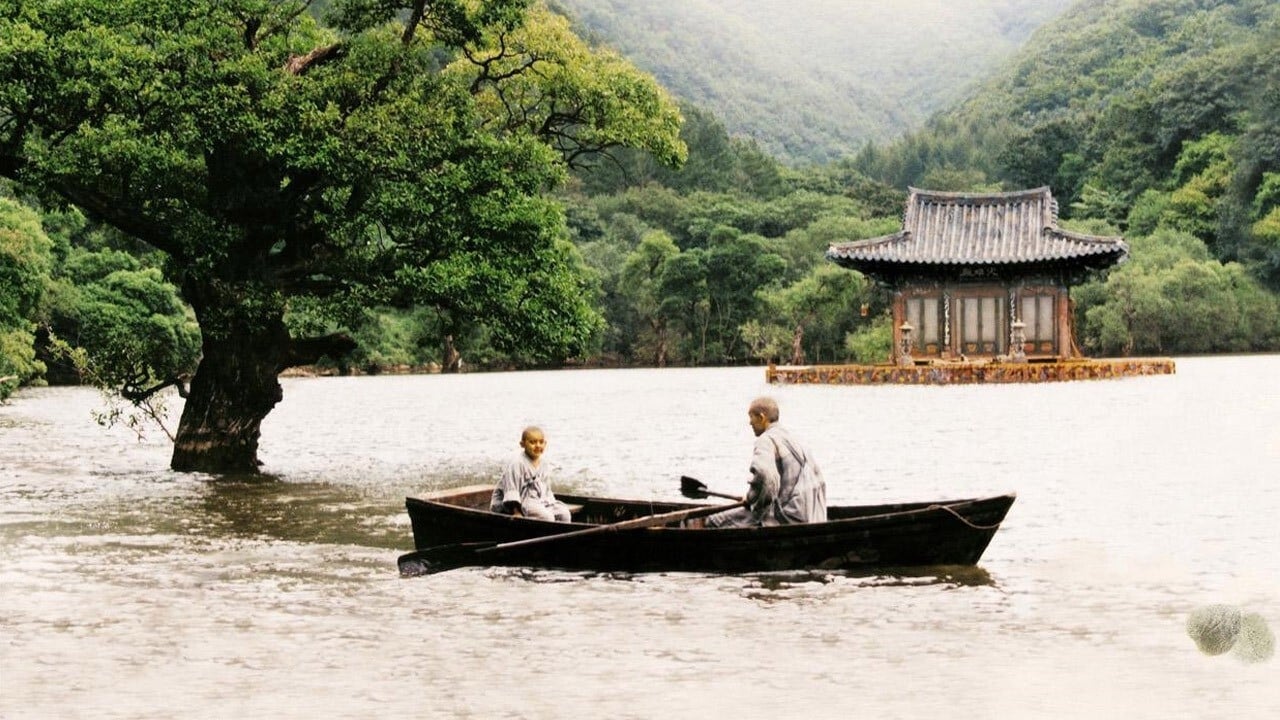
A lake ringed by mountains, and at its center a small hermitage floating on the water. This film takes only that space as its stage. The characters scarcely increase, and no events unfold with any clamor. Instead, over the span of five turning seasons, it slowly shows how one human being commits sin, is crushed beneath its weight, and empties it out again. It is the most static and composed work in director Kim Ki-duk’s filmography, and a film that makes you see anew, from a different angle, a name once remembered for violence and shock.
What it’s about — Five seasons turning at a hermitage on the water
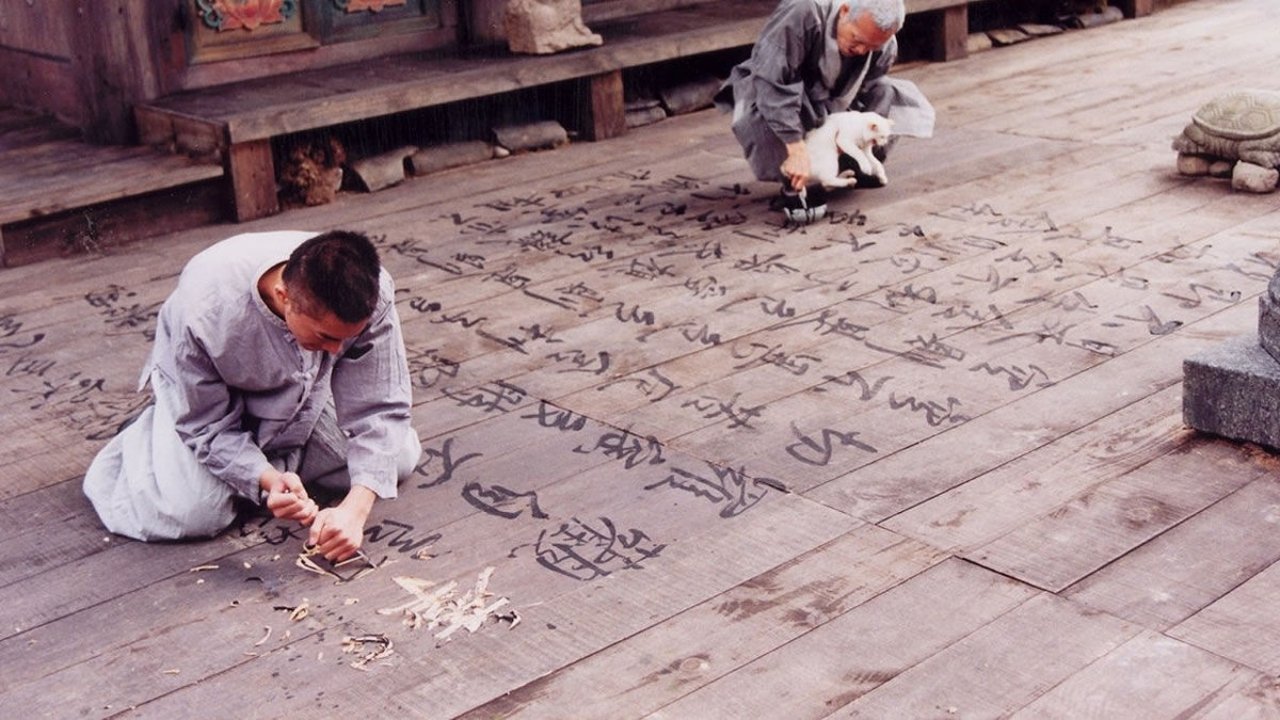
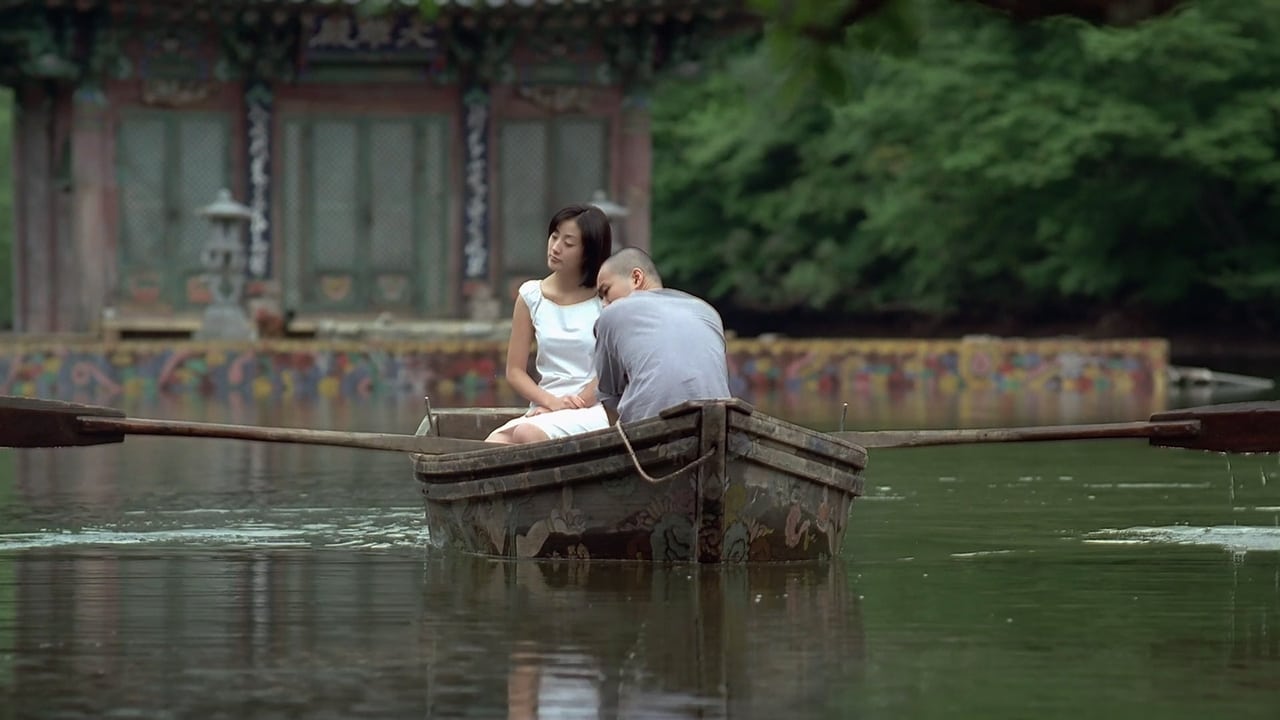
The story begins in spring. A young boy monk living with an old master playfully ties stones to a fish, a frog, and a snake, and the master ties an identical stone to the boy’s back so he comes to realize it for himself. In summer the boy becomes a young man, loses his heart to a girl who has come to convalesce, and in the end descends the mountain. In autumn he returns, fleeing, as a man who has committed murder, and in winter he heads back to the hermitage as a middle-aged man. And then another spring. As the title says, the four seasons turn a full circle, and life’s desire, attachment, and the process of laying them down are folded over the cycle of nature.
Direction — Doors without walls that trace the heart’s boundary
What first catches the eye is the way space is handled. Several doors without walls stand at the hermitage, and the characters insist on passing only through those doors. Even though one could simply step around the side, the very act of passing through the door frame becomes a device that shows an invisible discipline and a boundary of the heart. The dialogue is extremely restrained. The master teaches through action rather than words, and the camera watches the characters from afar, drawing close only at decisive moments.
It is also striking how clearly the color and air of the screen change with each season. The light green of spring, the deep green of summer, the dry brown of autumn, and the frozen white of winter become, just as they are, the temperature of the characters’ inner lives. In this film Kim Ki-duk himself plays the middle-aged man of winter, and the scene of him dragging a millstone up the mountain across the frozen lake conveys the weight of atonement without a single word. The skill of building emotion through scenery alone, without sensational setups, shows a calm power distinct from his other works.
Performance — Oh Yeong-su’s silently waiting face
The presence of Oh Yeong-su, who plays the old master, holds up the entire film. He scarcely shouts, nor does he grieve. With a single face that simply watches and waits in silence, he conveys both the sorrow for a disciple swept up by desire and the heart that, even so, believes in him to the end. That depth arises on screen despite little change in expression is thanks to the actor’s mastery.
The growing disciple is played by several actors across his different stages, and each takes up a different age of the same character naturally. In particular, the moment the young man of summer wavers as he first faces desire, that clumsy, raw trembling lands persuasively. A style of acting that compresses emotion into gesture and gaze rather than explaining it at length meshes well with the grain of this film, which is sparing with dialogue.
What the film says — The cycle of karma circling the same place
The core of this film is, in the end, karma and cycle. A childhood game of tying stones to animals returns one day with the same weight to oneself, and one person’s sin is cast again as the same question to the next generation. The structure that begins in spring and ends in another spring quietly tells us that life seems to circle the same place yet shifts, little by little, to a slightly different one. The religious coloring is strong, but it does not force any particular doctrine. Rather it reads as a story about the desire and regret everyone experiences at least once, and the time spent enduring them.
Ratings & reception
This work holds an IMDb rating of 8.0, placing it among Kim Ki-duk’s films that earned especially high regard abroad. The Rotten Tomatoes freshness score is 94 percent and the Metacritic score is 85 out of 100, with critical acclaim gathered almost consistently. In that a director who had drawn attention with cruel, provocative imagery completed, at the opposite pole, a static meditative piece, it drew great notice from overseas festivals and critics upon release. It is also frequently cited as a case showing that Korean cinema can resonate worldwide by holding a universal sentiment.
Verdict
If you expect dazzling events or a fast pace, this film may feel slow. But as you entrust your heart to each piece of scenery and follow along, before you know it a weighty resonance remains, as if you had watched the whole of one human life. It is a film that, though it merely shows rather than trying to teach anything, makes you think a great deal. Restrained voice, solid performances, and the simple yet powerful structure of the four seasons come together to show a quality that more than earns ★4.0.
Recommended for
- Those who love films that speak through scenery and atmosphere over dialogue
- Those who want to calmly chew over the themes of life’s cycle and karma
- Those who want to confirm a different side of director Kim Ki-duk
Comments