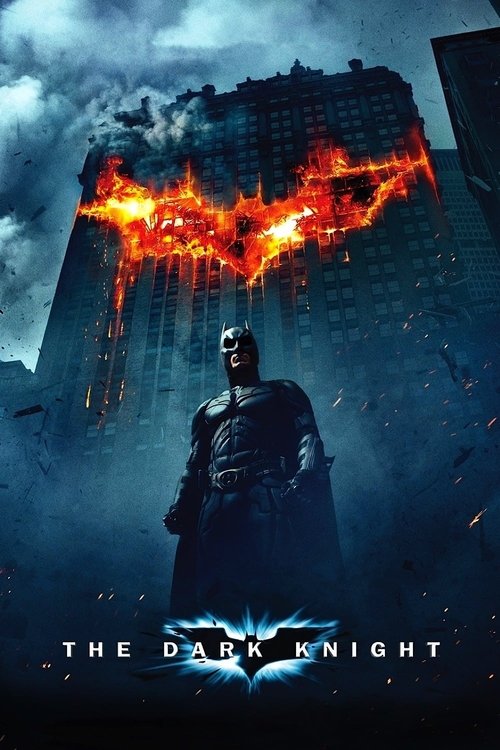
The Dark Knight (2008)
A Crime Tragedy Wearing a Superhero's Cape
by 10days1movie · Published 2026-06-29
| Type | Movie |
|---|---|
| Director | Christopher Nolan |
| Cast | Christian Bale, Heath Ledger, Aaron Eckhart |
| Release | 2008 |
| Genre | Action, Crime, Thriller |
| Runtime | 152min |
Calling this a superhero movie feels like a disservice. The Dark Knight is a crime drama that happens to feature Batman — more precisely, it is a moral tragedy about how far a person will compromise their principles in order to protect what they believe in. My rating is ★5.0. That it is still routinely cited as the greatest superhero film ever made, nearly two decades after release, is no accident.
What it’s about — The Joker’s experiment in pure chaos
With Gotham’s organized crime on the run, something stranger fills the vacuum. The Joker (Heath Ledger) has no interest in money or power; he wants only chaos. Bruce Wayne (Christian Bale), as Batman, sets out to stop him — but the Joker turns every attempt into a game, putting the entire city on a kind of moral operating table. When crusading district attorney Harvey Dent (Aaron Eckhart), the city’s “White Knight,” is drawn into the maelstrom, the film moves from a simple conflict between hero and villain into something considerably darker.
Direction — Weight built from practical shooting and rhythm
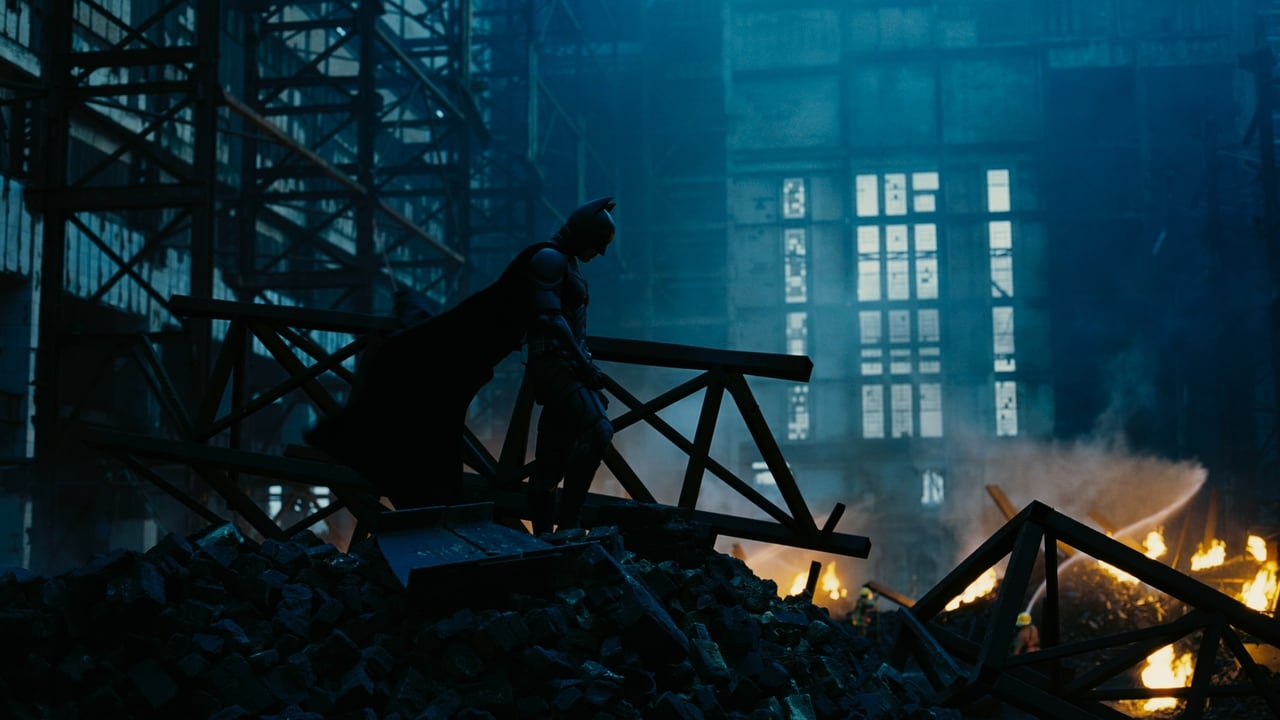
Christopher Nolan shoots Gotham not as a fantasy city but as a living, breathing metropolis. Filming on actual Chicago streets and using IMAX cameras for sweeping cityscapes, he creates the uncanny impression that everything happening on screen could happen in the real world. The truck chase, the bank robbery that opens the film, the Batmobile pursuit — these are built primarily on practical effects rather than CGI, and they hold up completely today.
What Nolan does better than almost anyone is rhythm. At two hours and thirty-two minutes, the film wastes nothing. He controls the flow of information so that the Joker remains unpredictable, stacks one moral dilemma on top of another, and builds the weight of the story steadily so that the ending lands with the force of everything that came before it. The score — Hans Zimmer and James Newton Howard’s dissonant, two-note motif — functions almost as a nervous system for the film, priming the audience for dread before the Joker even appears on screen.
Performance — The Joker that Heath Ledger left behind
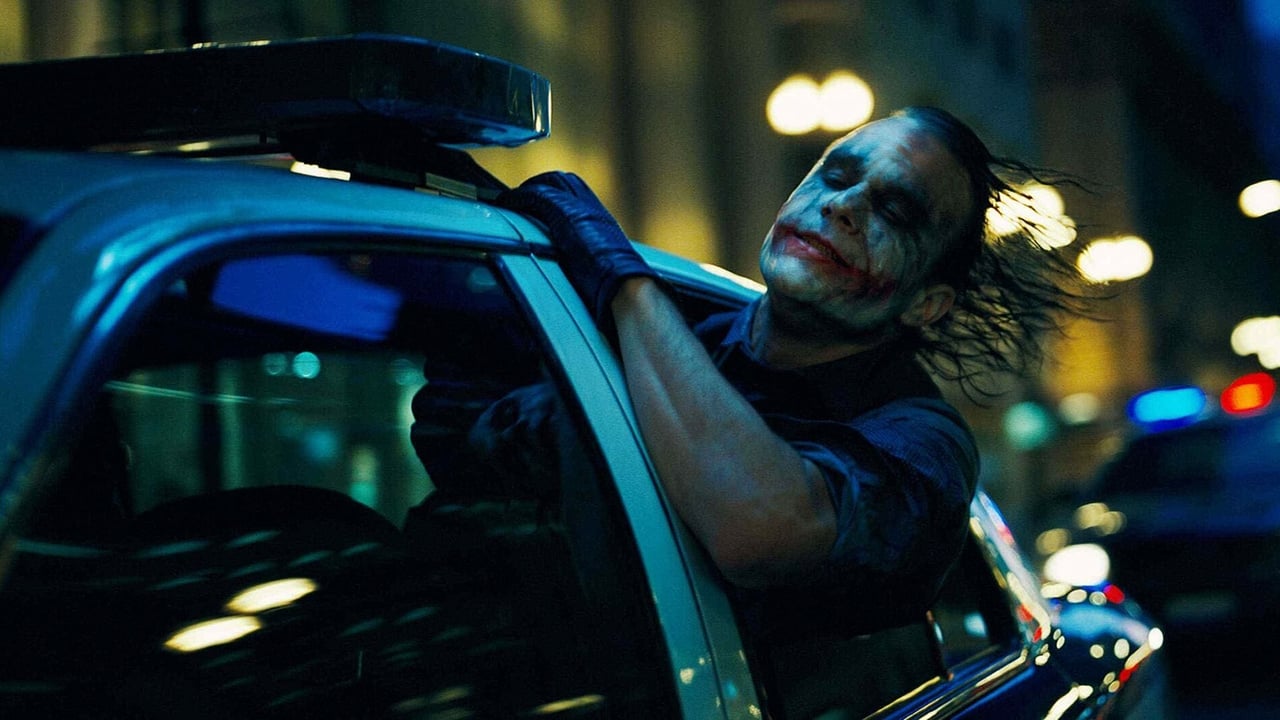
It is impossible to talk about this film without dwelling on Heath Ledger’s Joker, and that is because his performance exists on a different level from virtually any villain performance in modern cinema. This Joker does not want a monologue or a throne. He improvises, he probes, he turns every situation into an experiment. The small physical details — the way he licks his lips, the casual, almost gentle delivery of his threats — accumulate into something genuinely disturbing, and yet the character remains riveting throughout.
Ledger died in January 2008, before the film’s release, and was awarded the Academy Award for Best Supporting Actor posthumously in 2009. His performance became a defining cultural moment. Christian Bale grounds the film with a controlled, internalized portrayal of a man running out of moral room to maneuver, and Aaron Eckhart is quietly devastating as Harvey Dent — a genuinely good man pushed past the point of no return.
Ratings & reception
The Dark Knight holds a 94% Tomatometer on Rotten Tomatoes from 339 reviews, and a 9.1 out of 10 on IMDb — one of the highest scores in IMDb’s history. It crossed 100 million dollars at the North American box office in three days and went on to earn over one billion dollars worldwide. It was the first superhero film to win a competitive Academy Award in a major acting category, and it is widely credited with expanding the critical and commercial ambitions of the genre as a whole.
Verdict
The Dark Knight endures not because of its spectacle — though the spectacle is exceptional — but because it uses Batman as a vehicle for questions that have nothing to do with comic books. Can good intentions justify bad means? Will ordinary people hold to their principles when the cost is catastrophic? The Joker does not answer these questions; he detonates them. And the film watches, coldly, as the blast radius expands. That is why the rating is ★5.0.
Recommended for
- Viewers skeptical of superhero films who enjoy serious crime dramas
- Anyone who has not yet seen Heath Ledger’s Joker performance
- Fans of films that use genre conventions as a frame for genuine ethical inquiry
Comments