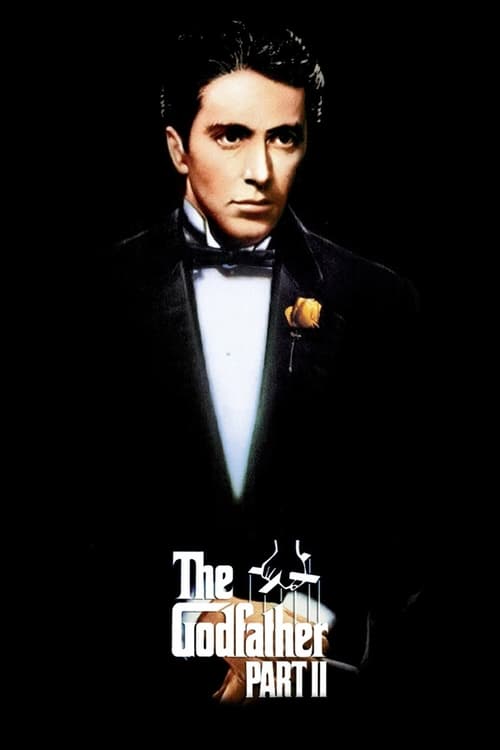
The Godfather Part II (1974)
How Power Hollows a Man Out Completely
by 10days1movie · Published 2026-06-06
| Type | Movie |
|---|---|
| Director | Francis Ford Coppola |
| Cast | Al Pacino, Robert De Niro, Diane Keaton |
| Release | 1974 |
| Genre | Crime, Drama |
| Runtime | 202min |
Sequels rarely surpass their originals. The Godfather Part II (1974) is one of the exceptions — and more than that, it dismantles the very concept of a sequel. My rating is ★5.0. In a single film, Francis Ford Coppola traces both the rise of young Vito Corleone and the fall of his son Michael, and over three hours and twenty-two minutes makes a case for how power strips a person down to nothing.
What it’s about — The intersecting times of Vito and Michael
The film runs two timelines simultaneously. The first follows Michael Corleone (Al Pacino) in the late 1950s and early 1960s as he tries to expand the family empire into Las Vegas and pre-revolutionary Cuba while fending off Senate investigations and a suspected assassination attempt. The second follows the young Vito (Robert De Niro), an orphan who emigrated from Sicily to New York in the early twentieth century, building himself from an unemployed garment worker into the respected Don of Little Italy. The two stories never meet. Coppola places them side by side so the audience feels the gulf between what Vito built and what Michael has made of it.
Michael’s strand is cold and oppressive. Suspicion radiates from every scene — toward senators, business partners, his own brother Fredo (John Cazale), even his wife Kay (Diane Keaton). Vito’s strand, shot in warm sepia tones on meticulously recreated immigrant streets, carries a different moral weight: violence, yes, but also community loyalty and a legible human warmth that Michael has long extinguished in himself.
Direction — A structure where two timelines comment on each other
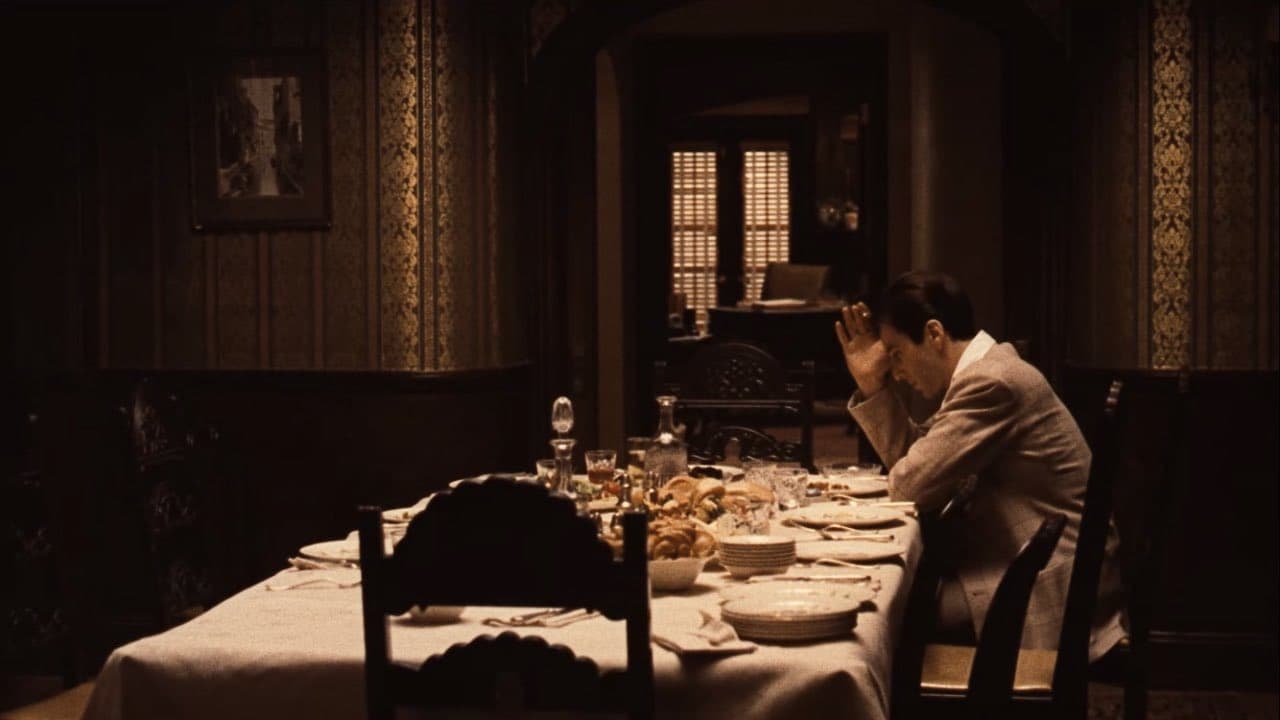
The dual-timeline gamble should not work. Cutting between the 1910s and 1950s in a single drama risks incoherence, or worse, a split film that satisfies neither story. Coppola makes it work by turning the structure itself into the argument: every time a Vito scene illuminates what the Corleone name once meant, the cut back to Michael sharpens the sense of what has been lost. The two timelines don’t just coexist — they comment on each other.
Cinematographer Gordon Willis, who lit the original, goes darker still. Michael’s scenes are so underlit that characters frequently emerge from near-total shadow — not as a stylistic flourish but as a literal rendering of Michael’s inner state. The warmth reserved for Vito’s story makes the contrast impossible to miss. Nino Rota’s score weaves the famous theme through both eras, creating continuity even as the emotional key shifts from melancholy to outright tragedy.
Performance — Pacino’s closing-off and De Niro’s Vito
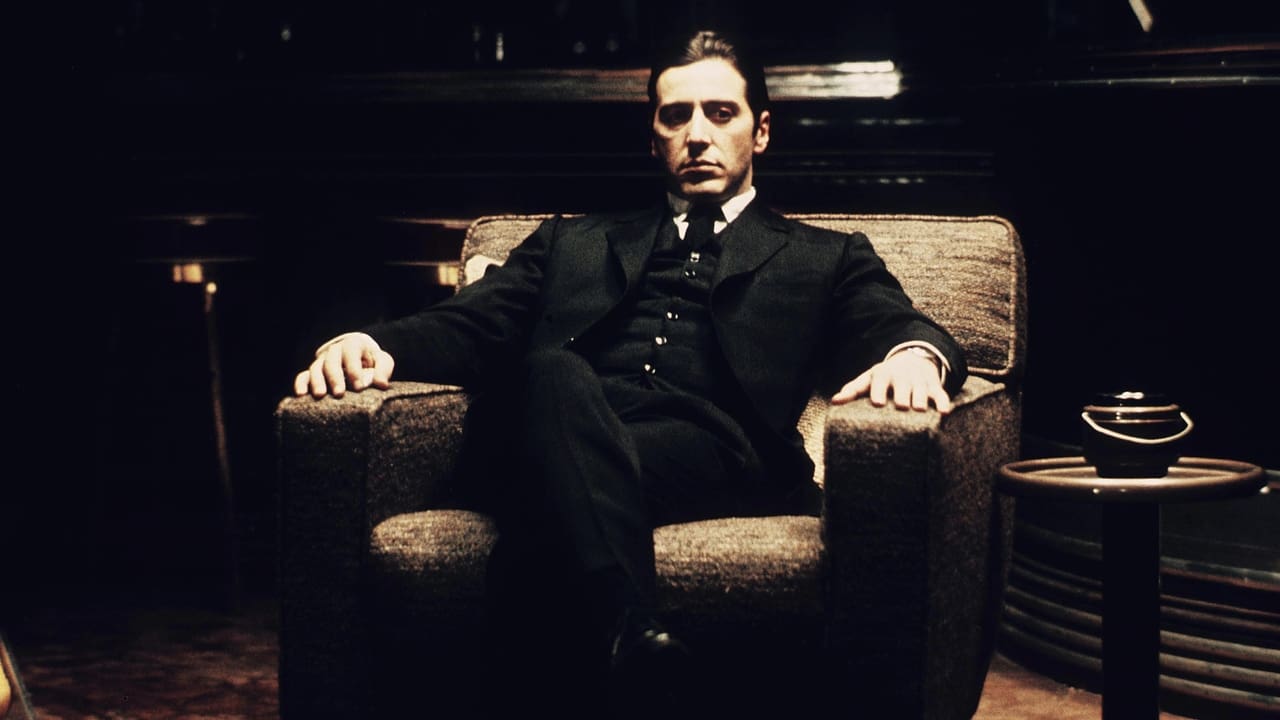
Al Pacino’s Michael here is a fundamentally different creature from the thoughtful war hero of Part I. By this point, Michael has willed himself into near-total emotional closure. Pacino plays this through stillness: minimal movement, a controlled voice, eyes that register everything and give back nothing. That restraint is far more frightening than any outburst could be. The scene where he absorbs Fredo’s betrayal without visible reaction, and the moment he hears Kay’s revelation about the abortion — in both cases, the performance works precisely because Pacino refuses to break. The final image of Michael alone in his empty compound, all victories intact and everything human gone, is the logical end of that performance.
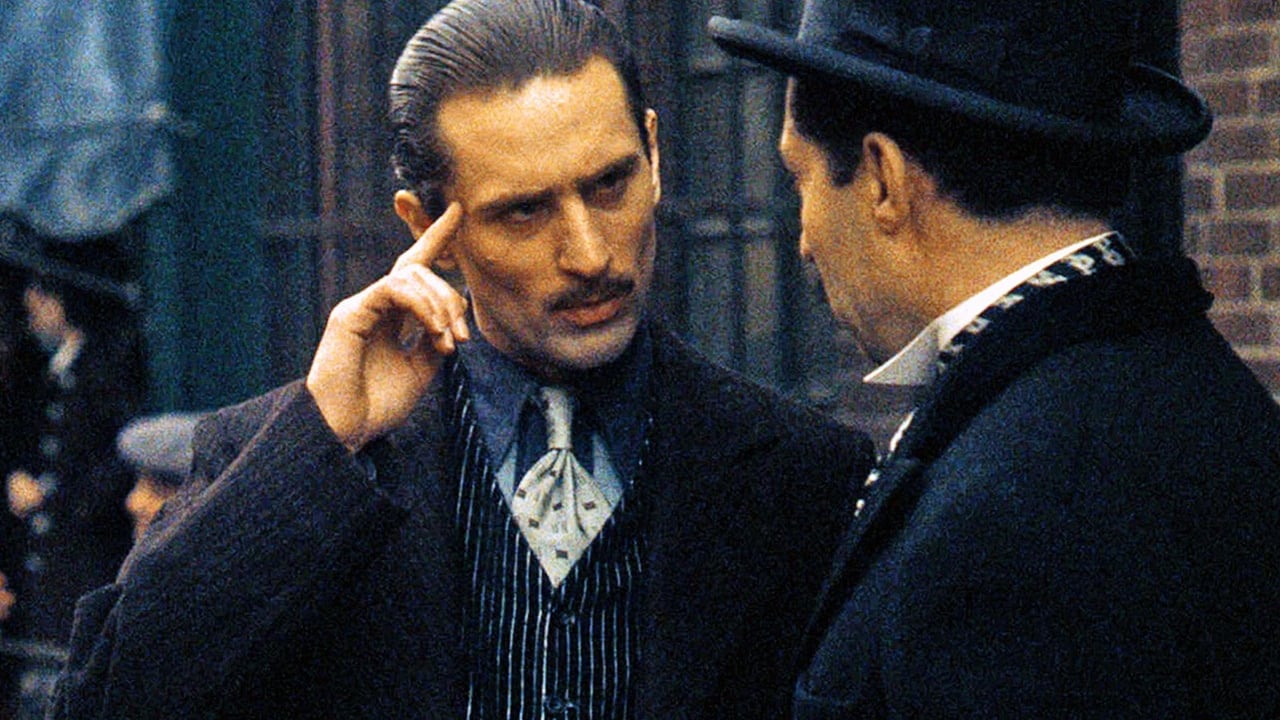
Robert De Niro’s young Vito speaks mostly Italian and communicates primarily through gesture and expression. He won the Academy Award for Best Supporting Actor for the role, and the performance justifies the recognition. Taking over a character that Marlon Brando had defined so vividly without imitation — building a younger version from scratch that still reads as the same man — requires a particular discipline. De Niro finds it: a watchful quality, a slow gathering of presence, and occasional flashes of genuine warmth that explain, without excusing, the world Vito builds.
Ratings & reception
The Godfather Part II holds a 96% Tomatometer on Rotten Tomatoes (129 reviews) and a Metacritic score of 90 out of 100, indicating universal critical acclaim. IMDb users rate it 9.0/10, placing it consistently among the highest-rated films in the site’s history. At the 1975 Academy Awards the film won six Oscars, including Best Picture, Best Director, Best Adapted Screenplay, Best Supporting Actor (De Niro), Best Original Score, and Best Art Direction — the first sequel in history to win Best Picture. Critics then and since have singled out the audacity of the parallel-timeline structure and the way two actors, sharing no screen time, together complete a portrait of a single dynasty’s moral arc.
Verdict
The Godfather Part II is a film about what Michael loses, not what he gains. Family, trust, the capacity for human feeling — everything surrendered one piece at a time to maintain control. The last shot gives us the end state: a man who won, surrounded by nothing. Because Vito’s story runs alongside it in all its warmth and relative humanity, the contrast lands harder than it would in any straightforward descent narrative. Fifty years on, the film endures not merely as a well-crafted crime epic but as one of the most precise and merciless accounts of power’s cost ever committed to film. Rating: ★5.0.
Recommended for
- Viewers who want a crime film that works equally as a character study and a moral essay
- Anyone drawn to bold narrative architecture — two timelines, one argument, no wasted scene
- Those who want to watch Al Pacino and Robert De Niro at the absolute peak of their craft
Comments