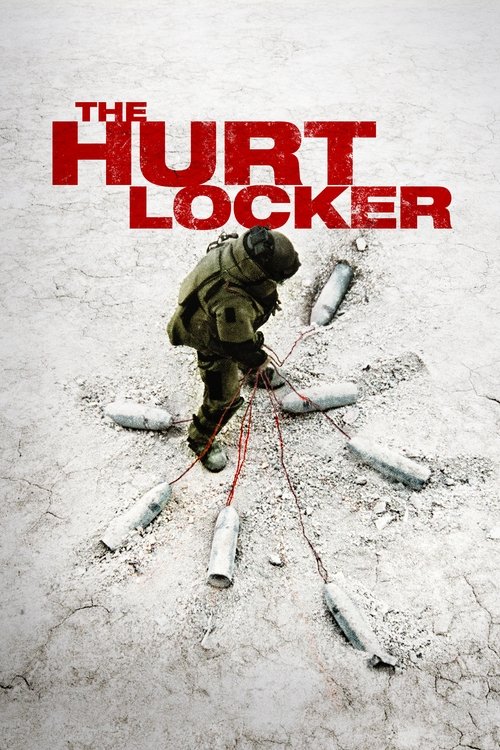
The Hurt Locker (2008)
The Addiction Built by Sixty Seconds of Defusing a Bomb
by 10days1movie · Published 2026-10-28
| Type | Movie |
|---|---|
| Director | Kathryn Bigelow |
| Cast | Jeremy Renner, Anthony Mackie, Brian Geraghty, David Morse, Guy Pearce, Evangeline Lilly |
| Release | 2008 |
| Genre | Drama, Thriller, War |
| Runtime | 131min |
War films usually deliver their message through vast battles or the sacrifice of a hero. The Hurt Locker barely uses those avenues at all. The place this film points its camera is a single person, and one lump of explosives set before him. Following the daily routine of a U.S. Army bomb disposal unit deployed to Baghdad, Kathryn Bigelow shows not so much what war means as how war gnaws at the human nervous system.
What it’s about — Defusing missions repeated without a clear arc
The story begins as Staff Sergeant William James, the new leader of an EOD unit, joins the team. He is a man who ignores regulations and safety procedures, casting off his protective helmet to approach detonators bare-handed. His comrades Sanborn and Eldridge feel his methods threaten their own lives, and they clash with him endlessly.
The film has no clear narrative arc. Instead, bomb-defusal missions recur like episodes, each one tightening like an independent short story. The audience is left not knowing whether the next bomb will go off, growing tense from scratch every single time. This structure itself transposes the sense of time on a battlefield directly to the screen.

Direction — Handheld camera that stretches sixty seconds into eternity
Bigelow’s direction is lean. The handheld camera darts between a character’s fingertips and expression and the gaze of a passerby watching from afar, filling the frame with the uncertainty of not knowing who is the enemy. In the scenes of defusing a bomb, she deliberately stretches time. A hand hesitating over which wire to cut, a sweating face, someone standing in the distance with a cellphone in hand. All these details gather to make a task of barely sixty seconds feel like eternity.
What is especially striking is the balance of conveying danger vividly while never glamorizing violence. The long-range sniper standoff in the desert is nearly silent, yet the pressure felt within that silence is stronger than any gunfight. It is no accident that Bigelow became the first woman to win the Academy Award for Best Director for this work.
Performance — Jeremy Renner, an addict alive only before a bomb
Jeremy Renner drew sudden attention with this film. The James he plays is no mere reckless hero. He is closer to a kind of addict who feels alive only before a bomb. Renner expresses this dangerous fascination without exaggeration. The image of him standing blankly before a supermarket shelf choosing cereal shows, in a single shot, how empty a person can become once removed from the tension of the battlefield.
The Sanborn played by Anthony Mackie stands at the opposite pole from James and balances the film. His fear, his wish to follow the rules and make it home alive, is utterly realistic, and the confrontation between the two actors becomes a pillar supporting the tension of the entire film.

What the film says — What kind of being war turns a person into
The film’s final scene, of James returning once more to the battlefield, speaks volumes. He has come back to an ordinary life with his family, yet there he cannot breathe. War has broken him and, at the same time, become the only stage on which he can live. The Hurt Locker does not weigh the rights and wrongs of war. It simply records, coldly, the process by which the environment of war transforms a person into a different being.
Ratings & reception
Its IMDb rating is 7.5 out of 10. Its Rotten Tomatoes freshness drew overwhelming critical support at 96%, and its Metacritic score reaches 95 out of 100. Though it was closer to a low-budget independent film, it rose to become the most talked-about work of its year, winning six categories at the 82nd Academy Awards including Best Picture and Best Director. The achievement is all the more meaningful for having been won over big-budget blockbusters.

Verdict
The Hurt Locker competes with nerve-fraying tension in place of dazzling spectacle. The directorial command to carry a premise as simple as bomb defusal across 131 minutes without flagging is certainly remarkable. There is a lingering regret that there was room to dig deeper into the characters’ inner lives. Still, works that capture the psychology of war with this much density are rare. It is fully worth four stars.
Recommended for
- Viewers seeking a war film that tightens with psychological tension over action
- Those who love the on-the-ground immediacy created by a handheld camera
- Anyone who wants to see Jeremy Renner’s breakout role
Comments