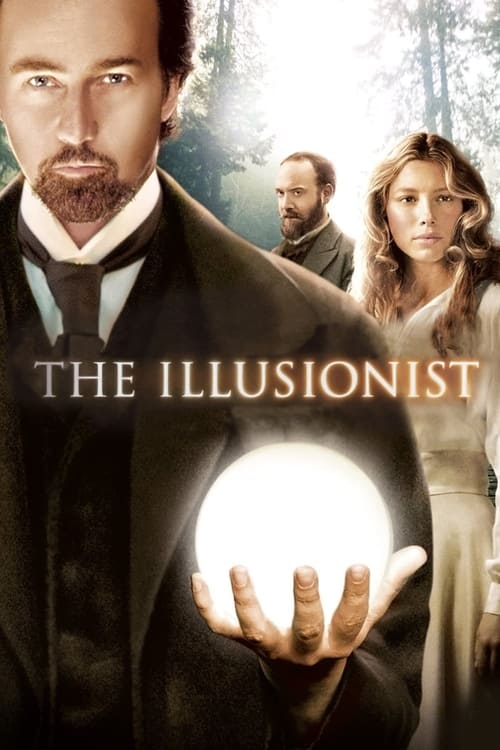
The Illusionist (2006)
Between Magic and Truth, the Aesthetic of an Elegant Deception
by 10days1movie · Published 2026-10-29
| Type | Movie |
|---|---|
| Director | Neil Burger |
| Cast | Edward Norton, Paul Giamatti, Jessica Biel, Rufus Sewell |
| Release | 2006 |
| Genre | Fantasy, Drama, Thriller, Romance |
| Runtime | 110min |
The essence of magic lies in knowing what the audience wants to see. The Illusionist is a work that draws that very principle into the structure of the film itself. Set against late nineteenth-century Vienna, depicting a contest between a stage magician and the power surrounding him, the film cunningly guides the viewer’s gaze to the very end. Rather than flaunting flashy tricks, director Neil Burger makes the elegantly woven story itself the greatest illusion of all.
What it’s about — A magician’s séance to cross the wall of class
Eisenheim (Edward Norton), the son of a cabinetmaker, falls in love as a boy with Sophie, of an aristocratic family, but they are separated by the wall of class. Years later he returns as a magician of great renown in Vienna, and on one stage he reunites with the grown Sophie (Jessica Biel). The problem is that Sophie is the fiancée of Crown Prince Leopold (Rufus Sewell). As the ambitious crown prince and Chief Inspector Uhl (Paul Giamatti), who watches the magician on his orders, become entangled, the tug-of-war between love and power gradually casts the shadow of death. The film centers on Eisenheim’s séance performances, which seem to summon the dead, blurring the boundary between truth and deception.
Direction — The sepia-toned image itself as the greatest illusion
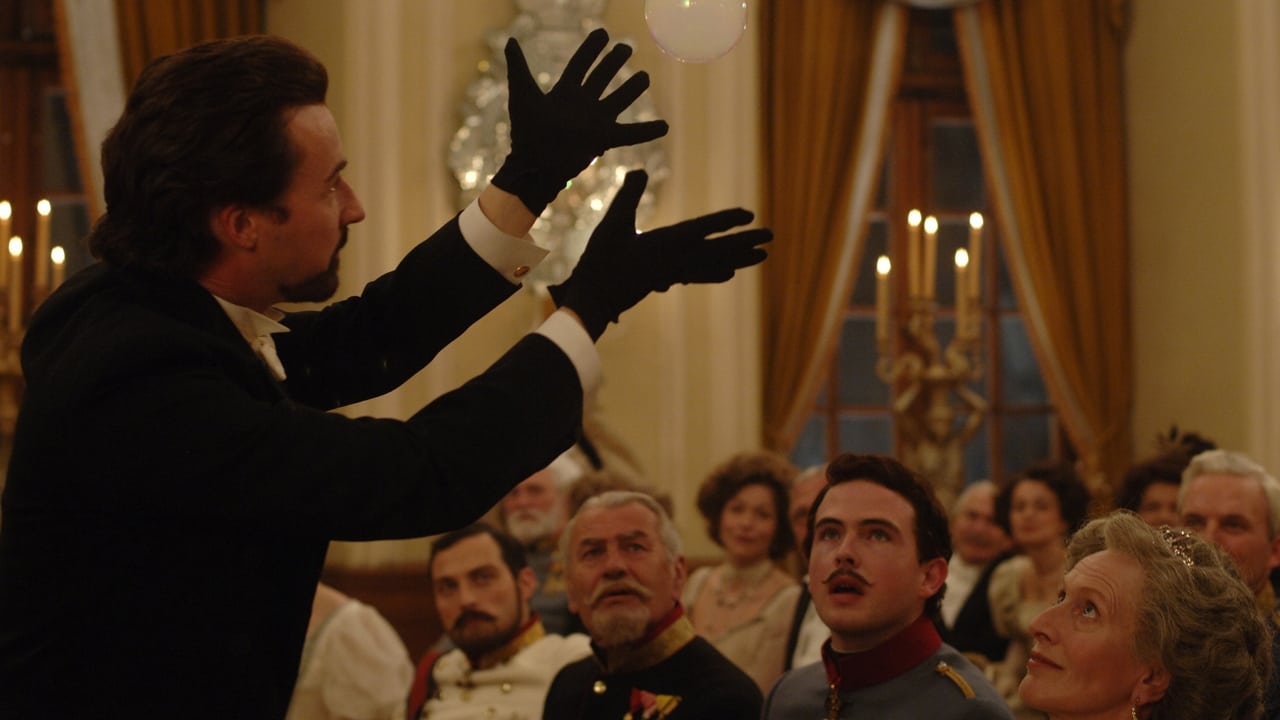
The first thing that catches the eye in Neil Burger’s direction is the texture of the image. The vignetting effect, in which the edges softly darken, and the sepia-toned palette give the impression of watching old film shot in that very era. This antique image goes beyond mere mood, subtly implying that the entire film is a kind of recollection, an illusion. The production recreating Vienna’s theaters and court also bears clear traces of careful effort.
The direction of the magic scenes strikes a balance between restraint and boldness. Some tricks use computer graphics, but rather than becoming intoxicated by that flash, Burger concentrates on touching what the audience wants to believe. Above all, the film’s real magic lies in its narrative structure. At the ending, the moment the earlier scenes are rearranged into entirely different meanings, the audience realizes it was in someone’s palm the whole time. That said, the clues to the twist are laid out somewhat generously, so for sharp-eyed viewers the surprise may be lessened.
Performance — Paul Giamatti, sculpting an enchanted chief inspector
Edward Norton renders Eisenheim as a mysterious, composed figure. He scarcely reveals emotion yet radiates an overwhelming presence on stage, and this restraint deepens the character’s air of secrecy. The Chief Inspector Uhl played by Paul Giamatti is the film’s hidden center. Giamatti convincingly expresses a complex interior, a man who serves power yet is enchanted by the magician’s true nature, through subtle expressions and breathing. Rufus Sewell handles the axis of tension through the cruel, unstable crown prince, and Jessica Biel grants Sophie, caught between two men, both elegance and resolve.

What the film says — The story we want to believe, stronger than truth
The Illusionist is a film about what we accept as truth. Whether Eisenheim’s séances are genuine supernatural phenomena or elaborate deceptions, the film never clearly answers to the end. On the contrary, that very ambiguity is the work’s core. The powerful try to control what is seen, but the magician makes people believe in what is not seen. Through an elegant deception, the film reminds us that what people want to believe can be more powerful than truth.
Ratings & reception
By OMDb, the IMDb rating is 7.5 out of 10. Its Rotten Tomatoes freshness is 74 percent and its Metacritic score is 68 out of 100, marking a generally favorable reception. The acting chemistry between Edward Norton and Paul Giamatti, along with the period-recreating cinematography and Philip Glass’s score, are frequently cited as objects of praise. It lost out somewhat in comparisons with another magic-themed film released the same year, but with its calm, classical charm it has been steadily reappraised.

Verdict
The Illusionist is a film that competes with an elegant atmosphere and an intricate story in place of loud spectacle. The refinement of a period piece, the tension of a mystery, and an ending like a piece of magic blend harmoniously. The shock of the twist may not be overwhelming, but the very process of following the grain of the illusion the film weaves is enchanting enough. It is a work that suits four stars well, one that reveals more the second time around.
Recommended for
- Viewers who love period-piece mysteries with an antique atmosphere
- Those who enjoy intricate narrative structure over flashy action
- Anyone who wants to see the restrained acting of Edward Norton and Paul Giamatti
Comments