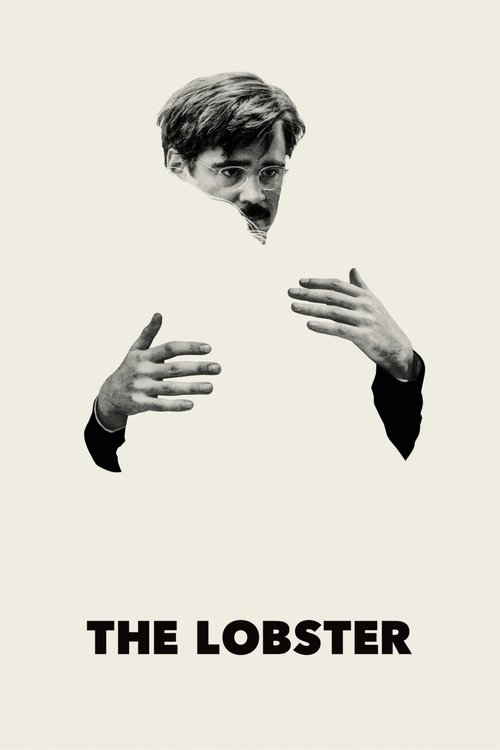
The Lobster (2015)
The Uncomfortable Logic of a World Where Failure to Find a Partner Means Becoming an Animal
by 10days1movie · Published 2026-08-27
| Type | Movie |
|---|---|
| Director | Yorgos Lanthimos |
| Cast | Colin Farrell, Rachel Weisz, Léa Seydoux, Ben Whishaw |
| Release | 2015 |
| Genre | Comedy, Drama, Romance |
| Runtime | 118min |
Fail to find a partner within 45 days and you will be transformed into the animal of your choice. This absurd premise initially sounds like black comedy, but as you watch the film this rule begins to feel less strange. My rating is ★4.0. Uncomfortable throughout, and even more uncomfortable once it ends.
What it’s about — The rule of finding a partner within 45 days
David (Colin Farrell), abandoned by his wife, is sent to a hotel for singles. The rules are simple: find a partner within 45 days or be transformed into an animal. David says he would choose to become a lobster. Outside the hotel exists another extreme — the Loners in the woods, who forbid any romance or emotional exchange between members. The film follows the protagonist as he moves between these two extremes, trying to survive in a world where coupling is required for life.

Direction — The eeriness shaped by an emotionless tone
Yorgos Lanthimos’s distinctive style is in full effect. All the actors deliver their lines in a flat, emotionless tone — which feels awkward at first but gradually makes the absurdity of this world stand out all the more. Throughout the film, violence and comedy coexist in a dry way. The scenes where characters unremarkably comply with irrational rules keep appearing, and that is the most unsettling part.
Performance — Colin Farrell concealing his interior
Colin Farrell grew a beard and gained weight to play a middle-aged everyman — that itself is a performance. He plays a character who reveals almost nothing of his interior, yet he makes the audience follow him. Rachel Weisz enters in an important role in the second half and delicately builds the relationship of two people learning about each other while suppressing feeling. Léa Seydoux as the leader of the Loners appears briefly but leaves a strong impression.

What the film says — Both extremes are violent
Both extremes in the film are violent. The society where you must be coupled to be validated, and the group that permits no relationship whatsoever — both suppress individual feeling and demand compliance with rules. Through this configuration, Lanthimos uses exaggeration to show the pressure that couple-centric society places on single people, or the compulsion to belong to a group. It looks absurd, but the logic is entirely familiar.
Ratings & reception
IMDb gives it 7.1 and Rotten Tomatoes gives it 87%. TMDB sits in the 7.0 range, and it is highly regarded in European arthouse circles. It won the Jury Prize at Cannes. Critics particularly praised Lanthimos’s construction of an original world, while many audience members report enjoying the hotel section of the first half before finding the second half excessively bleak.

What falls short
There is a significant tonal shift between the first and second halves. The dry humor of the hotel scenes deflates when the story moves to the forest section. The second half is bleaker and slower, and the emotional investment of the first half doesn’t carry seamlessly into it. The ending also leaves things open, which may leave some viewers unsatisfied.
Verdict
Lanthimos is a director born to make uncomfortable worlds. The Lobster lingers because that world turns out to be not so far from our own. The first half is clearly more entertaining and the second half is darker, but completes the theme. If you can accept the tonal inconsistency, it is unquestionably a striking experience. This film’s affectless performance style seems strange at first, but once you settle into it you realize it is the most frightening direction of all. It does not show characters failing to express emotion — it shows a world in which emotion itself is not permitted. This is the approach that allows Lanthimos to go on to build his own territory in Dogtooth, The Killing of a Sacred Deer, and The Favourite. ★4.0.
Recommended for
- Fans of arthouse films, particularly European black comedies
- Viewers who want sharp satire on relationships and social pressure
- Those who have seen or are interested in other Yorgos Lanthimos films (The Favourite, The Killing of a Sacred Deer)
Comments