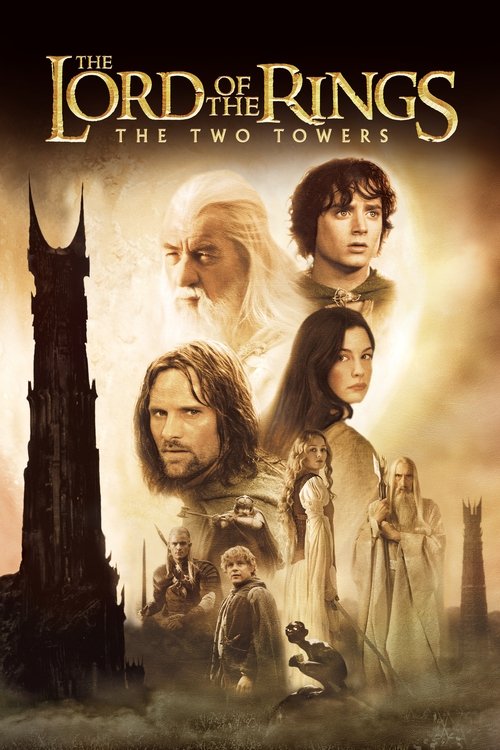
The Lord of the Rings: The Two Towers (2002)
The Journey Continues Even After the Fellowship Scatters
by 10days1movie · Published 2026-07-05
| Type | Movie |
|---|---|
| Director | Peter Jackson |
| Cast | Elijah Wood, Ian McKellen, Viggo Mortensen, Sean Astin, Andy Serkis |
| Release | 2002 |
| Genre | Adventure, Fantasy, Action |
| Runtime | 177min |
The middle chapter of a trilogy is usually the hardest. It has no real beginning or end — it simply carries the story forward from the last film to the next. The Two Towers turns that structural burden into an advantage. With the Fellowship scattered, the story splits into three simultaneous threads, and that fragmentation creates a rhythm uniquely its own. And where those three threads converge, the Battle of Helm’s Deep is waiting.
What it’s about — The quest after the Fellowship splits three ways
Directed by Peter Jackson in 2002, the film picks up after the Fellowship’s dissolution. Frodo (Elijah Wood) and Sam (Sean Astin) press on toward Mordor guided by Gollum (Andy Serkis). Aragorn (Viggo Mortensen), Legolas, and Gimli pursue Merry and Pippin — kidnapped by Uruk-hai — and find themselves caught up in the crisis of the kingdom of Rohan. Merry and Pippin, meanwhile, encounter the tree-shepherd Treebeard in Fangorn Forest. These three threads interweave until they converge in the massive battle where Saruman’s army besieges Helm’s Deep.
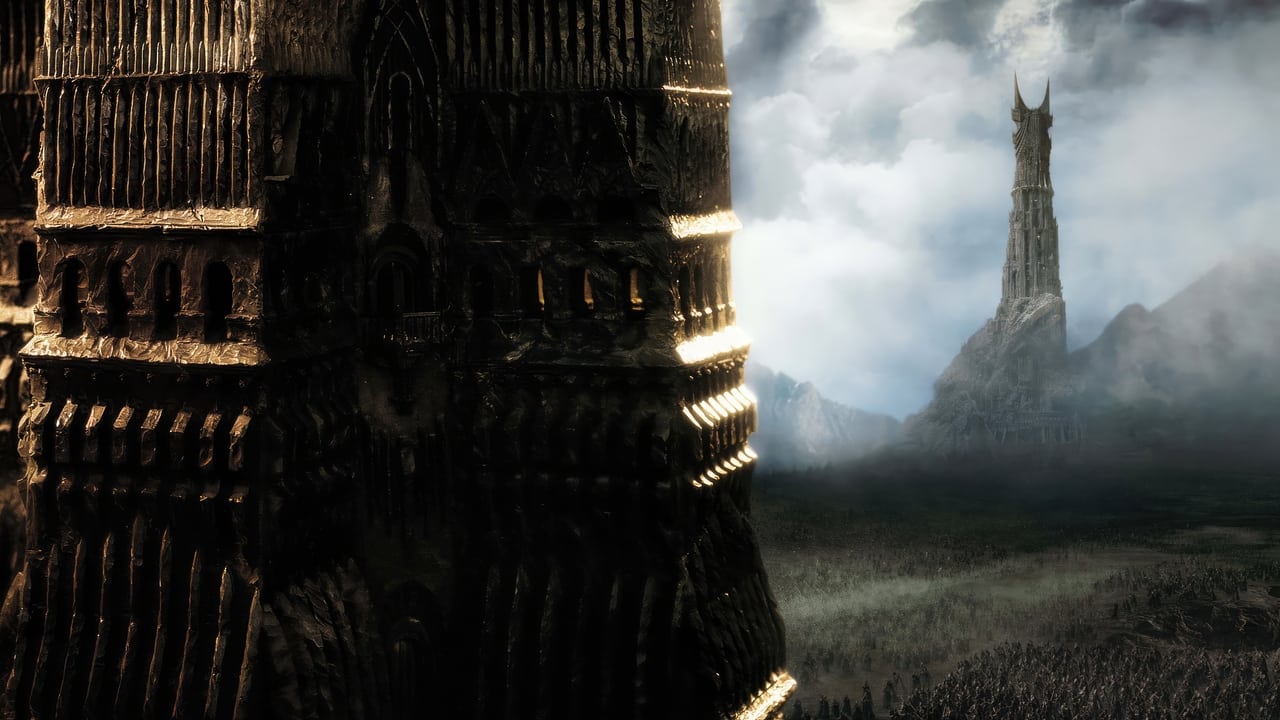
Direction — The Battle of Helm’s Deep that rewrote the standard
The Battle of Helm’s Deep is among the most intense sequences in the entire trilogy. A rain-soaked night, thousands of Uruk-hai encircling the stronghold, and a handful of men holding the line — in terms of scale and tension, it reset the standard of what was possible at the time. Jackson captures the chaos of the battlefield with rapid cuts and close-quarter close-ups while never losing the overall picture. Gandalf arriving at dawn with reinforcements is one of the most dramatically charged turning points in the whole series.
Outside the battle, Jackson’s direction remains solid. The textures of Fangorn Forest, the sweeping breadth of Rohan’s plains, and the golden roof of Edoras are all convincingly realized. The combination of New Zealand locations and constructed sets makes this world feel real.
Performance — Andy Serkis breathing emotion into Gollum
The film’s greatest acting achievement is Andy Serkis’s Gollum. A digital character built from motion capture, Gollum nonetheless has genuine feeling in him because of Serkis’s work. The scene in which Sméagol and his corrupted self conduct an internal dialogue — one desperately craving the Ring while the other tries to resist — became a benchmark for how far the technology could go. Gollum is not a simple villain; he is a tragic figure who earns sympathy.
Viggo Mortensen quietly conveys Aragorn beginning to accept his destiny in earnest. Sean Astin expresses Sam’s loyalty and goodness — following Frodo to the end — without ever overselling it.
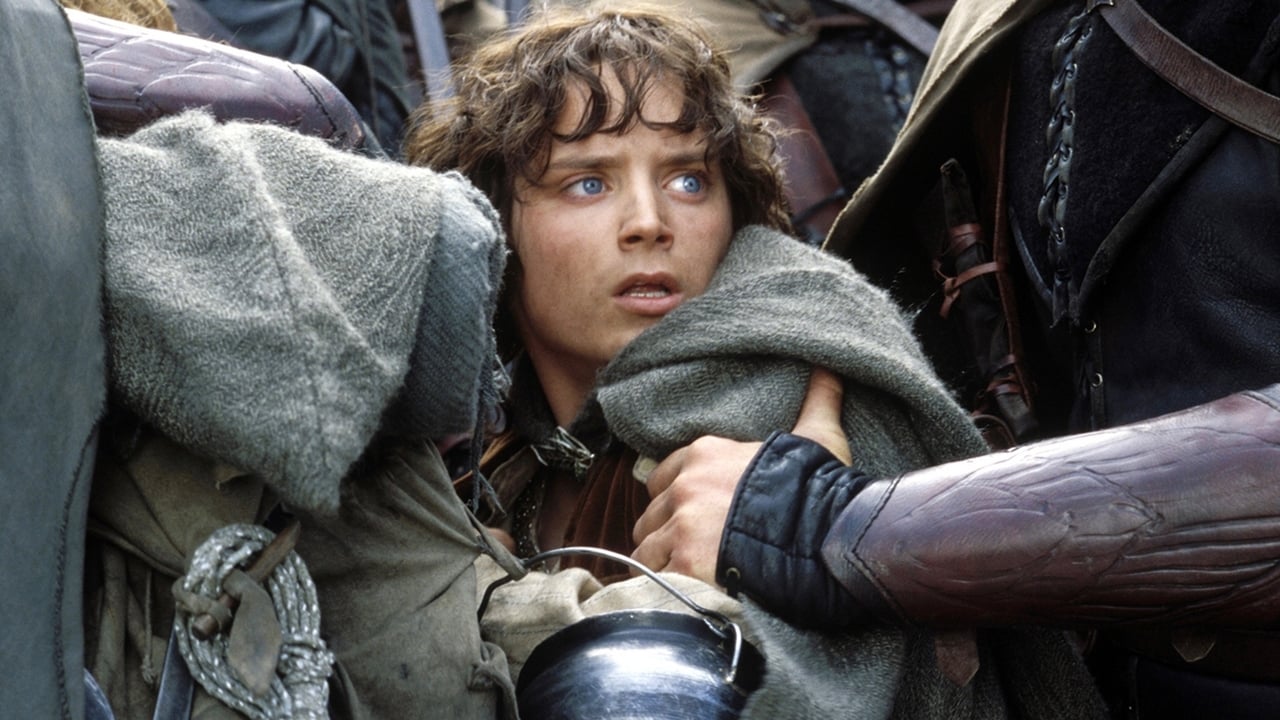
What the film says — Not giving up in the darkest place
The Two Towers is the darkest of the three. It unfolds at the point where hope is at its thinnest. Two towers — Saruman’s and Sauron’s — press Middle-earth from opposite directions, and the forces of good are fragmented and exhausted. Yet the film shows, through each of its three threads, what it means not to give up. The moment where Sam tells Frodo that the heroes in the old stories could have turned back too, but they kept going, is the film’s most direct statement of that theme.
Ratings & reception
TMDB scores it 8.4. On IMDb it holds 8.8 — among the highest in the series — and its Rotten Tomatoes score is 95%. At the 2003 Academy Awards it won Visual Effects and Sound Editing, and received nominations for Film Editing, Sound Mixing, and Art Direction.
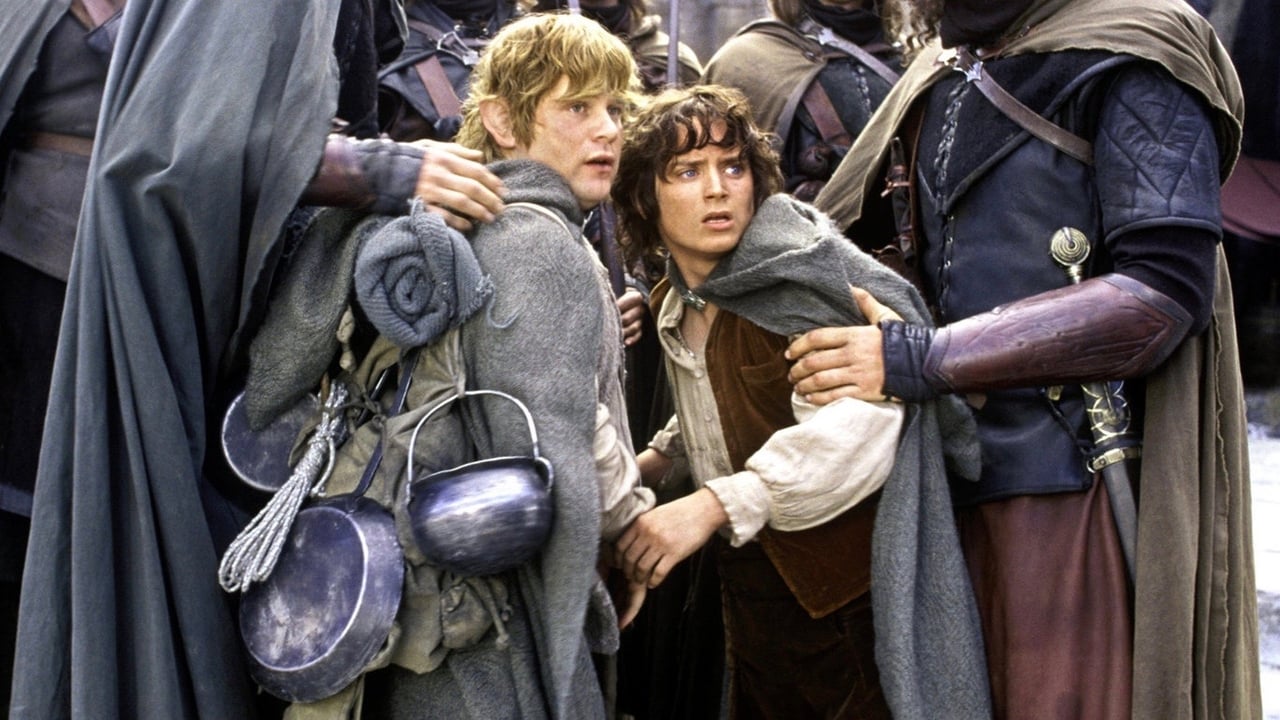
What doesn’t quite work
The split-narrative structure is both a strength and a weakness. The inserted romance scenes between Aragorn and Arwen feel episodic beside the main flow. And readers of the source novel may take issue with how Faramir’s character is handled differently from the book.
Verdict
The darkest entry in the trilogy, and the one that contains the series’ greatest battle sequence at Helm’s Deep. The fact that Gollum fully comes alive in this film alone is reason enough to watch. My rating is ★4.5. If you’re watching all three back to back, this is likely the one that leaves the strongest impression.
Recommended for
- Fans of large-scale fantasy battle sequences
- Anyone curious how far motion-capture performance can carry genuine emotion
- Those starting the Lord of the Rings trilogy for the first time or revisiting it
Comments