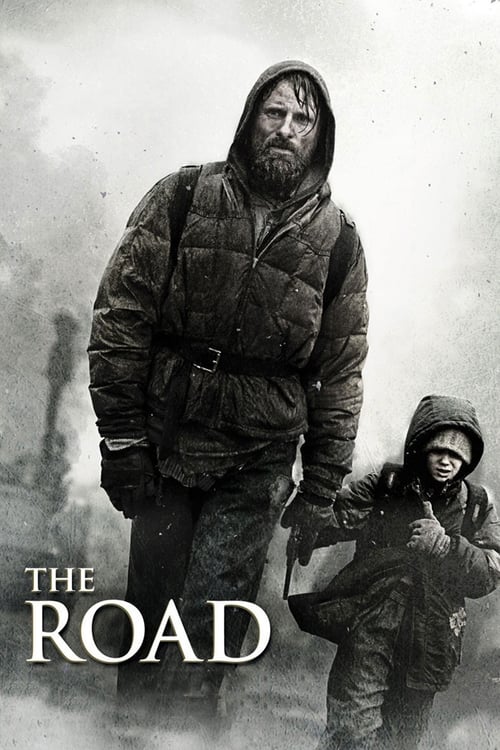
The Road (2010)
What Remains After the World Ends
by 10days1movie · Published 2026-08-22
| Type | Movie |
|---|---|
| Director | John Hillcoat |
| Cast | Viggo Mortensen, Charlize Theron, Kodi Smit-McPhee |
| Release | 2010 |
| Genre | Adventure, Drama |
| Runtime | 111min |
This is not an easy film. It is uncomfortable throughout, with nowhere to rest. Cormac McCarthy’s source novel won the Pulitzer Prize for a reason — and that reason is present in the film too, rendered in desolate images instead of beautiful sentences. Rating: ★4.0. If you want entertainment, this is the wrong choice; if you want an intense experience, it’s the right one.
What it’s about — A father and son walking a grey world
Some unexplained catastrophe has turned the world grey. A father (Viggo Mortensen) and his young son (Kodi Smit-McPhee) walk south, held together by a single hope that somewhere warm exists. There is no food. Most other survivors are a threat. No names, no backstory, no future. Only two people and one direction.
Direction — The pressure of grey, without beautification
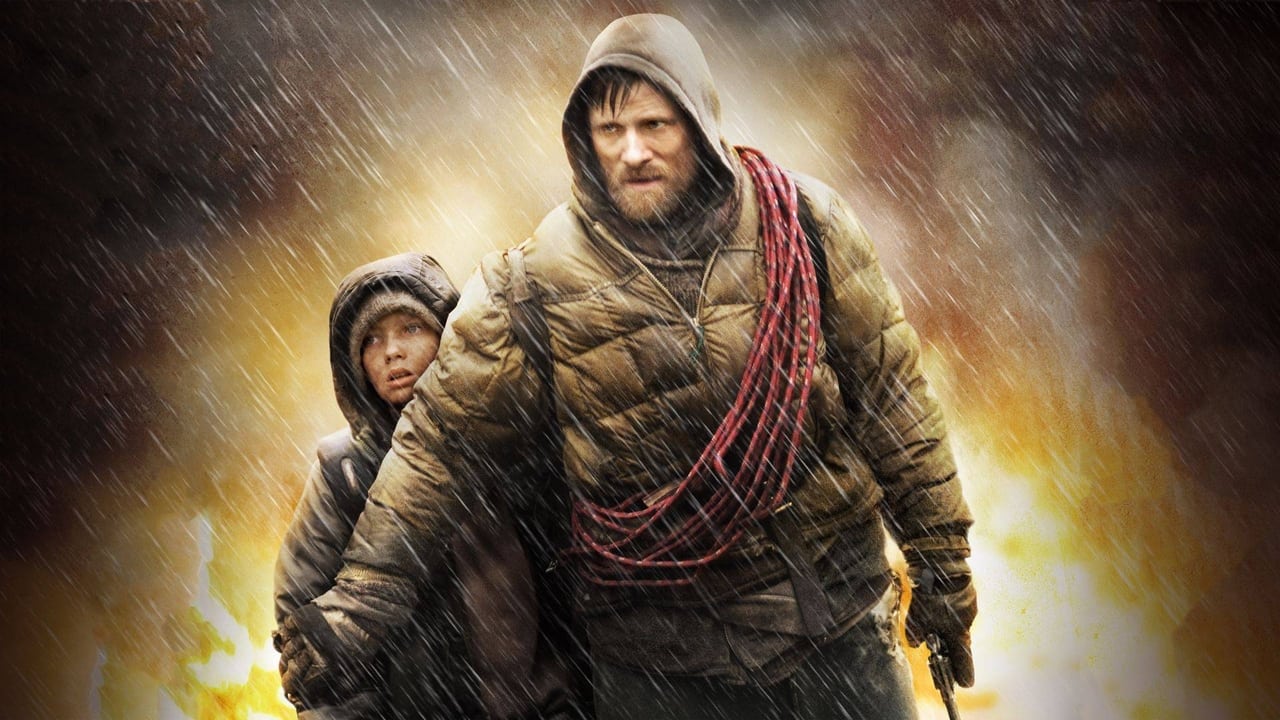
Director John Hillcoat resists beautifying the devastated world. The screen is relentlessly grey, and only the occasional memory of the wife (Charlize Theron) carries different color. That contrast communicates without words the weight of what the father is holding onto. Music is minimized; the images themselves press down on the viewer.
Performance — Mortensen carving exhausted fatherhood
You can feel how much this role cost Viggo Mortensen. He embodies in his entire body a man who constantly chooses between the compulsion to survive and the instinct to protect his son. Kodi Smit-McPhee naturally plays a child who accepts the world as though it has always been this way — a child who knows no other world. The chemistry between the two anchors the film.

What the film says — Keeping goodness even in a world that has ended
In this film, the reason the world ended does not matter. What matters is the question of whether humans can maintain goodness even afterward. The father tells the son, “We’re the good guys. We’re carrying the fire.” What that fire is goes unspecified, but watching the film to the end brings understanding. The film quietly shows what is the first thing to disappear when society collapses — and what is the very last thing that remains.
Ratings & reception
IMDb scores it 7.2. Rotten Tomatoes gives it 74%, a fresh rating. Viggo Mortensen’s performance was widely praised. Fans of the source novel largely considered it a faithful adaptation, though they acknowledged the inevitable limitation that the sensory quality of McCarthy’s prose cannot be fully re-created in film. Audience reaction split between those who found it too dark with no hope, and those who found the darkness precisely the thing that makes it more intense.

What doesn’t quite work
The suffocating darkness continues right to the end. This film is entirely wrong for viewers who want something entertaining. The poetic language of the novel is not completely translatable into images — readers who know the book may feel its absence. McCarthy’s prose is spare yet rhythmic, and that language itself creates a beauty within the desolation. In translating it to film, some of the novel is inevitably lost. The father’s interior monologue, which occupies a large portion of the novel, is difficult to render on screen, resulting in somewhat shallower psychological density. Charlize Theron’s wife being confined to flashback sequences is also a limitation; more background on that character would have given the father’s suffering fuller dimension. The psychological change of the father might have been more fully three-dimensional with additional context.
Verdict
Among post-apocalyptic films, this is the most human and the most uncomfortable. It holds the pain of a father who cannot pass a good world on to his child even as the world ends. You may feel heavy for a while afterward. That heaviness is the film’s value. The concept of carrying fire is interpreted in the film as inheriting goodness — the film shows without compromise how exhausting and dangerous a choice it is to maintain goodness in this world. The fact that the father fears giving up that goodness more than he fears death means this film is not a simple survival story but a story about values. A side effect of watching it: you find yourself grateful for the small things in ordinary life. For that alone the film has done its job.
Recommended for
- Fans of Cormac McCarthy’s source novel or those wanting serious post-apocalyptic drama
- Those interested in Viggo Mortensen’s intense performance
- Viewers prepared to withstand a dark, heavy film
Comments