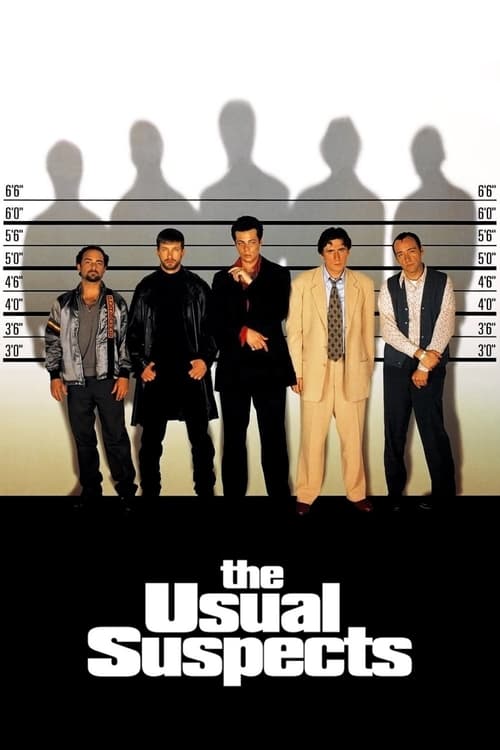
The Usual Suspects (1995)
Whoever Controls the Story Creates the Truth
by 10days1movie · Published 2026-07-03
| Type | Movie |
|---|---|
| Director | Bryan Singer |
| Cast | Kevin Spacey, Gabriel Byrne, Benicio del Toro, Kevin Pollak, Stephen Baldwin |
| Release | 1995 |
| Genre | Drama, Crime, Thriller |
| Runtime | 106min |
Some films make you want to watch them again from the start the moment they end. The Usual Suspects is one of those films. It is a 106-minute crime thriller, but what it is actually saying is something about who constructs the story. Few films have shown as cleverly as this one that whoever controls the narrative can create the truth.
What it’s about — The testimony of five suspects in a lineup
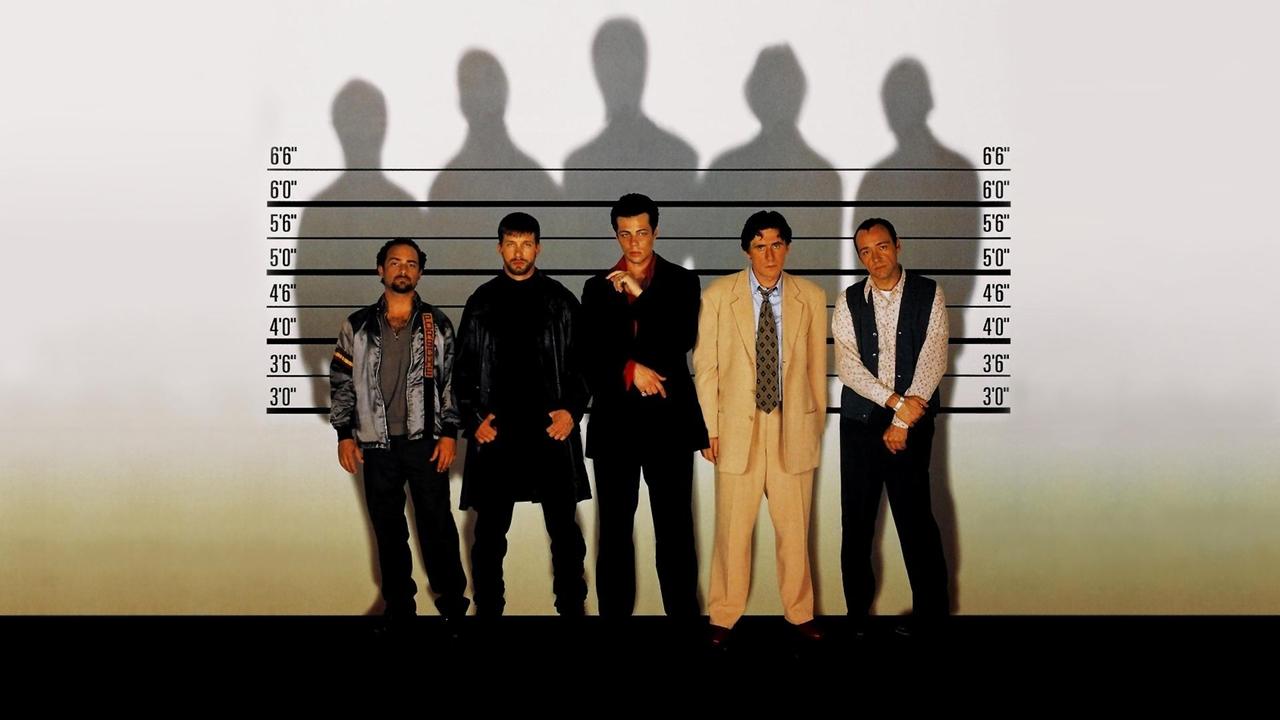
Directed by Bryan Singer in 1995 with a screenplay by Christopher McQuarrie, the film begins with five criminals who find themselves in a police lineup. After an explosion at San Pedro Harbor, the sole survivor — Verbal Kint (Kevin Spacey) — gives an account of events to investigator Dave Kujan (Chazz Palminteri). Through Verbal’s narration, the audience gradually learns how the five became entangled with each other and who the legendary criminal Keyser Söze actually is. The film is designed so that if you take all the information at face value, you will feel betrayed when the ending arrives.

Direction — Pacing that builds distance to grow the twist
The most impressive aspect of Bryan Singer’s direction is his control of pace. The film cuts between Verbal’s testimony and the events of the past in a way that is natural and rhythmically sound. As the audience begins to settle into the story, the camera pulls back slightly and creates distance. That accumulated distance is what makes the final twist land so hard.
The atmosphere running through the film is dark and damp. The docks, nighttime warehouses, and interrogation rooms with newspaper-covered windows create a noir texture. Even without flashy action, the tension holds because of that texture. John Ottman’s editing and music precisely time the moments when the story is allowed to breathe.
Performance — Spacey’s balance that holds up the twist
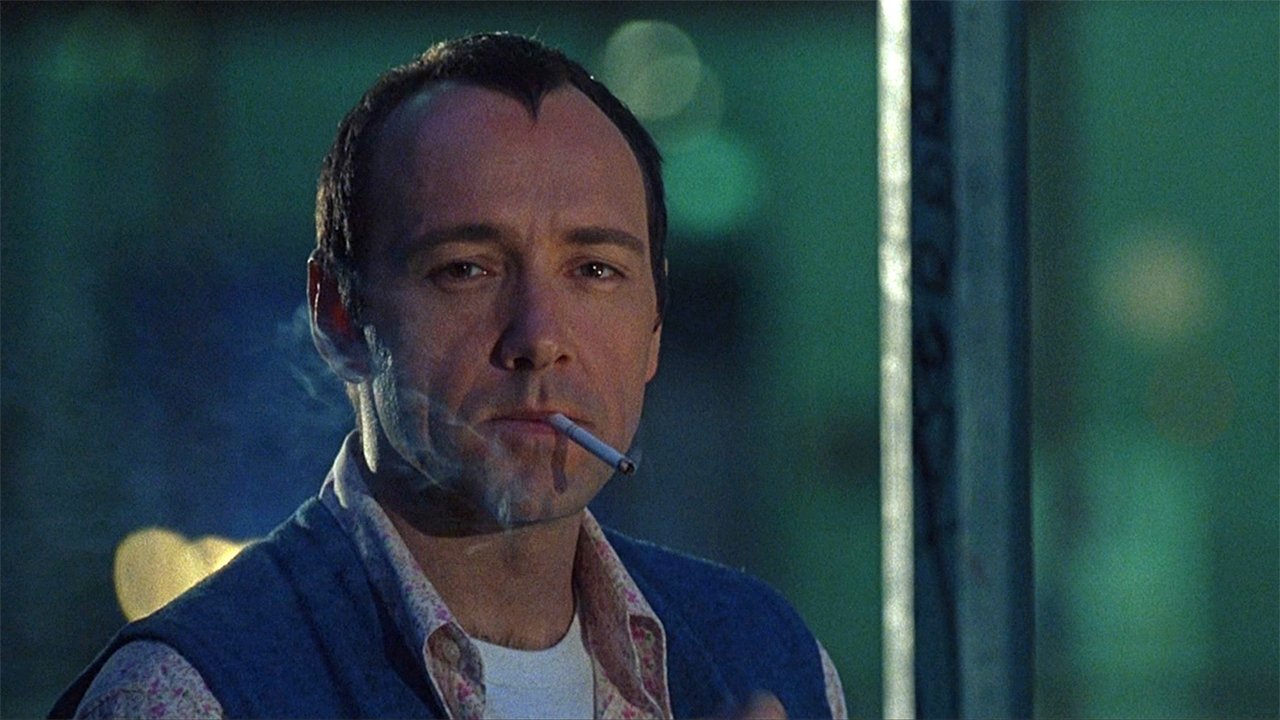
Kevin Spacey won the Academy Award for Best Supporting Actor for this film. Verbal Kint is the least imposing of the five — physically limited, with a stammer, barely present. Spacey plays that timidity at exactly the right calibration: never too small, never overdone. That balance is what produces the twist’s power. Gabriel Byrne plays Keaton — who appears to be the central figure among the five — conveying the complexity of a man wavering between suspicion and trust. Benicio del Toro’s Fenster, whose dialogue is almost entirely incomprehensible mumble, is strangely memorable for precisely that reason.
What the film says — Whoever holds the story creates the truth
The heart of The Usual Suspects is narrative power. The same event can take entirely different forms depending on who is telling it. The film demonstrates this through its structure itself. Verbal’s account keeps shifting whether it is trustworthy — whether what we have heard is fact or reconstruction. Only after the ending does it become clear how the film was guiding the audience from the very beginning.
The more often the name Keyser Söze is repeated, the more diffuse the character’s actual nature becomes. Söze functions inside the film like a myth — a name everyone fears and no one can verify, and no one has seen. This setup is not merely a device serving the twist; it reads as a commentary on how power and fear are created.
Ratings & reception
TMDB scores it 8.2. On IMDb it holds 8.5, placing it among the all-time upper tier, and Rotten Tomatoes gives it 87%. Christopher McQuarrie’s screenplay won the Academy Award for Original Screenplay. It is often cited as the classic of twist films, but the view that its structure and acting are far too solid to be called a mere trick film is widely held.
What doesn’t quite work
With so much focus on the twist, the supporting characters are not developed enough. The relationships between the five are set up interestingly but there is simply not enough time to go deeper. Also, on a second viewing some scenes contain foreshadowing that is too obviously visible.
Verdict
Christopher McQuarrie’s screenplay is what lifts this film above a simple twist thriller. It is a film that does not end on a single viewing — on a second watch it becomes an entirely different film. My rating is ★4.5. The twist is not the whole point; the film in which the method of constructing the story is itself the theme.
Recommended for
- Those who enjoy twist structures where the ending rearranges everything
- Those who want noir atmosphere and precise screenplay together
- Anyone looking for a film they’ll want to rewatch immediately after finishing
Comments