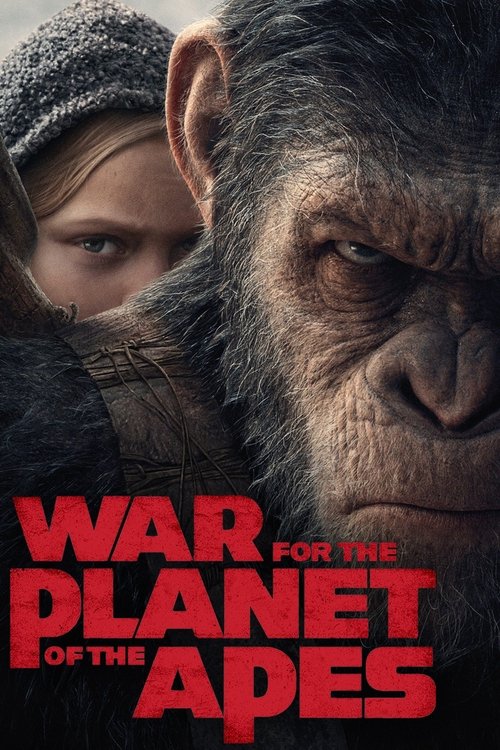
War for the Planet of the Apes (2017)
Caesar's Final Battle Was Not About Revenge
by 10days1movie · Published 2026-06-18
| Type | Movie |
|---|---|
| Director | Matt Reeves |
| Cast | Andy Serkis, Woody Harrelson, Steve Zahn, Karin Konoval |
| Release | 2017 |
| Genre | Drama, Sci-Fi, War |
| Runtime | 140min |
Having watched all three films in the trilogy, the reason the character of Caesar lingers so long becomes clear when this final chapter ends. War for the Planet of the Apes does not end as a simple sci-fi action blockbuster. It is the story of a being who resists to the end the temptation of revenge, and the weight of that choice stays. My rating is ★4.5. It stands as the finest conclusion in the series.
What it’s about — Caesar’s final battle and revenge
The final chapter in the reboot trilogy that began in 2011. In a world where the Simian Flu has collapsed human civilization, Caesar’s (Andy Serkis) ape colony is at a standoff against a human military force commanded by the Colonel (Woody Harrelson). The film begins with the Colonel killing Caesar’s family, and Caesar sets out alone on a path toward revenge. Meanwhile, the tension between the responsibility of leading his people and his personal rage forms the film’s central axis.
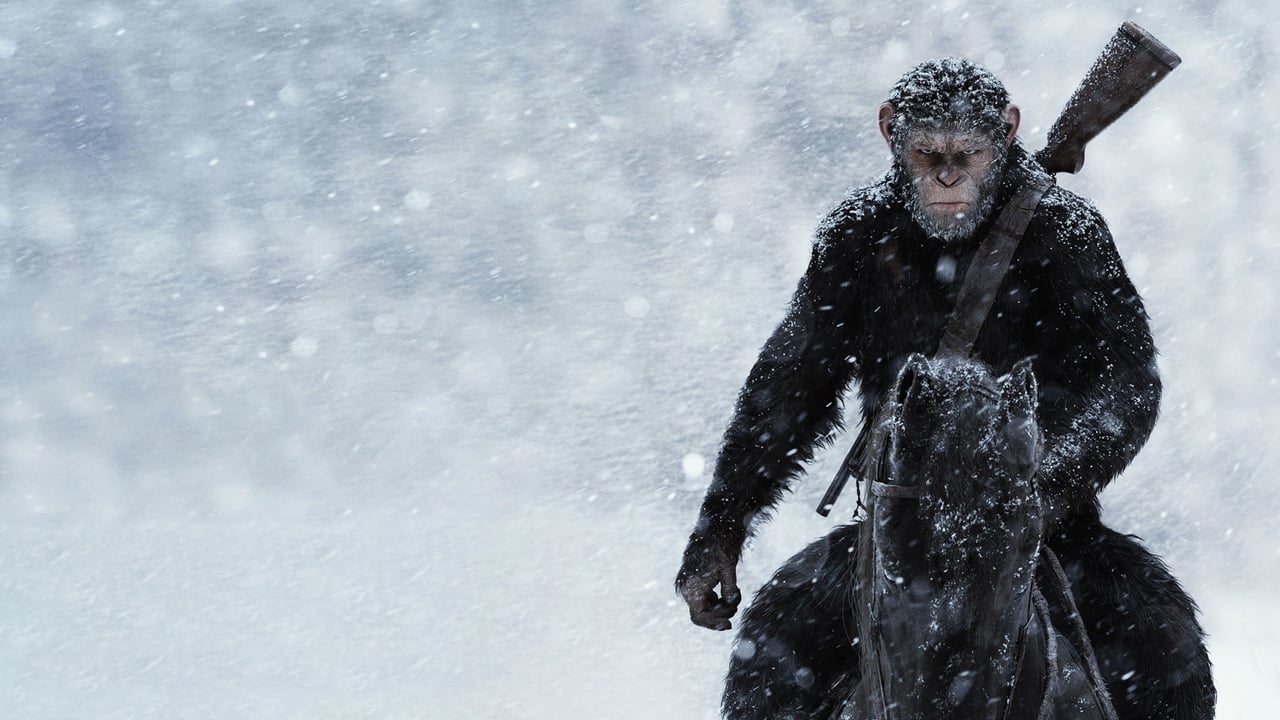
Direction — A snowfield weaving Western and POW drama
Matt Reeves structured this film through the grammar of the Western and the prisoner-of-war film. The first half flows like a road movie following Caesar’s revenge journey; the second half builds pressure within the confined space of a prison camp. The two rhythms interlace to fill 140 minutes. Visually, the film uses vast snow-covered landscapes — expressing Caesar’s solitude and exhaustion in physical terms. Michael Giacchino’s music is grand yet sad; it signals from the first notes that this is not simply a satisfying revenge thriller.
Performance — Serkis’s most complete performance
Andy Serkis’s performance capture work has been discussed across the entire trilogy, but in this chapter it reaches its most complete form. Exhaustion, rage, sorrow, and will are all naturally readable in the digitally rendered chimpanzee face. Woody Harrelson’s Colonel is not a simple villain — he is a character who has discarded everything for the survival of humanity, and his conviction coexists with madness. Steve Zahn’s Bad Ape momentarily lightens the heavy atmosphere while leaving an impression as a character in his own right.

What the film says — What if revenge changes who I am
The film consciously shows that as Caesar follows the path of revenge, he increasingly resembles Koba — the antagonist ape from the previous film. Caesar consumed by anger makes choices that endanger his people repeatedly. The central question of the film is this: even if revenge is justified, if it transforms who you are, can you hold to that choice? The decision Caesar makes in the ending is the answer to that question, and its emotional weight is what makes the final scene linger so long.
Ratings & reception
IMDb scores it 7.4. Rotten Tomatoes gives it 94%, and the entire trilogy has maintained uniformly high scores across all three entries. Andy Serkis’s performance capture work was widely seen as deserving recognition beyond the visual effects category. The series as a whole is assessed as a rare successful example of realizing moral complexity and emotional depth within the framework of an SF blockbuster franchise.
What doesn’t quite work
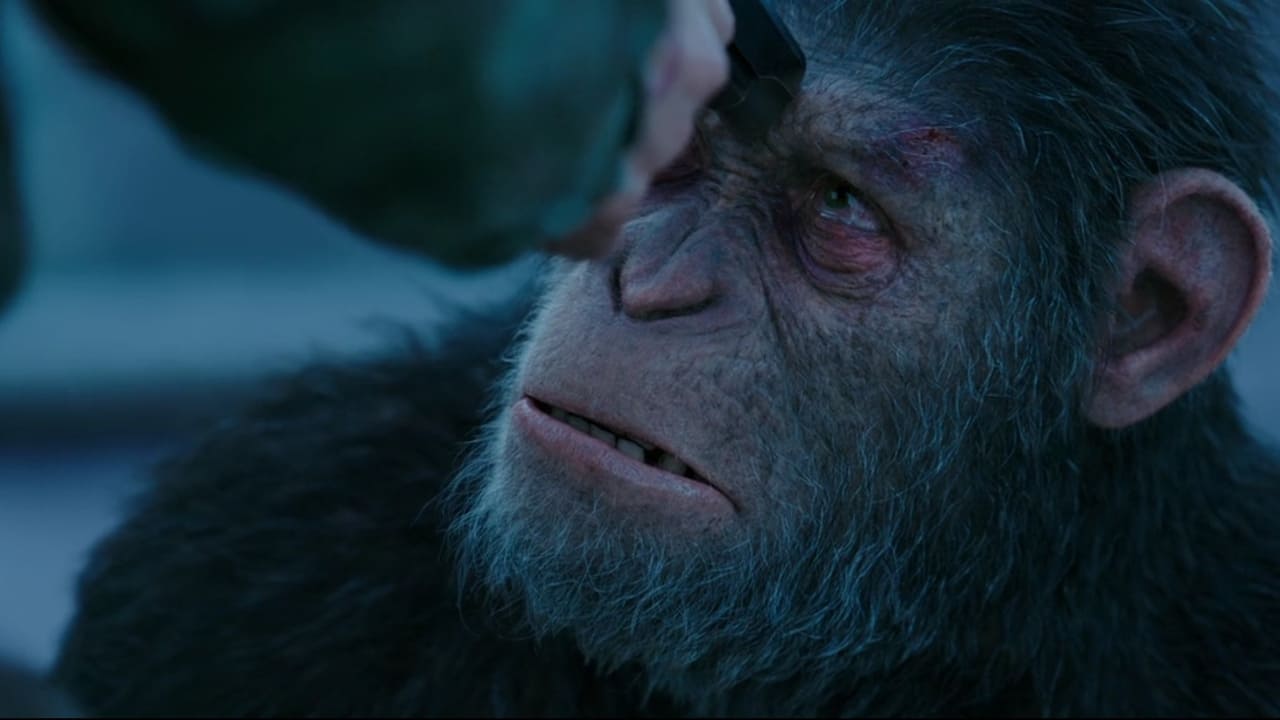
The prison camp sequence runs long. The escape process in the back half progresses in a somewhat predictable direction, and there are stretches where the narrative tension weakens. For audiences who have seen all three films in the trilogy, the emotional resonance is rich — but viewers who see only this film in isolation may find it harder to invest emotionally in Caesar as a character. Watching in series order is strongly recommended.
Verdict
Watching the three-film trilogy through and then seeing this work, Caesar’s entire journey reads as one complete tragedy. Matt Reeves embedded classical themes within a sci-fi shell — questions of revenge and forgiveness, responsibility and freedom, and what we are fighting for. Franchise conclusions of this quality are uncommon. Among trilogy finales, it is one of the standout achievements. ★4.5.
Recommended for
- Those who have watched the Planet of the Apes reboot trilogy from the first film in order
- Those who prefer character drama over pure sci-fi
- Viewers who enjoy films that engage with complex moral conflict rather than simple good-versus-evil
Comments