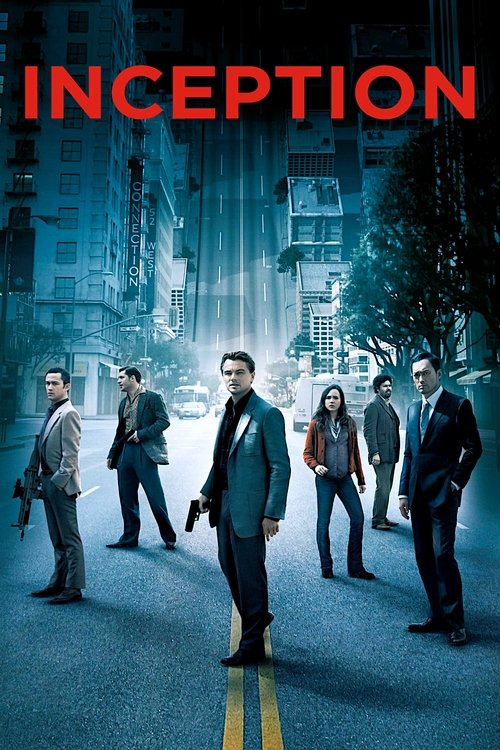
Inception (2010)
A Film That Burrows Into Your Mind and Stays
by 10days1movie · Published 2026-06-05
| Type | Movie |
|---|---|
| Director | Christopher Nolan |
| Cast | Leonardo DiCaprio, Joseph Gordon-Levitt, Elliot Page, Tom Hardy, Ken Watanabe, Marion Cotillard |
| Release | 2010 |
| Genre | Action, Science Fiction, Adventure |
| Runtime | 148min |
Inception is the film Christopher Nolan spent over a decade writing. It begins with a deceptively clean premise — enter someone’s dream and steal an idea — then keeps folding new layers onto that premise until you’re three dreams deep and the 148 minutes feel both relentless and too short. My rating is ★5.0. It’s one of the rare blockbusters that earns its intellectual ambition through sheer craft rather than explanation.
What it’s about — A Mission to Plant an Idea in a Dream
Cobb (Leonardo DiCaprio) is an extractor: a corporate spy who infiltrates people’s dreams to steal information. He’s been living in exile, wanted for a crime connected to his wife’s death, and a powerful businessman named Saito (Ken Watanabe) offers him one way home — planting an idea deep inside a rival heir’s subconscious rather than stealing one. That act, inception, is supposedly impossible. Cobb assembles a team of specialists and constructs a three-level dream architecture inside the target’s mind. The catch is that Cobb’s own subconscious — in particular, the projection of his dead wife Mal (Marion Cotillard) — keeps breaking in and threatening everything.
Direction — Layered Dreams and a Sense of the Real
Nolan refuses to explain the rules upfront and instead lets each dream level demonstrate its own physics and time-dilation. That choice demands concentration, but it’s also what makes watching Inception feel like active participation rather than passive consumption. Figuring out which layer you’re in at any given moment is itself a pleasure. The architecture is intricate, but every piece is load-bearing — nothing collapses under scrutiny on a rewatch.
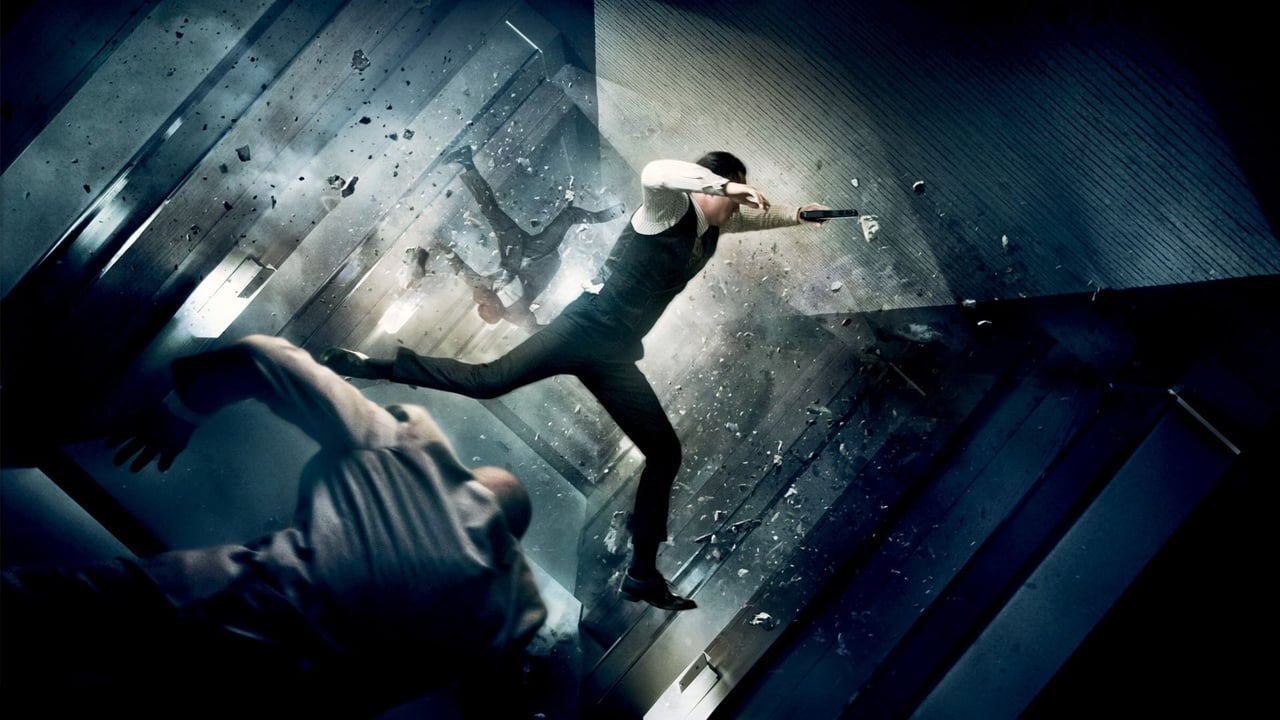
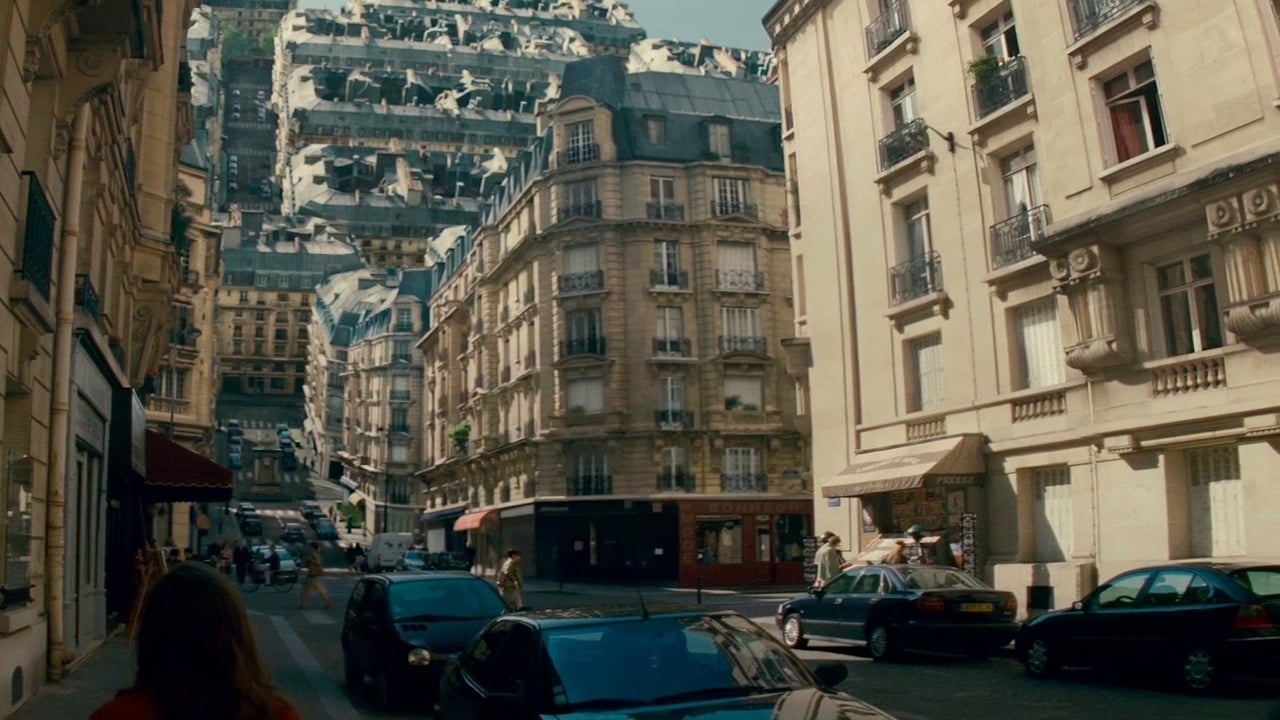
The visual effects are disciplined in a way that’s almost unfashionable now. The Paris street folding up on itself, the zero-gravity hotel corridor fight, the snow fortress assault — all three were built with practical sets, camera rigs, and physical stunts first, with CGI used to extend rather than replace. The result holds up in a way that purely computer-generated spectacle rarely does. Hans Zimmer’s score locks onto the editing rhythm at every key moment, and his motif — built from Édith Piaf’s “Non, je ne regrette rien” stretched to near-imperceptibility — became one of cinema’s most recognisable sonic signatures.
The film’s emotional centre, though, is not the action. It’s the question of whether Cobb will ever stop running from grief. His totem, a small spinning top he uses to tell dreams from reality, reappears throughout the film, and whether it falls or keeps spinning in the final shot is the debate that has kept audiences arguing for fifteen years.
Performance — DiCaprio Restraining Guilt
DiCaprio plays Cobb’s guilt and obsession with a restraint that makes the character’s eventual emotional release land cleanly. He doesn’t overwork the grief; he lets it leak through at the edges. Joseph Gordon-Levitt performed the majority of the zero-gravity corridor sequence without a stunt double, and that single fight is the most technically astonishing thing in the film. Marion Cotillard gives Mal a warmth and menace that makes her genuinely dangerous as a presence, not just a plot device. Tom Hardy injects levity into nearly every scene he shares with the ensemble, keeping the film from becoming airlessly solemn, while Elliot Page functions as the audience’s guide into Cobb’s inner world — curious, probing, not easily deceived.

Ratings and reception
Inception holds an 8.8/10 on IMDb — placing it consistently in the site’s all-time top fifteen — and an 87% Tomatometer on Rotten Tomatoes from 363 reviews, with a 91% audience score. At the Academy Awards it won four Oscars: Best Cinematography, Best Visual Effects, Best Sound Editing, and Best Sound Mixing, with additional nominations for Best Picture and Best Original Screenplay. Critics praised Nolan for smuggling genuinely philosophical questions about grief, guilt, and the nature of reality into a film with the scale and pace of a summer action blockbuster. The fact that the ending debate has never settled — and that there are long-form analytical videos with millions of views still being published — is evidence of how thoroughly it lodged itself in the cultural memory.
Verdict
Underneath the dream architecture and the spectacle, Inception is about one person trying to let go of the past well enough to return to the present. The layers of the heist are the maze Cobb has to navigate to get there. When every level clicks into place in the final act and the film accelerates toward that last shot, the structural payoff is as satisfying as anything in Nolan’s career. That combination — visceral excitement plus a grief story that earns its ending — is why this is ★5.0.
Recommended for
- Viewers who want to piece together a puzzle while watching rather than after
- Fans of blockbusters that sustain emotional weight alongside spectacle
- Anyone curious about what Christopher Nolan’s directing craft looks like at full stretch
Comments